Theopolis Logo

Writing

Explore our collection of theological essays, biblical studies, and reflections on faith and culture.

See all
abortion
Abortion

Letters on Abortion, (Part 1)

What is below is fairly self-explanatory. This is an exchange I had with a local liberal clergyman on the subject of abortion. The circumstances of the debate are included in the text itself. I initially e-mailed this out to a list of clergy in our city after a local (and…

by Richard BledsoeNovember 17, 2015
wall-2
Ezra

The Perfumed Butler and the Wisdom of Civil Obedience

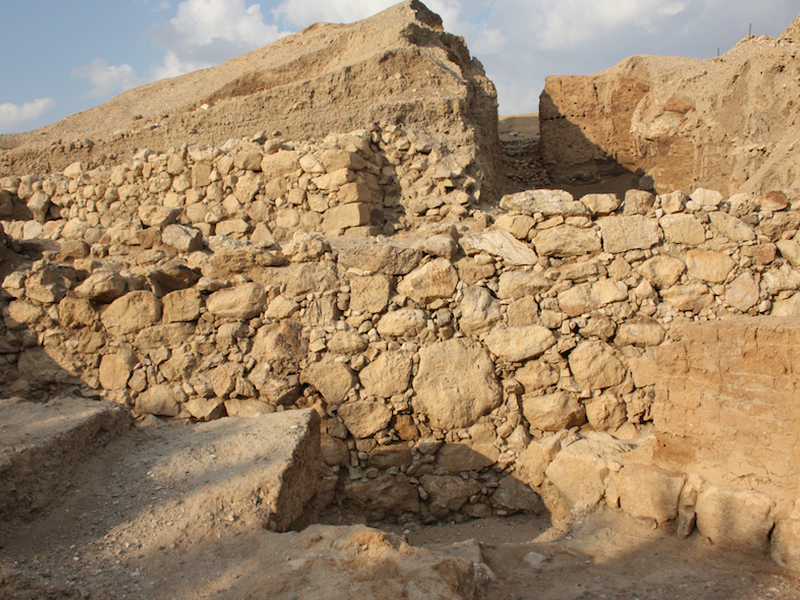
The seemingly humdrum parts of the Bible often hide overlooked wisdom. Take, for example, the books of Ezra and Nehemiah. Their stories aren't exactly the most gripping or memorable. They are far less concrete than, say, the story of the Exodus. No one in Ezra is stricken blind or devoured…

by Christian LeithartNovember 10, 2015
sparkler
Happiness

"Happy! Happy! Happy!" Authentic Happiness and Its Knock-Offs

For most of the past century, philosophical perspectives on life in the western world have been overtly grim and pessimistic. The optimism of the Enlightenment, generated by confidence in the scientific method and the potential of an increasingly civilized humanity to redress the evils of the world, was shattered by…

by Bill DeJongNovember 5, 2015
aaron-burden-1ebsmyrau-s-unsplash
Hermeneutics

How Does a Chiasm Mean?

Chiastic structures are found all over the Bible, and in recent decades commentators have become more adept at spotting them. But identifying these literary structures is only part of the challenge. There remains the challenge of understanding what they mean. Part of the answer is found in the recognition that…

by Steve JefferyNovember 3, 2015
last-supper
Eucharist

How To Change the World, (Part 2)

Part 1 can be found HERE . Clearly, more than just getting worship right is important in changing the world, but since worship is the central act of God’s people, performed on the first day of the week at the center of the world before the very face of God,…

by James B. JordanOctober 29, 2015
solomonsidolatry
Biblical Theology

Big Love: A History of Stolen Fruit

“Blessed is the womb that bore you, and the breasts at which you nursed.” ( Luke 11:27 ) Arguing for Christian morality in a secular society is difficult. A culture which accepts evolutionary dogma has no intellectual place — or inherent desire — for absolute morality, since it believes morality…

by Mike BullOctober 27, 2015

Showing page 141 of 309

See all
See all
History

Modernity and antiquity

Kumar suggests that “some of the principal hall-marks of modernity” are already evident in the Christian notions of time and history. Both Christianity and modernity separate time from nature, and humanize time; time is seen by both as “linear and irreversible”; both see history as an Aristotelian drama with beginning,…

February 24, 2006
History

First Modernity

The Latin modernus was coined in the late fifth century, as an antonym to antiquus , and variations of modernus became particularly common after the 10th century. Thus, Krishan Kumar writes, “Modernity is . . . an invention of the Christian Middle Ages,” and was used to emphasize the radical…

February 24, 2006
Philosophy

Computer Communications and the Self

Poster lists four effects that computer communications (email, chat groups, etc) have on the self: “1 they introduce new possibilities for playing with identities; 2 they degender communications by removing gender cues; 3 they destabilize existing hierarchies in relationships and re-hierarchize communications according to criterio that were previously irrelevant; and…

February 24, 2006
Philosophy

Computers, subjects and objects

Descartes famously contrasted the mind (res cogitans) with the external world (res extensa), but Mark Poster suggests that computer writing fudges that distinction: “the computer dematerializes the written trace. As inputs are made to the computer through the keyboard, pixels of phosphor are illuminated on the screen, pixels that are…

February 24, 2006
Media

Community and New Communications

Mark Poster points to a tension between the modern institutions of production and the postmodern technologies of communication, particularly as they impact the formation of the self: “If modernity or the mode of production signifies patterned practices that elicit identities as autonomous and (instrumentally) rational, postmodernity or the mode of…

February 24, 2006
Media

Telephone

Prior to World War I, Telefon Hirmondo, the telephone system of Budapest, was used as a broadcast system, with a published schedule of programs that were restricted to certain classes of people in Hungary. Only later did it develop into a communications system in which everyone could pass information to…

February 24, 2006

Showing page 1878 of 2212

Browse by Category

In Medias Res

Your weekly digest for all things Theopolis.

Donate

Theopolis is nearly 100% donor-supported. Consider joining us on our mission.