Theopolis Logo

Writing

Explore our collection of theological essays, biblical studies, and reflections on faith and culture.

See all
jon-tyson-zlf17v5scrq-unsplash
Biblical Horizons

Protestants and BMEV

For years I have read little posts by fresh new Papal converts that assert that Luther, Zwingli, Calvin, etc., believed in the perpetual virginity of Mary. So did Turretin. Setting aside the question of whether these men believed that this notion was important or not — and Calvin, at least,…

by James B. JordanNovember 27, 2009

jon-tyson-zlf17v5scrq-unsplash
Biblical Horizons

More Thoughts on BMEV

The previous discussion led to several points that I’d like to take up in like to take up in more detail. For the sake of discussion, I’ll number them for ease of consideration. 1. Typological “evidences” for Mary as perpetual virgin, queen of heaven, etc. etc. I assert here that…

by James B. JordanNovember 26, 2009
jon-tyson-zlf17v5scrq-unsplash
Biblical Horizons

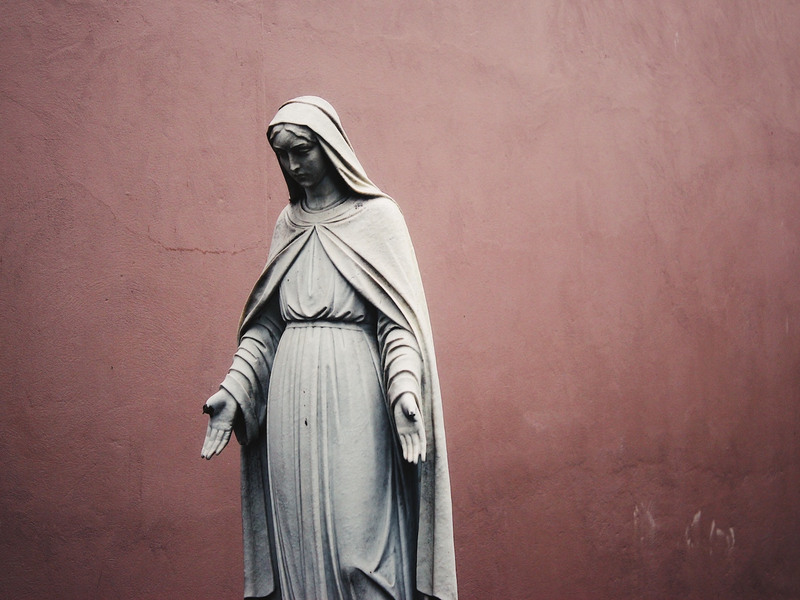
Concerning BMEV (Blessed Mary Ever-Virgin)

BMEV, or “Blessed Mary Ever-Virgin,” should not be an issue for any Protestant today, but clamor from various quarters means that we need once again to “get real” with the Biblical data here. Herewith is a reworking of a recent essay on the subject originally published in Biblical Horizons. Early…

by James B. JordanNovember 12, 2009
channel-82-urfja47nuhu-unsplash
Biblical Horizons

Rome? Why Bother?

When I hear from time to time of some young evangelical Presbyterian going into Roman Catholicism, I ask myself, “Why bother? You’re already in a church pretty much like what the Reformers rejected.” In the Medieval church, the congregation did little but watch while the priest and choir did everything.…

by James B. JordanJuly 14, 2009
greg-rakozy-ompaz-dn-9i-unsplash-2
Ephesians

A New Perspective on the Mystery of God

The “New Perspective” sheds light on what the New Testament means by the “mystery” of God. The mystery theme is quite pervasive in the apostolic writings, and shows up across genre lines, in the gospels, the epistles, and Revelation. One could even make a solid case that the revelation of…

by Mark HorneJune 5, 2009
skyler-gerald-oygna91tfis-unsplash
Biblical Horizons

Sanctus

THIS should be a link to the Sanctus I put together for use at the Biblical Horizons Conferences. Some churches have been using it also.

by James B. JordanMay 22, 2009

Showing page 208 of 309

See all
See all
History

Modernity and antiquity

Kumar suggests that “some of the principal hall-marks of modernity” are already evident in the Christian notions of time and history. Both Christianity and modernity separate time from nature, and humanize time; time is seen by both as “linear and irreversible”; both see history as an Aristotelian drama with beginning,…

February 24, 2006
History

First Modernity

The Latin modernus was coined in the late fifth century, as an antonym to antiquus , and variations of modernus became particularly common after the 10th century. Thus, Krishan Kumar writes, “Modernity is . . . an invention of the Christian Middle Ages,” and was used to emphasize the radical…

February 24, 2006
Philosophy

Computer Communications and the Self

Poster lists four effects that computer communications (email, chat groups, etc) have on the self: “1 they introduce new possibilities for playing with identities; 2 they degender communications by removing gender cues; 3 they destabilize existing hierarchies in relationships and re-hierarchize communications according to criterio that were previously irrelevant; and…

February 24, 2006
Philosophy

Computers, subjects and objects

Descartes famously contrasted the mind (res cogitans) with the external world (res extensa), but Mark Poster suggests that computer writing fudges that distinction: “the computer dematerializes the written trace. As inputs are made to the computer through the keyboard, pixels of phosphor are illuminated on the screen, pixels that are…

February 24, 2006
Media

Community and New Communications

Mark Poster points to a tension between the modern institutions of production and the postmodern technologies of communication, particularly as they impact the formation of the self: “If modernity or the mode of production signifies patterned practices that elicit identities as autonomous and (instrumentally) rational, postmodernity or the mode of…

February 24, 2006
Media

Telephone

Prior to World War I, Telefon Hirmondo, the telephone system of Budapest, was used as a broadcast system, with a published schedule of programs that were restricted to certain classes of people in Hungary. Only later did it develop into a communications system in which everyone could pass information to…

February 24, 2006

Showing page 1878 of 2212

Browse by Category

In Medias Res

Your weekly digest for all things Theopolis.

Donate

Theopolis is nearly 100% donor-supported. Consider joining us on our mission.