Theopolis Logo

Writing

Explore our collection of theological essays, biblical studies, and reflections on faith and culture.

See all
aaron-burden-h8s0pf2rcqs-unsplash
Galatians

The Restoration of the Galatians

While controversies over the writings of Paul continue in various corners of the intellectual globe, the word of God given through Paul and his scribe and all of the church’s interpreters and translators over the last two millennia is still readily available to the lofty and the lowly. Paul, as…

by Grace LangnessMarch 25, 2013

kiwihug-l4gw27xzn1i-unsplash
Deuteronomy

Law and History: How to Read the Law of Moses (Part 2)

The second in a series of studies in Deuteronomy. Deuteronomy 22:30: A man shall not take his father’s wife, and shall not uncover his father’s wing (Hebrew: kanaf ). There are a number of unusual features in this law that mark it out from the previous context, indicating that it…

by Ralph Allan SmithMarch 20, 2013
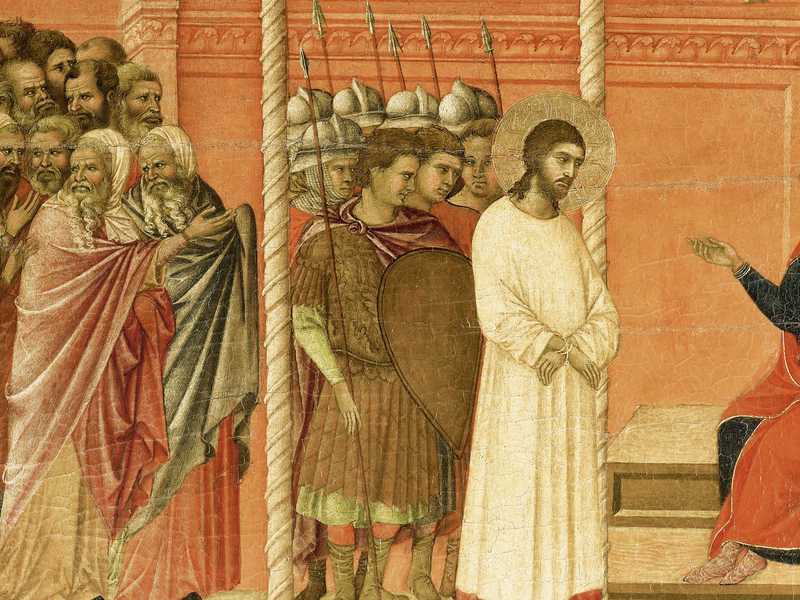
200403-moss-pilate-tease_pncfq5
History

Victimhood and the Gospel

The texts of Christianity have been slowly at work, under the power of the Holy Spirit for 2000 years now. If we could be magically transported back into the world of two millennia ago, modern Americans would be shocked at the cruelty of that world. There was no concern for…

by Richard BledsoeMarch 18, 2013
aaron-burden-1ebsmyrau-s-unsplash
Luke

The Dysfunctional Family of the Gadarene Madman

The Story of the Gadarene Madman is told in all three synoptic Gospels (Matthew 8:28-34, Mark 5:1-20, Luke 8:26-37). Jesus ventures into a Gentile area when He passes over the Sea of Galilee. Upon disembarking from his boat, he is immediately met by a demon-possessed madman. Upon meeting Jesus, he…

by Richard BledsoeMarch 13, 2013
aaron-burden-1ebsmyrau-s-unsplash
Deuteronomy

Law and History: How to Read the Law of Moses

Part 1 of a multi-part series of studies on Deuteronomy 22:30-23:8. Eric Auerbach, in his classic work on Western literature, devotes his first chapter to contrasting Homer with the Bible. Of Homer, he writes of the “need of Homeric style to leave nothing which it mentions half in darkness and…

by Ralph Allan SmithMarch 12, 2013
markus-winkler-aid-xyrtlec-unsplash
Theopolis News

James Jordan in Korea, Japan

Trinity House Fellow James B. Jordan will be a speaker at an International Conference on Biblical Symbolism that will be held in Seoul on Monday, May 27 in 2013. He will address "The Importance of Biblical Symbolism and Symbolic Interpretation of the Bible." The conference will have three other speakers…

by Peter LeithartMarch 9, 2013

Showing page 197 of 309

See all
See all
Science

End of Modernity?

Iain Provan offers this comment in his Ecclesiastes commentary: “Modern people tend to view the movement of history, as far as human beings are concerned, as being from primeval swamp to divinity. The beginning was unpromising, but quite against expectation the forces of evolution have propelled us along, to a…

January 29, 2006

Eucharistic meditation, Fourth Epiphany

Ecclesiastes 12:1: Remember also your Creator in the days of your youth. Solomon ends Ecclesiastes, as we have seen, emphasizing again the brevity of life. Life is vapor, all is vapor, a vapor of vapors, most vaporous, superlatively vaporous. Solomon makes it clear at the end of the book that…

January 29, 2006

Baptismal meditation, Fourth Epiphany

Ecclesiastes 11:1: Cast your bread on the face of the waters, for you will find it after many days. We saw in this morning’s sermon Solomon’s image of casting bread on the water encourages a reckless faith, a willingness to act in spite of the risks. You don’t know whether…

January 29, 2006

Exhortation, Fourth Epiphany

What kind of guidance should we give our children? We often focus exclusively on all the things that they may not do. That is a perfectly sound approach, especially for younger children. After all, we worship and serve a God whose first words to newborn Israel were “Thou Shalt Not.”…

January 29, 2006
Philosophy

No dry light

Francis Bacon offered this wise caution, “The human understanding is no dry light but receives an infusion from the will and affections; whence proceed sciences which may be called ‘sciences as one would.’ For what a man had rather were true he more readily believes . . . . Numberless…

January 26, 2006

Notes on Freud

Some notes on Freud, mainly as background for discussion of Ernest Jones psycho-analytic treatment of Hamlet, largely based on Merold Westphal’s summary in Suspicion & Faith. FREUD AND SCIENCE Freud is an Enlightenment man who subverted the Enlightenment, an advocate of scientism whose theories rendered scientism impossible. He appears not…

January 26, 2006

Showing page 1892 of 2212

Browse by Category

In Medias Res

Your weekly digest for all things Theopolis.

Donate

Theopolis is nearly 100% donor-supported. Consider joining us on our mission.