Theopolis Logo

Writing

Explore our collection of theological essays, biblical studies, and reflections on faith and culture.

See all
david-with-goliaths-head-and-soldiers-crop

David, Goliath, and the Body of Moses, Part 1

In the Bible, all the world is a stage, but like the Tabernacle, that stage moves around a lot. David’s defeat of Goliath can only be fully understood as liturgy fulfilled in history. Liturgy, as a sacrifice of praise, is the step-by-step process of resolving a conflict. It relinquishes all…

by Mike BullAugust 22, 2019

andrew-welch-eozrev7i3pi-unsplash
Aristotle

On Friendship

Aristotle isn’t fundamentally wrong about friendship, nor is the long tradition that follows him. But you might not gather that by reading some of the more pointed critics of the classical conception of friendship. I think, however, that the classical view is not only viable but taken up and fulfilled…

by Jack FranicevichAugust 20, 2019
jachan-devol-xdplirqchx8-unsplash
Epistemology

Integration: Putting the Pieces Together

#13 in Theopolis Papers, Seeking Integration in a Fragmented World It is time for me to “cast off” integration, the way a knitter removes a completed scarf from the needles. I want to bring my quest concerning integration to a decent closure, though my happy quest for reality continues. With…

by Esther Lightcap MeekAugust 13, 2019
nebuchadnezzar
Revelation

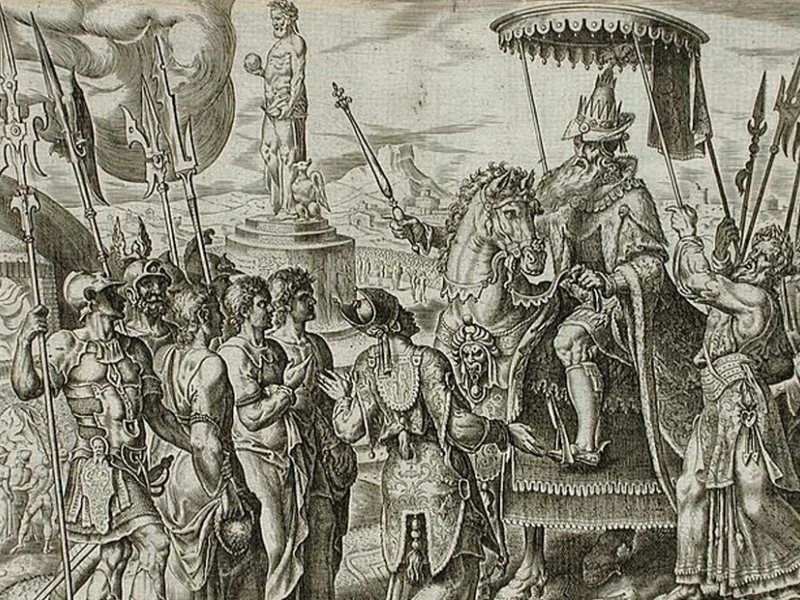
Nebuchadnezzar’s Unfinished Symphony

Below are some notes on a particular sub-theme of Daniel 3, namely the downfall of Babylon’s liturgy. First up, a few words on our text’s literary construction. One of the most conspicuous features of Dan. 3 is its author’s love of lists . Personnel are listed (vs. 2, 3, 27),…

by James BejonAugust 6, 2019
e99a0657
Prayer

Praying for God's Good Name

Few things in Scripture, few things in the Christian life, are more familiar than the Lord’s Prayer. Sunday after Sunday, we pray these words together with our brothers and sisters. At home, alone or with our families, we pray this prayer daily, as Jesus taught us (Luke 11:2: “When you…

by John BarachJuly 30, 2019
catholicity_1
Culture

The Head, the Heart, and the “Gay Christian” Movement

At the 2019 General Assembly of the Presbyterian Church in America, the denominational delegates considered a number of official overtures (requests for action from the regional parts of the denomination) relating to issues of gender and sexuality. The PCA is conservative. As evidence of this, the assembly passed a resolution…

by Jonathan BarlowJuly 23, 2019

Showing page 76 of 309

See all
See all
Science

End of Modernity?

Iain Provan offers this comment in his Ecclesiastes commentary: “Modern people tend to view the movement of history, as far as human beings are concerned, as being from primeval swamp to divinity. The beginning was unpromising, but quite against expectation the forces of evolution have propelled us along, to a…

January 29, 2006

Eucharistic meditation, Fourth Epiphany

Ecclesiastes 12:1: Remember also your Creator in the days of your youth. Solomon ends Ecclesiastes, as we have seen, emphasizing again the brevity of life. Life is vapor, all is vapor, a vapor of vapors, most vaporous, superlatively vaporous. Solomon makes it clear at the end of the book that…

January 29, 2006

Baptismal meditation, Fourth Epiphany

Ecclesiastes 11:1: Cast your bread on the face of the waters, for you will find it after many days. We saw in this morning’s sermon Solomon’s image of casting bread on the water encourages a reckless faith, a willingness to act in spite of the risks. You don’t know whether…

January 29, 2006

Exhortation, Fourth Epiphany

What kind of guidance should we give our children? We often focus exclusively on all the things that they may not do. That is a perfectly sound approach, especially for younger children. After all, we worship and serve a God whose first words to newborn Israel were “Thou Shalt Not.”…

January 29, 2006
Philosophy

No dry light

Francis Bacon offered this wise caution, “The human understanding is no dry light but receives an infusion from the will and affections; whence proceed sciences which may be called ‘sciences as one would.’ For what a man had rather were true he more readily believes . . . . Numberless…

January 26, 2006

Notes on Freud

Some notes on Freud, mainly as background for discussion of Ernest Jones psycho-analytic treatment of Hamlet, largely based on Merold Westphal’s summary in Suspicion & Faith. FREUD AND SCIENCE Freud is an Enlightenment man who subverted the Enlightenment, an advocate of scientism whose theories rendered scientism impossible. He appears not…

January 26, 2006

Showing page 1892 of 2212

Browse by Category

In Medias Res

Your weekly digest for all things Theopolis.

Donate

Theopolis is nearly 100% donor-supported. Consider joining us on our mission.