Theopolis Logo

Writing

Explore our collection of theological essays, biblical studies, and reflections on faith and culture.

See all
evangelists
Matthew

Dating Matthew, (Part 1)

When might the Gospel according to Matthew have been written? Of course, any answer can only be speculation, but that does not mean we are reduced to groundless opinion. In this series of articles I point the way to an approach different from the general consensus among scholars today which…

by Ralph Allan SmithNovember 22, 2016

hebrew-manuscript-3
Hermeneutics

Synopticity, (Part 2)

In my first essay on “synopticity” I offered a rather rough definition of the phenomenon and important, though not exhaustive examples. In this essay, I want to introduce broader aspects of the phenomenon of “synopticity.” The first example that I have in mind is conventional stories, stories of different historical…

by Ralph Allan SmithNovember 17, 2016
screen-shot-2016-03-31-at-9-32-11-am
Ascension

Brexit and the Binding of Satan, Part 4

Since the judgment of Babel was followed by the initiation of the circumcision, the impending end of the circumcision in AD70 explains the significance of the first century miracle of foreign tongues. Except for a few Aramaic “teasers” in the book of Daniel, the Word of God was monolingual and…

by Mike BullNovember 15, 2016
four-evangelists
Hermeneutics

Synopticity, (Part 1)

To the best of my knowledge “synopticity” is not a word used in theology or Biblical studies, but it seems an appropriate word to describe the kind of phenomena associated with the Synoptic Gospels, Matthew, Mark, and Luke. These three Gospels tell essentially the same story with significant — sometimes…

by Ralph Allan SmithNovember 10, 2016
laughing_statue_by_xxbobbiie-d5f0meh-2
Humor

Learning to Laugh

Humor is a funny thing. It is altogether familiar yet also mysterious. What makes us laugh? Why do we find things funny? There are academic fields of study dedicated to discovering what makes things humorous. These academicians even have a journal entitled International Journal of Humor Research . No joke.…

by Bill SmithNovember 8, 2016
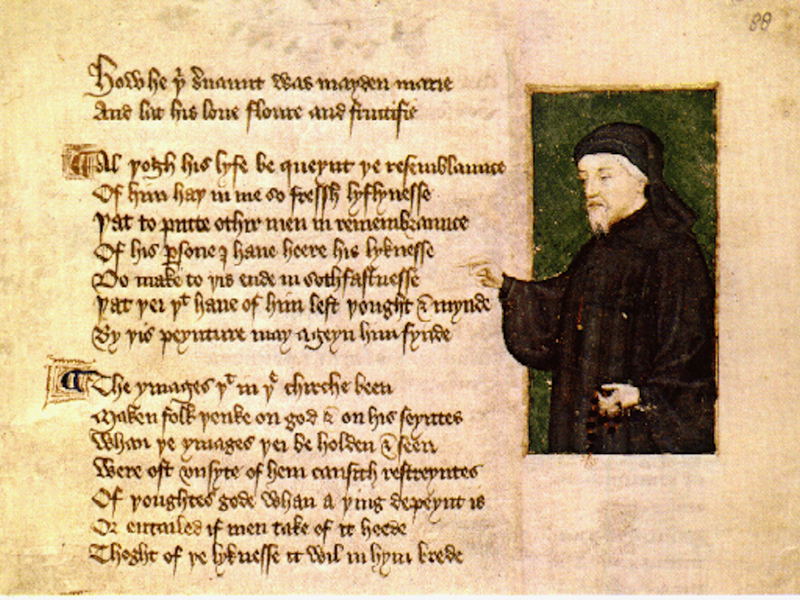
chaucer
Literature

Flawed Means of Grace: Liturgy in The Pardoner's Tale

Out of all the characters in Geoffrey Chaucer’s The Canterbury Tales , the Pardoner has been called the “one lost soul.” The pious Parson, who closes out the collection of tales with a sermon on the seven deadly sins and how a sinner can absolve himself of them, connects the…

by Christian LeithartNovember 3, 2016

Showing page 122 of 309

See all
See all

Culpable gloom

“Follow the ways of your heart and what your eyes see; and know that on account of all these, God will bring you into judgment.” The last part of this is often taken as a warning about the limits of joy and pleasure-taking. Seow thinks otherwise: “Human beings are supposed…

January 25, 2006

Calvinist Proof Text

Ecclesiastes 11:5 emphasizes the limitations of human knowledge by emphasizing that God works everything: “you do not know the works of God (ELOHIM) who does all (Y’SH ET-HAKOL).” There are two possible translations of the last relative clause: 1) “who does all.” If we go with this translation, we have…

January 25, 2006

Portions to eight

I saw a man hoarding his treaures, building bigger barns and stuffing his safety deposit boxes and worrying over his portfolio. Disaster struck, and he lost everything because he had everything to lose. He didn’t even have three comforters. I saw a man throwing around his money with abandon, emptying…

January 25, 2006

Bread on Waters

I saw a man with a bag of seed. He looked at the sky to discern the weather, and decided tomorrow would be a better day to plant. The next day, he invented instruments to test the humidity and to predict the wind, and decided that tomorrow would be a…

January 25, 2006

Historicist Reduction of Freud

As Jones presents it, the logic of repression of sexual desires is as follows: 1) The desires are most likely to be repressed are those that are socially disapproved, disapproved by the “herd.” 2) We unconsciously push back those disapproved desire. The imagery is hydraulic: Repressing disapproved desires creates pressure,…

January 25, 2006

What Psychology Taught Us

Ernest Jones notes an essential contribution of modern psychology: “We are beginning to see man not as the smooth, self-acting agent he pretends to be, but as he really is, a creature only dimly conscious of the various influences that mould his thought and action, and blindly resisting with all…

January 25, 2006

Showing page 1893 of 2212

Browse by Category

In Medias Res

Your weekly digest for all things Theopolis.

Donate

Theopolis is nearly 100% donor-supported. Consider joining us on our mission.