Theopolis Logo

Writing

Explore our collection of theological essays, biblical studies, and reflections on faith and culture.

See all
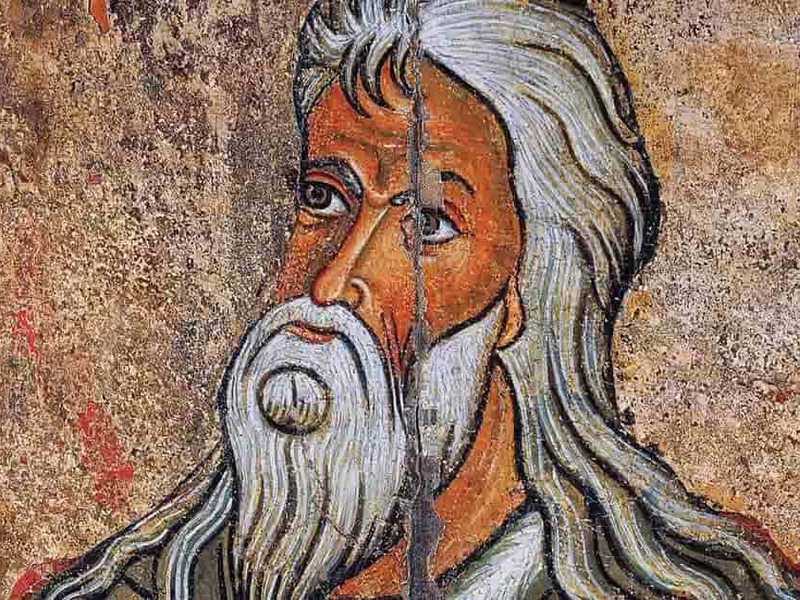
elijah-1200x630-min
Biblical Horizons

Elijah’s Exodus

1 Kings 17, which abruptly introduces Elijah into the history of the northern kingdom, is a carefully constructed literary unit. In its basic structure, it follows a clear exodus-return pattern. Like Jacob and his sons, Elijah was driven out of the land by a famine (vv. 1-4). In exile, Elijah…

by Peter LeithartJune 17, 1992

ales-krivec-4mibe6zg5r0-unsplash
Biblical Studies

All Things New

Now the Pharisees, who were lovers of money, were listening to all these things and they were scoffing at Him. And He said to them, "You are those who justify yourselves in the sight of men, but God knows your hearts; for that which is highly esteemed among men is…

by Mark HorneJune 6, 1992
aaron-burden-h8s0pf2rcqs-unsplash
Biblical Chronology

Chronologies and Kings, Part 11: The Knots of 2 Kings 11-14

In the year 3119, Ahaziah of Judah and Jehoram of Israel were both slain by Jehu as he carried out his God-appointed task of eliminating the seed and house of Ahab (2 Kings 9:13-33). Since the kings of Israel are usually counted as beginning their reign in the same year…

by James B. JordanMay 24, 1992
trnava-university-beeyeib-am8-unsplash
Biblical Studies

Gleanings from Robert Alter’s "Art of Biblical Narrative"

One of the most important developments in Biblical studies in recent years has been a movement of scholars devoted to studying the literary techniques of the Biblical writers. Tremper Longman, III of Westminster Theological Seminary has treated this movement from a Reformed perspective in his Literary Approaches to Biblical Interpretation…

by Peter LeithartMay 17, 1992
ian-schneider-iqbc4vu4ypq-unsplash
Biblical Horizons

Tentmaking

And because [Paul] was of the same trade, he stayed with [Aquila and Priscilla] and they were working; for by trade they were tentmakers (Acts 18:3). The fact that Paul was by trade a tentmaker has usually been taken as the springboard for a discussion of whether pastors should have…

by James B. JordanApril 24, 1992
screen-shot-2022-05-12-at-12-07-23-pm
Biblical Studies

Chronologies and Kings, Part 10: Jehoram of Judah

I pointed out in Chronologies and Kings Part 9 that the years of Judah’s kings are given in chronological fashion. "When we read of a Judahite king’s reign as lasting 4 years, it means that 4 years of the chronology have been given to him, and there is no chronological…

by James B. JordanApril 24, 1992

Showing page 290 of 309

See all
See all
Philosophy

Speech

Franz Rosenzweig saw that philosophy proceeds only through humility, which means through speech and dialogue rather than abstract thought: “The ‘speaking thinker’ cannot anticipate anything: he must be able to wait because he depends on the word of the other: he requires time . . . The ‘speaking thinker’ speaks…

January 4, 2006

Shepherding spirit

Thanks to my friend Alex Trochez for stimulating the following line of thought. According to Jordan’s count (confirmed by my own), the phrase “shepherding wind” occurs twice in Ecclesiastes by itself (1:17; 4:6) and 7 times with the word “vapor” (1:14; 2:11, 17, 26; 4:4, 16; 6:9). In addition, the…

January 4, 2006

Solomonic epistemology

Solomon pursued knowledge and wisdom, and concluded that the pursuit was no more than vapor and shepherding wind, and besides the more he knew the more pain and grief he suffered (1:17-18). There is so much in this wispy world that we cannot know: Whether the result of our works…

January 4, 2006

Design

John Thackara ‘s In the Bubble: Designing in a Complex World , a brief for more human, and more eco-friendly, technology and economy, is full of insights that challenge much of the conventional wisdom about the “information age.” A sampling: We do not live in “the ‘weightless’ new economy we…

January 3, 2006

Beginnings

Solomon captures the aporia of beginnings in Ecclesiastes 3:15: “That which is has been already, and that which will be has already been, for God seeks what has passed by.” This not only restates “there is nothing new under the sun” but also suggests that the search for an origin…

January 2, 2006

Sermon Outline, First Sunday After Epiphany

INTRODUCTION Solomon begins Ecclesiastes talking about the regularities of the natural world (1:3-11), and in chapter 3 turns to the regular rhythms of human life (3:1-8). THE TEXT “To everything there is a season, a time for every purpose under heaven: A time to be born, and a time to…

January 2, 2006

Showing page 1904 of 2212

Browse by Category

In Medias Res

Your weekly digest for all things Theopolis.

Donate

Theopolis is nearly 100% donor-supported. Consider joining us on our mission.