
Theopolis Logo

Writing

Explore our collection of theological essays, biblical studies, and reflections on faith and culture.

See all
cloister

Gatekeepers

1 Chronicles 9:1 seems to bring the genealogies of 1 Chronicles to an end. The Chronicler has recorded the genealogy of the human race from Adam, focusing on the descendants of Abraham through Jacob. Summing it all up, he says, “So all Israel was enrolled by genealogies; and behold, they…

by Peter LeithartJune 21, 2016
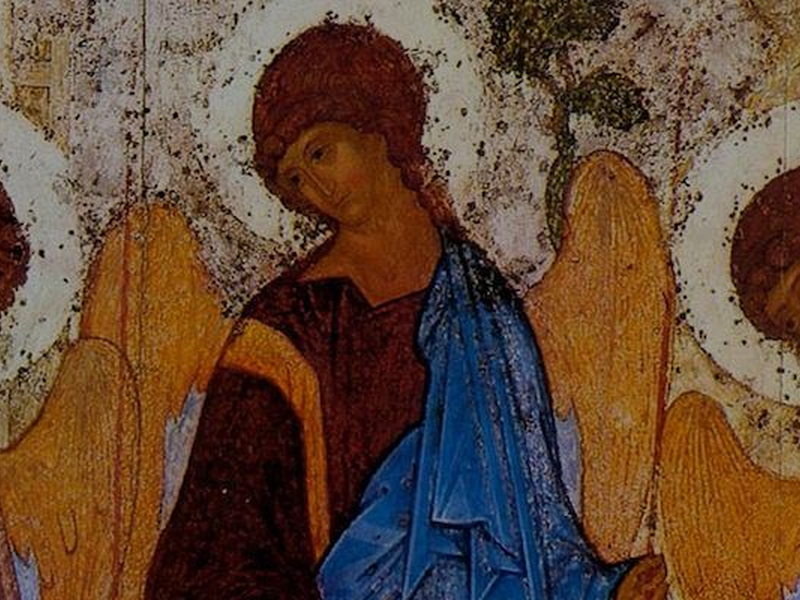
trinity-1-2
Trinity

Are the Divine Persons Persons?

The “personalist” understanding of the Trinity, articulated most influentially in the work of John Zizioulas, has fallen on hard times. Recent scholars have attacked Zizioulas’s idea that Cappadocian Trinitarianism represented an ontological revolution, hammering on the distinction between divine and human personhood. Michel Barnes’s conclusion is the most drastic of…

by Peter LeithartJune 16, 2016
img_4660-2
Architecture

On Biblical Theology

Biblical Theology is often defined as the historical unfolding of God’s revelation, or of God’s revelation and of the history of his covenantal redemption and transformation of humanity and the world. In practice, Biblical Theology is usually broader than this, and also includes the study of literary structure and of…

by James B. JordanJune 14, 2016
laughing_statue_by_xxbobbiie-d5f0meh-2
Humor

Wise Laughter

We are made to be happy. Created to enter into the eternal joy of God, our whole being inclines to that end, but the fallen world has put forth barriers and by our own sin we bar ourselves from that endless delight, and death blinds us to that reality. Yet…

by Remy WilkinsJune 7, 2016
img_7664
Liturgy

Why Theopolis? Take Two

At the end of Revelation, John sees the heavenly city descending to earth. The city shines with the brilliance of God's glory, which lightens the nations, so that kings bring their glory to the city. This is not a vision of the final new heaven and new earth. It's a…

by Peter LeithartJune 2, 2016
trinity-1-2
Attributes of God

How Can We Talk About God?

“No one has ever seen God,” writes John (John 1:18). If this is the case, then how can we speak about God? Some people say we actually cannot. Or at least we cannot speak about God positively, i.e. who He is. We can only say who or what God is…

by Bogumil JarmulakMay 31, 2016

Showing page 130 of 309

See all
See all

Solomon’s imagination

Iain Provan doubts that Solomon wrote Ecclesiastes . One of the “striking” bits of evidence is “that many of the later passages in Ecclesiastes appear to be written from a non-Solomonic point of view (i.e., from the perspective of the subject rather than the ruler, e.g., 5:8-9; 8:1-9).” It’s a…

December 31, 2005

Vapor and Wind

More thoughts on Ecclesiastes, stealing, as always, from James Jordan . The image of “shepherding wind” has a particular application to the king, who is the shepherd of flock of Israel. Solomon recognizes that ruling a kingdom is like trying to shepherd wind, which is of course impossible for human…

December 31, 2005

Remnant and reunion

Some additional thoughts about the role of the “remnant” in Israel’s history, which supercede earlier posts on the subject. 1) The word “remnant” in the OT normally refers to the whole of Israel that survives a judgment, rather than to some sub-division of Israel that remains faithful during a period…

December 30, 2005
History

Christopher Dawson and the New Age

Christopher Dawson, who died in 1970, was one of the leading historians of the twentieth century. A devout Roman Catholic, hededicated his career, and some 25 books, to understanding andexplaining history, particularly Western history, from aChristian perspective. One little book, Christianity and the New Age, provides a glimpse of thewisdom…

December 30, 2005
Philosophy

What I Think of Postmodernism

As if anyone cares, here are some unfinished and amateurish comments on “what I think of postmodernism.” 1) First, it is helpful to distinguish, as many writers do, between postmodernism and postmodernity. The latter is a cultural/political mood or condition, referring to movements in architecture, film, and other arts that…

December 30, 2005
Theology

Foundationalism and Inerrancy

Somewhere in his blog discussion of Brian McLaren’s Generous Orthodoxy , Doug Wilson indicated that McLaren considers inerrancy a sell-out to modernist foundationalism. To support this, Doug pointed me to this quotation from John Franke’s foreword to McLaren’s book: “In the nineteenth and twentieth centuries, the foundationalist impulse produced a…

December 30, 2005

Showing page 1906 of 2212

Browse by Category

In Medias Res

Your weekly digest for all things Theopolis.

Donate

Theopolis is nearly 100% donor-supported. Consider joining us on our mission.



