Theopolis Logo

Writing

Explore our collection of theological essays, biblical studies, and reflections on faith and culture.

See all
preston-goff-xncifslw0jw-unsplash
Biblical Theology

The Old Testament Precursor to the Pastor

WHAT IS THE OT PRECURSOR OF THE NT OFFICE OF PASTOR? HOW DOES THE FORMER ILLUMINATE THE LATTER? The first problem to address is: how do we know that there is an office of pastor in the New Testament? 1 Perhaps the way the question is put may permit me…

by Mark HorneJune 5, 1999

nasa-vhsz50aafas-unsplash
Biblical Horizons

The Geocentricity Question

[This essay was originally published in December, 1981, in The Biblical Educator , a publication of the Institute for Christian Economics, and again with slight revisions in Contra Mundum 7 (Spring, 1993). It is reprinted here as a supplement to my book Creation in Six Days .] In 1979, Dr.…

by James B. JordanJune 4, 1999
screen-shot-2022-05-12-at-12-07-23-pm
Biblical Horizons

Call Me Ishmael, Part 2

Anyone seeking to reverse the meaning of this promise needs to come to grips not only with the phrase "God was with the lad" later on, but also with Hagar’s response in 16:13. She worships Yahweh, putting her trust in Him and obeying Him. In fact, Hagar is at the…

by James B. JordanJune 4, 1999
aaron-burden-h8s0pf2rcqs-unsplash
Biblical Horizons

Call Me Ishmael, Part 1

Ishmael is the narrator of Melville’s fantasy-romance Moby Dick. Melville takes up the traditional view of Ishmael as a wayward son of Abraham, driven out solely because of the Divine "caprice" of election, an angry man with his hand raised against all other men. He is a fitting "anti-hero," or…

by James B. JordanMay 4, 1999
aaron-burden-1ebsmyrau-s-unsplash
Isaiah

Five Cities and Isaiah 19

There were five cities at the center of the Canaanite culture in the circle of the Jordan, a place like the Garden of Eden, like the land of Egypt, before it became the Dead Sea at the destruction of the cities (Genesis 13:10). Genesis 14:2 tells us their names: Sodom,…

by James B. JordanApril 4, 1999
phillip-medhurst-abraham-and-lot
Biblical Horizons

Lot

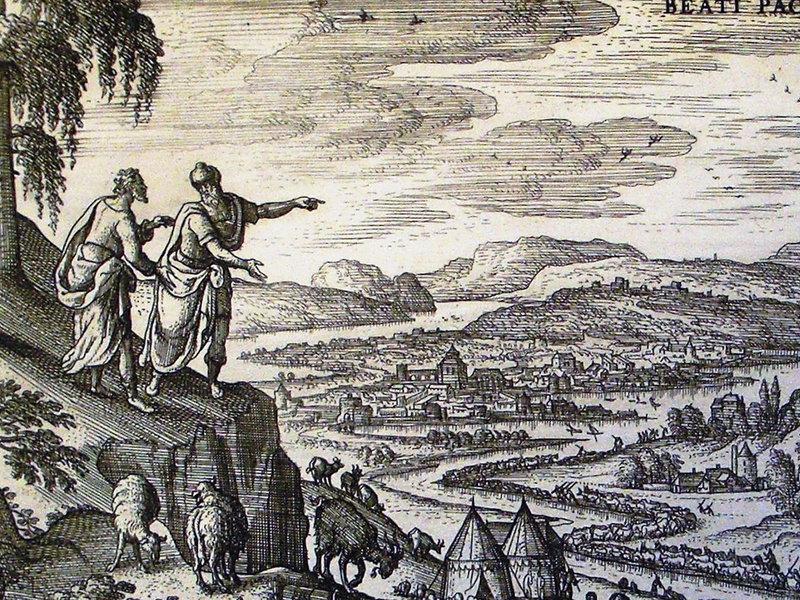
Meditations by James B. Jordan Genesis 19, the destruction of Sodom and the rescue of Lot, is part two of a story that begins in Genesis 18. These two chapters happen in one 24-hour period: noon and evening in Mamre, and midnight and daybreak in Sodom. God and two angels…

by James B. JordanApril 4, 1999

Showing page 244 of 309

See all
See all

Jehoram and Elisha

The history of the Omrides during the ministry of Elisha takes a curious turn. Instead of confronting the king with his sin, as Elijah generally did, Elisha instead repeatedly gives assistance to the son of Ahab (2 Kings 3; 6-7). Jehoram wavers, sometimes whining, sometimes hostile to Elisha, ultimately respectful.…

October 27, 2005

New Joseph

Dothan is mentioned in only two places in the Old Testament: Gen 37, at the beginning of the Joseph narrative, and 2 Kings 6, the place where the Aramean king attempts to find Elisha. Jacob sends Joseph to take food to his brothers, and he initially does not find them…

October 27, 2005

Things that are not

Jacques Ellul helpfully points out that God frightens away the Arameans in 2 Kings 7 by a mere sound, and it is a sound that has no physical cause. God overcomes things that are, Ellul says, through things that are not.

October 27, 2005

Food in 1-2 Kings

A critical issue throughout 1-2 Kings is the question of who provides bread. Early on, it’s Solomon, whose table overflows with good things and who rules an Israel that is continuously rejoicing and feasting. Kings continue to supply tables after the division of the kingdom, but they are often tables…

October 27, 2005

Puns in 2 Kings 7

Iain Provan points to two entertaining puns in the story of the siege of Samaria in 2 Kings 6-7. The first puns on “lepers” (Heb. MISORAIM) and “Egypt” (Heb. MIZRAIM): The Arameans become frightened by the sound of an army, thinkin that Egyptians are attacking; it’s only lepers, though, scrounging…

October 27, 2005

Blood and life

In his recent Concordia commentary on Leviticus, John Kleinig gives a good summary of what I think is the best explanation of the blood prohibtiion of Lev 17: “many animists regard blood as the most potent of all ritual substances. The blood of an animal was either drunk or, more…

October 27, 2005

Showing page 1932 of 2212

Browse by Category

In Medias Res

Your weekly digest for all things Theopolis.

Donate

Theopolis is nearly 100% donor-supported. Consider joining us on our mission.