Theopolis Logo

Writing

Explore our collection of theological essays, biblical studies, and reflections on faith and culture.

See all
tanner-mardis-xuxghzhibn4-unsplash-1-2
Biblical Studies

Tweets-turned-Notes on the Bible’s Chronology

Summary In what follows, I will consider the “year-stamps” employed in Scripture, i.e., statements of the form, “Such-and-such an event took place in the Xth year of Y.” In the process, I will suggest some ways in which the Biblical narrative might relate to events in the extra-Biblical world, though…

by James BejonJuly 16, 2019
durer-prodigal-son-2
Luke

Perspectives on the Prodigal, (Part 2)

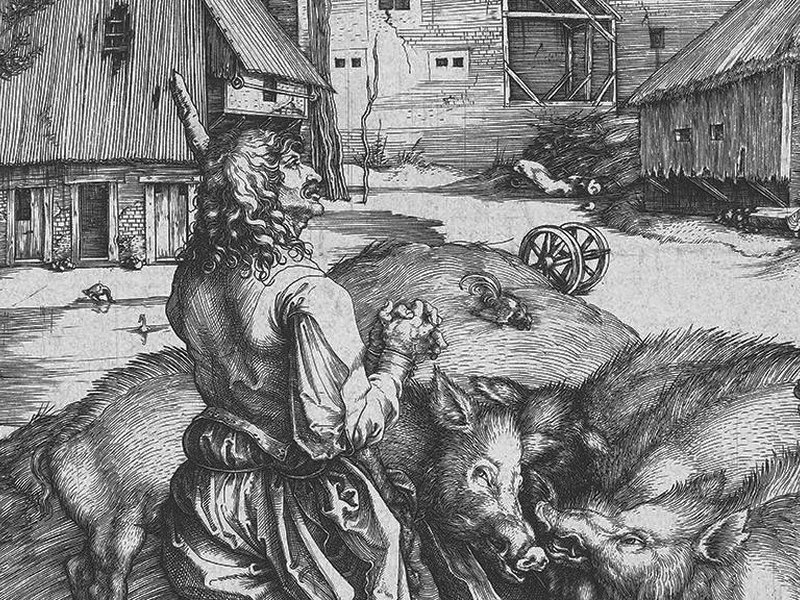
In the first essay on the parable of the Prodigal Son, I suggested that the problems commentators and others encounter in interpreting Jesus three-part parable are not accidental. These are not just problems in our ignorance of cultural background. They are intentional features of the stories —stories designed to poke…

by Ralph Allan SmithJuly 11, 2019
durer-prodigal-son-2
Luke

Perspectives on the Prodigal, (Part 1)

The story of the Prodigal Son is perhaps the most well-known story in the Bible. As others have observed, it may also be one of the most misunderstood. In two short essays, I will point out features of this story that are commonly neglected, aspects of Jesus’ parable that might…

by Ralph Allan SmithJuly 9, 2019
de-rijke-man-en-de-arme-lazarus-by-jacopo-da-ponte-16th-century
Luke

Lazarus and the Rich Man

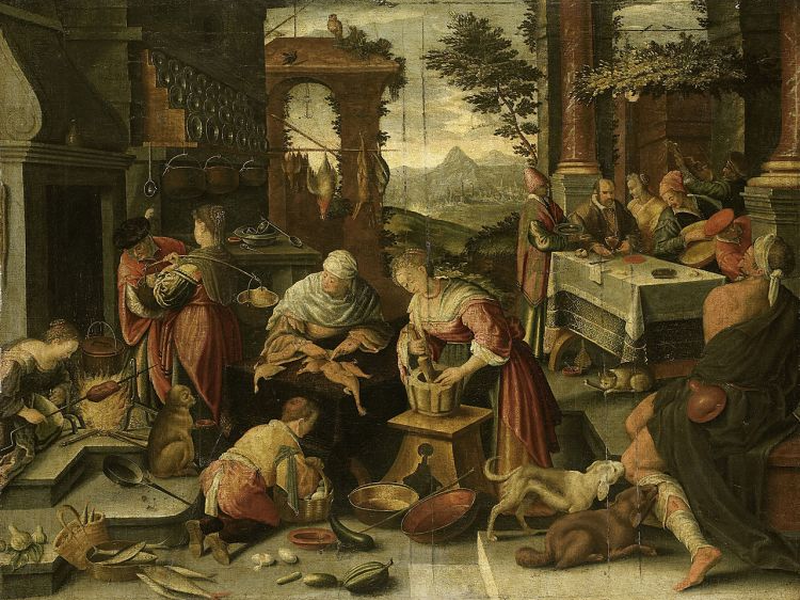
The parable of Lazarus and the nameless rich man is not an independent story. It is part of a long context that begins in Luke 15:1, where Jesus is eating with tax collectors and sinners and the scribes and Pharisees grumble. In response to their hardheartedness, Jesus tells a three-part…

by Ralph Allan SmithJuly 4, 2019
aaron-burden-uynrnfdkjwg-unsplash
Luke

Everybody has Dropsy - Luke 14:1-24

The Bible is written so that even when a reader cannot pick up on what might be deeper or more detailed aspects of a text, there is virtually always a message to be heard. In the ancient world, where the “reader” of Scripture would likely be a church official facing…

by Ralph Allan SmithJuly 2, 2019
communion
Biblical Theology

Fruit Trees and Grain Plants

The distinction between garden (or vineyard) and field begins in Genesis 2. This relates to the ordering of the formless world. Plants of the field are contrasted with the garden planted by God in Genesis 2:5&8. Later on, under the Old Covenant the Israelites will be required to keep their…

by James B. JordanJune 27, 2019

Showing page 77 of 309

See all
See all

Sex as vestigia trinitatis

Barth famously argues there is an I-Thou within humanity itself that manifests the inner reciprocity, the differentiation and union, that is the life of the Trinity: “that it is in the differentiation of man and woman, the relation of sex, that there is this repetition, is an indication of the…

September 22, 2005
Theology

Sapientia and Scientia

Augustine taught that scientia, knowledge of historical events, was necessary for Christian theology, but that all theology aspired to love of God, which is more closely bound with “sapientia” or wisdom. By the time Aquinas raised the question of whether sacred doctrine is a form of wisdom, however, the terms…

September 22, 2005

1 Kings 13 again

James K. Mead has a fine article on 1 Kings 13 from an issue of VT several years ago. He proposes a parallel structure for the whole chapter: Scene 1 (vv. 1-10) matches scene 3 (vv. 20-25); in both there is a calling out, a pronouncement from Yahweh, a sign,…

September 21, 2005

Amos and 1 Kings 13

In an article on 1 Kings 13, Werner Lemke noted a number of parallels with the prophecy of Amos, specifically parallels between the man of God from Judah and Amos himself. 1) Both are from Judah and prophesy at Bethel. 2) Both confront authorites at Bethel. 3) Both predict the…

September 21, 2005

Sermon Outline, September 25

INTRODUCTION One of the great evils of American Christianity is the idolization of the family. American Christians believe that blood is thicker than baptismal water, and that the family is a redemptive institution. But the primary family for Christians is the “brotherhood” of the church, and Jesus stressed that discipleship…

September 20, 2005
Biblical Studies

Metonymic Imagination

One sometimes hears references to a “metaphorical imagination,” but biblical imagery often works also by metonymy. It is not only that the tree of, say, Psalm 1 “stands for” strength or stability. It is that, as the Psalm makes clear by emphasizing the fruitfulness or the tree who is a…

September 20, 2005

Showing page 1943 of 2212

Browse by Category

In Medias Res

Your weekly digest for all things Theopolis.

Donate

Theopolis is nearly 100% donor-supported. Consider joining us on our mission.