Theopolis Logo

Writing

Explore our collection of theological essays, biblical studies, and reflections on faith and culture.

See all
tanner-mardis-xuxghzhibn4-unsplash-1-2
Biblical Studies

Tweets-turned-Notes on the Bible’s Chronology

Summary In what follows, I will consider the “year-stamps” employed in Scripture, i.e., statements of the form, “Such-and-such an event took place in the Xth year of Y.” In the process, I will suggest some ways in which the Biblical narrative might relate to events in the extra-Biblical world, though…

by James BejonJuly 16, 2019
durer-prodigal-son-2
Luke

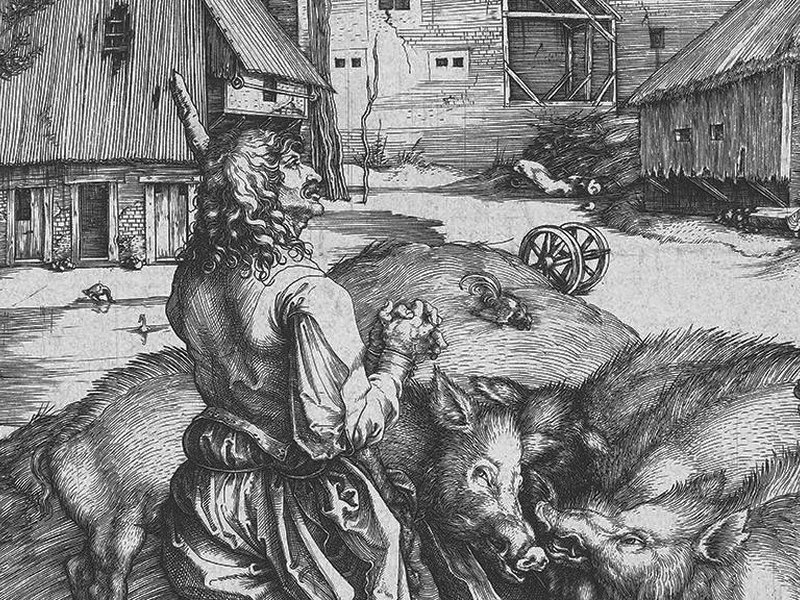
Perspectives on the Prodigal, (Part 2)

In the first essay on the parable of the Prodigal Son, I suggested that the problems commentators and others encounter in interpreting Jesus three-part parable are not accidental. These are not just problems in our ignorance of cultural background. They are intentional features of the stories —stories designed to poke…

by Ralph Allan SmithJuly 11, 2019
durer-prodigal-son-2
Luke

Perspectives on the Prodigal, (Part 1)

The story of the Prodigal Son is perhaps the most well-known story in the Bible. As others have observed, it may also be one of the most misunderstood. In two short essays, I will point out features of this story that are commonly neglected, aspects of Jesus’ parable that might…

by Ralph Allan SmithJuly 9, 2019
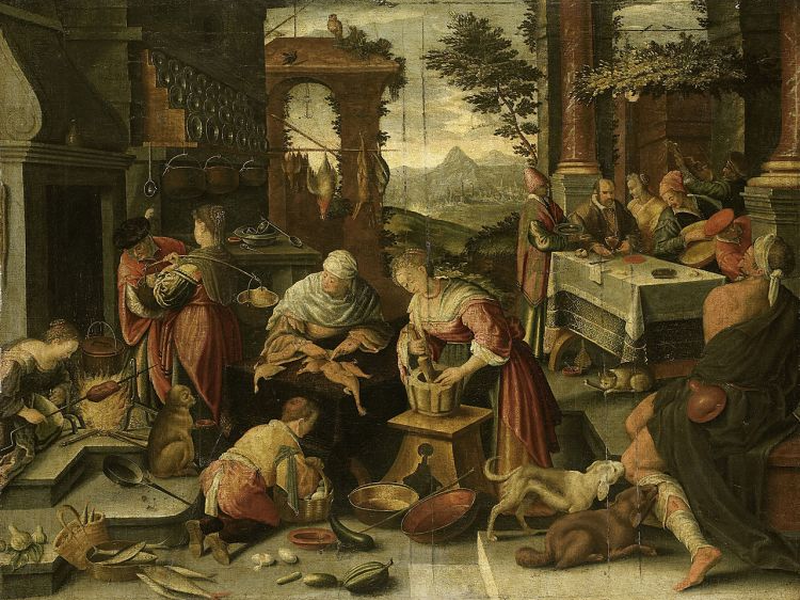
de-rijke-man-en-de-arme-lazarus-by-jacopo-da-ponte-16th-century
Luke

Lazarus and the Rich Man

The parable of Lazarus and the nameless rich man is not an independent story. It is part of a long context that begins in Luke 15:1, where Jesus is eating with tax collectors and sinners and the scribes and Pharisees grumble. In response to their hardheartedness, Jesus tells a three-part…

by Ralph Allan SmithJuly 4, 2019
aaron-burden-uynrnfdkjwg-unsplash
Luke

Everybody has Dropsy - Luke 14:1-24

The Bible is written so that even when a reader cannot pick up on what might be deeper or more detailed aspects of a text, there is virtually always a message to be heard. In the ancient world, where the “reader” of Scripture would likely be a church official facing…

by Ralph Allan SmithJuly 2, 2019
communion
Biblical Theology

Fruit Trees and Grain Plants

The distinction between garden (or vineyard) and field begins in Genesis 2. This relates to the ordering of the formless world. Plants of the field are contrasted with the garden planted by God in Genesis 2:5&8. Later on, under the Old Covenant the Israelites will be required to keep their…

by James B. JordanJune 27, 2019

Showing page 77 of 309

See all
See all

Turn of civilization

At the end of his wonderful essay on “Art and Sacrament,” the Welsh poet and painter David Jones included a fragment that he wrote and rewrote over several decades. Here is wisdom: I said, ah! what shall I write? I inquired up and down (he’s tricked before with his manifold…

September 14, 2005

The Pianist and the Nazis

In a 2003 TNR review of Roman Polanski’s Oscar-winning film, The Pianist , Michael Oren gives information about Wilm Hosenfeld, the German officer who assists Szpilman: “while scrounging in an abandoned house for food, Szpilman comes face-to-face with a German officer. Instead of drawing his revolver, the officer asks Szpilman…

September 14, 2005
Literature

Marilynne Robinson

Here are a couple of selections from a September 2004 New Yorker interview with Marilynne Robinson: Q. “In your nonfiction collection, ‘The Death of Adam: Essays on Modern Thought,’ you wrote about the sixteenth-century theologian John Calvin, and about his strong sense of humanism and tolerance and his importance to…

September 14, 2005

Odysseus’ return to himself

Charles Segal argues in his Singers, Heroes, and Gods in the Odyssey that Odysseus’ return to Ithaca is a return to himself. This works in several dimensions. Through the second half of the epic, various characters reconstruct the story of Odysseus’ life - the story of his naming and the…

September 14, 2005

Odysseus’ return to himself

Charles Segal argues in his Singers, Heroes, and Gods in the Odyssey that Odysseus’ return to Ithaca is a return to himself. This works in several dimensions. Through the second half of the epic, various characters reconstruct the story of Odysseus’ life - the story of his naming and the…

September 14, 2005
Theology

Matter and spirit

Discussing the question of the corporeality of angels, Herman Bavinck argues that angels cannot have bodies because that would imply they are material and “matter and spirit are mutually exclusive.” He charges that “it is a form of pantheistic identity philosophy to mix the two and to erase the distinction…

September 13, 2005

Showing page 1946 of 2212

Browse by Category

In Medias Res

Your weekly digest for all things Theopolis.

Donate

Theopolis is nearly 100% donor-supported. Consider joining us on our mission.