Theopolis Logo

Writing

Explore our collection of theological essays, biblical studies, and reflections on faith and culture.

See all
sixteen-miles-out-al48tflf4e8-unsplash
Food

Gluttony In The Bible (As Opposed To Gluttony In The American Church)

In the Bible, fatness is such a blessing, that it is especially hard to understand why wicked men are permitted to enjoy such a state. It requires a theodicy and faith in God. Thus: “For they have no pangs until death; their bodies are fat and sleek . They are…

by Mark HorneAugust 12, 2013

jeremy-yap-j39x2xx_8cq-unsplash
How to Worship

Biblical Worship (Video with James B. Jordan)

[fve]http://vimeo.com/71901553[/fve]

by Peter LeithartAugust 8, 2013
chris-bair-ndczc5739ck-unsplash
Deuteronomy

Holy Things for Holy People

The allusion to the Exodus story is contained in the first words of Deuteronomy 14:1 — “ye are the sons of Yahweh your God” — as well as in 14:2 in the use of the technical term translated “treasured possession,” “His own possession,” “peculiar people,” “precious people,” and so forth.…

by Ralph Allan SmithAugust 5, 2013
adam-and-eve-in-the-garden-of-eden-wenzel-peter
Deuteronomy

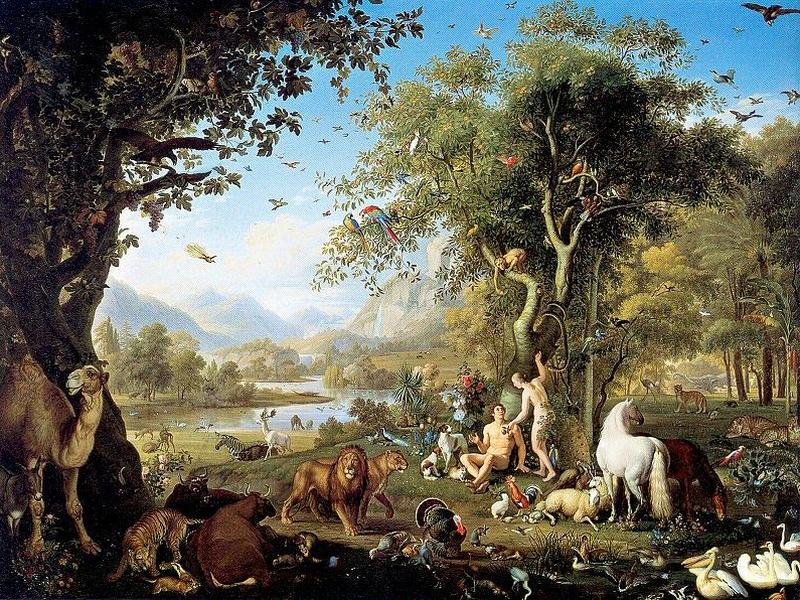
Forbidden Foods

I have argued that Deuteronomy 14:1-21 is an independent literary unit that applies the Third Word to the lives of Israelites from the time of Moses and Joshua. In this short pericope, Moses suggests broad and deep meaning by means of literary allusion to the stories of the creation and…

by Ralph Allan SmithJuly 31, 2013
david-weber-fwuo_zluhnw-unsplash
How to Worship

Pro-Sacramental Reformation

In his recently republished The New Creation , the late, delightful Herbert McCabe defends the priesthood of the plebs as roundly as anyone could want. Citing Hebrews, he claims that "there is an essential difference between the Christian community and the community of the Old Law, or any other religious…

by Peter LeithartJuly 29, 2013
eric-ward-7kqe_8meex8-unsplash
Augustine

Sexual Idolatry

Augustine famously prayed, “Our hearts our restless until they rest in You.” True indeed. Being creatures, we inherently sense our ontological poverty—our innate condition of dependence—and are compelled to find a sense of security. And it is also true—as Augustine’s own narrative painfully illustrates—that one of the things we most…

by Gerald HiestandJuly 24, 2013

Showing page 190 of 309

See all
See all
Philosophy

Cinematic perception and Zeno’s arrow

Henri Bergson attempted to solve the paradox of Zeno’s arrow (which can never cover the infinite points between the bow and the target, and yet does) by calling attention to the implicit spatialization of time within the paradox. The space in which movement takes place is divisible, but the duration…

May 5, 2005
Philosophy

Cinematic perception and Zeno’s arrow

Henri Bergson attempted to solve the paradox of Zeno’s arrow (which can never cover the infinite points between the bow and the target, and yet does) by calling attention to the implicit spatialization of time within the paradox. The space in which movement takes place is divisible, but the duration…

May 5, 2005

Romans 8, continued

INTRODUCTION Paul is talking about the liberation of creation from bondage to decay and corruption into freedom. This raises the question of the time frame for the fulfillment of this prophecy. It is normally taken as a reference to the end of the world. The ?redemption of the body?E(v. 23)…

May 5, 2005

Osiander and the Reformed Tradition

Julie Canlis has a helpful article on Calvin’s response to Osiander in the International Journal of Systematic Theology (6:2 [2004]). A few points are worth highlighting: 1) She sees the response to Osiander as part of the reason why Reformed theologians tend to be skittish about talk of “participation.” Calvin,…

May 5, 2005

Justification and Reformation

In two older articles, Alister McGrath examines the sources for the Reformation doctrine of justification, covering ground also covered in his 2-volume Iustitia Dei. The first article, published in the Harvard Theological Review in 1982 (75:2, pp. 219-242) examines the evidence for claiming that the Reformation doctrine of justification was…

May 4, 2005
Theology

More on Hart, The Beauty of the Infinite

Covenant of Light. This section concludes Part I of The Beauty of the Infinite , entitled ?Dionysus Against the Crucified.?E With this section, Hart concludes his critique of classical, modern and postmodern thought, and the outlines of the Christian ontology that interrupted the history of metaphysics and that he develops…

May 4, 2005

Showing page 1984 of 2212

Browse by Category

In Medias Res

Your weekly digest for all things Theopolis.

Donate

Theopolis is nearly 100% donor-supported. Consider joining us on our mission.