Theopolis Logo

Writing

Explore our collection of theological essays, biblical studies, and reflections on faith and culture.

See all
cloister

Gatekeepers

1 Chronicles 9:1 seems to bring the genealogies of 1 Chronicles to an end. The Chronicler has recorded the genealogy of the human race from Adam, focusing on the descendants of Abraham through Jacob. Summing it all up, he says, “So all Israel was enrolled by genealogies; and behold, they…

by Peter LeithartJune 21, 2016
trinity-1-2
Trinity

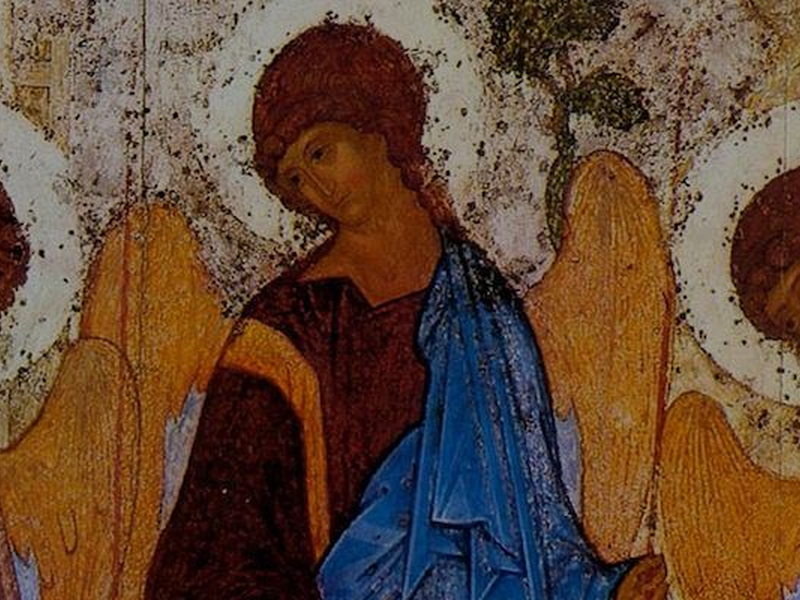
Are the Divine Persons Persons?

The “personalist” understanding of the Trinity, articulated most influentially in the work of John Zizioulas, has fallen on hard times. Recent scholars have attacked Zizioulas’s idea that Cappadocian Trinitarianism represented an ontological revolution, hammering on the distinction between divine and human personhood. Michel Barnes’s conclusion is the most drastic of…

by Peter LeithartJune 16, 2016
img_4660-2
Architecture

On Biblical Theology

Biblical Theology is often defined as the historical unfolding of God’s revelation, or of God’s revelation and of the history of his covenantal redemption and transformation of humanity and the world. In practice, Biblical Theology is usually broader than this, and also includes the study of literary structure and of…

by James B. JordanJune 14, 2016
laughing_statue_by_xxbobbiie-d5f0meh-2
Humor

Wise Laughter

We are made to be happy. Created to enter into the eternal joy of God, our whole being inclines to that end, but the fallen world has put forth barriers and by our own sin we bar ourselves from that endless delight, and death blinds us to that reality. Yet…

by Remy WilkinsJune 7, 2016
img_7664
Liturgy

Why Theopolis? Take Two

At the end of Revelation, John sees the heavenly city descending to earth. The city shines with the brilliance of God's glory, which lightens the nations, so that kings bring their glory to the city. This is not a vision of the final new heaven and new earth. It's a…

by Peter LeithartJune 2, 2016
trinity-1-2
Attributes of God

How Can We Talk About God?

“No one has ever seen God,” writes John (John 1:18). If this is the case, then how can we speak about God? Some people say we actually cannot. Or at least we cannot speak about God positively, i.e. who He is. We can only say who or what God is…

by Bogumil JarmulakMay 31, 2016

Showing page 130 of 309

See all
See all

Mass v. Manners

C atherine Pickstock claims that the rejection of liturgy is central to modernity. Having refused the integrations of liturgy, modernity forges various forms of pseudo-liturgy, pale substitutes to accomplish what the liturgy once did in Western society. One of these pseudo-liturgies is civility: “Once the common ritual basis in which…

February 24, 2017

China - Guardian of Western Civ

D avid Goldman compares “transgressors” Milo Yiannopoulos and Yuja Wang . Milo's transgressiveness is his essence; Wang, a thirty-year-old Chinese pianist, plays the Western repertoire, her transgressiveness evident in her habit of performing in micro-dresses and revealing evening gowns. (Goldman wrote this just before Milo's public humiliation.) Despite her Asian…

February 24, 2017

Weak Nationalism?

P ete Spiliakos makes the counter-intuitive point that Trump's nationalism will fail politically unless it can become more nationalist: Trump’s ‘Make America Great Again' slogan is, paradoxically, insufficiently nationalist. MAGA leaves out African Americans for whom America was not noticeably greater in the past—when, for instance, blacks were prevented from…

February 24, 2017

Adamic Israel

1 Chronicles 27:25–31 lists the officials in charge of David's stores and lands. Twelve men are named and each has an area of responsibility: 1. Azmaveth, king's treasuries, v. 25a 2. Jonathan, treasuries in the field, v. 25b 3. Ezri, supervisor of field workers, v. 26 4. Sheim, vineyards, v.…

February 23, 2017

Typology, Toleration, and the Metaphysics of Hospitality

I n an article on “Liturgy, Art and Politics,” Catherine Pickstock argues that the liturgy holds together universal and particular in a unique way. It does this in part because it “extends the liturgical tension between the ideal and the real to an extreme, and yet still holds the polarities…

February 23, 2017

Zwingli, Matter, Mind

I n her meticulous and revealing study of The Eucharist in the Reformation , Lee Palmer Wandel argues that Luther and Zwingli divided at Marburg because their respective positions were incommensurate, incomprehensible each to the other. Specifically, they “divided over the nature of Christ's body,” but that point of division…

February 22, 2017

Showing page 203 of 2212

Browse by Category

In Medias Res

Your weekly digest for all things Theopolis.

Donate

Theopolis is nearly 100% donor-supported. Consider joining us on our mission.