Theopolis Logo

Writing

Explore our collection of theological essays, biblical studies, and reflections on faith and culture.

See all
tanner-mardis-xuxghzhibn4-unsplash-1-2
Biblical Studies

Tweets-turned-Notes on the Bible’s Chronology

Summary In what follows, I will consider the “year-stamps” employed in Scripture, i.e., statements of the form, “Such-and-such an event took place in the Xth year of Y.” In the process, I will suggest some ways in which the Biblical narrative might relate to events in the extra-Biblical world, though…

by James BejonJuly 16, 2019
durer-prodigal-son-2
Luke

Perspectives on the Prodigal, (Part 2)

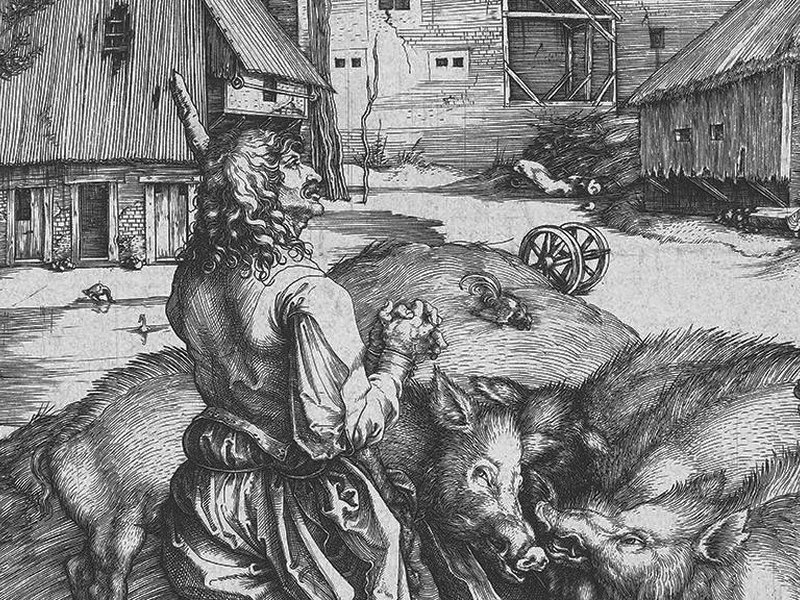
In the first essay on the parable of the Prodigal Son, I suggested that the problems commentators and others encounter in interpreting Jesus three-part parable are not accidental. These are not just problems in our ignorance of cultural background. They are intentional features of the stories —stories designed to poke…

by Ralph Allan SmithJuly 11, 2019
durer-prodigal-son-2
Luke

Perspectives on the Prodigal, (Part 1)

The story of the Prodigal Son is perhaps the most well-known story in the Bible. As others have observed, it may also be one of the most misunderstood. In two short essays, I will point out features of this story that are commonly neglected, aspects of Jesus’ parable that might…

by Ralph Allan SmithJuly 9, 2019
de-rijke-man-en-de-arme-lazarus-by-jacopo-da-ponte-16th-century
Luke

Lazarus and the Rich Man

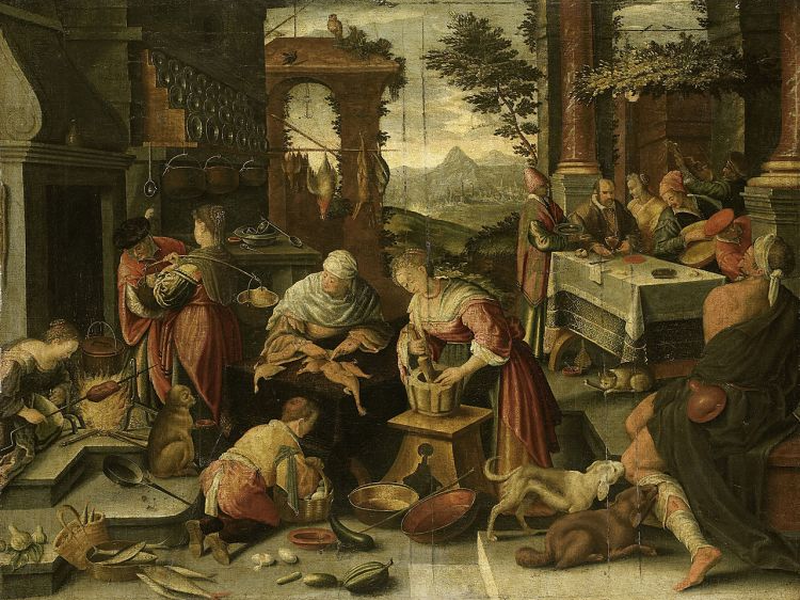
The parable of Lazarus and the nameless rich man is not an independent story. It is part of a long context that begins in Luke 15:1, where Jesus is eating with tax collectors and sinners and the scribes and Pharisees grumble. In response to their hardheartedness, Jesus tells a three-part…

by Ralph Allan SmithJuly 4, 2019
aaron-burden-uynrnfdkjwg-unsplash
Luke

Everybody has Dropsy - Luke 14:1-24

The Bible is written so that even when a reader cannot pick up on what might be deeper or more detailed aspects of a text, there is virtually always a message to be heard. In the ancient world, where the “reader” of Scripture would likely be a church official facing…

by Ralph Allan SmithJuly 2, 2019
communion
Biblical Theology

Fruit Trees and Grain Plants

The distinction between garden (or vineyard) and field begins in Genesis 2. This relates to the ordering of the formless world. Plants of the field are contrasted with the garden planted by God in Genesis 2:5&8. Later on, under the Old Covenant the Israelites will be required to keep their…

by James B. JordanJune 27, 2019

Showing page 77 of 309

See all
See all

Allotments

1 Chronicles 23–27 describes the distribution of responsibilities for the house of Yahweh (chs. 23–26) and the management of the king's palace and estates (ch. 27). Using lots, David and the priests create “divisions” of priests, Levites, singers, gatekeepers, treasurers, and others. “Division” translates the Hebrew machaloqet , derived from…

February 16, 2017

Descartes, Nihilist

I n her After Writing , Catherine Pickstock argues that the Cartesian Cogito is grounded in a Cartesian ontology, which is in turn related to a Cartesian politics. According to Descartes' Regulae , she says, “being is defined as that which is clear and distinct, available to absolute and certain…

February 16, 2017

Art, Divine and Human

A ccording to Jean-Louis Chretien ( Hand to Hand ), the notion of God as divine artist and of the world as art comes into its own in Augustine’s Trinitarian notion of ars divina , developed in medieval theology and Baroque art theory. This tradition was not free of ambiguities.…

February 15, 2017

Time Out of Joint

E veryone who's read Genesis 1 knows that Hebrews reckoned time from night till day. “Evening and morning, one day” is a refrain of the creation week (Genesis 1:5, 8, 13, 19, 23, 31). Lamps in the tabernacle burned continually ( tamid ), that is, from evening till morning (Leviticus…

February 14, 2017

Christian Unity

D espite its orientation to Catholics, Thomas Ryan's Christian Unity is full of practical suggestions for pastors, lay people, and theologians of all Christian traditions. A few more or less random gleanings. Ryan quotes Cardinal Kurt Koch's warning that we must not be satisfied with mutual recognition in a situation…

February 14, 2017

Science of Division

P lato said that purification is a science of division. So is creation. In Genesis, God forms the formless by separating. He divides ( badal ) light from darkness to form a temporal structure of evenings and mornings (Genesis 1:4) and waters from water to create a vertical spatiality (Genesis…

February 13, 2017

Showing page 206 of 2212

Browse by Category

In Medias Res

Your weekly digest for all things Theopolis.

Donate

Theopolis is nearly 100% donor-supported. Consider joining us on our mission.