Theopolis Logo

Writing

Explore our collection of theological essays, biblical studies, and reflections on faith and culture.

See all
31-03-0213
Hermeneutics

Apocalyptic Eyes

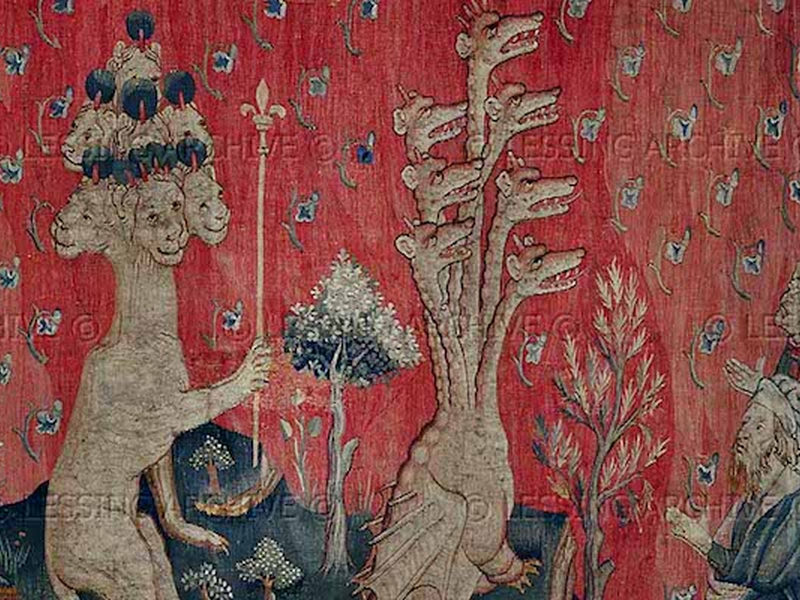
Flying scrolls. Red horses. Beasts coming out of the sea. Winged women. The list goes on. Apocalyptic literature in the Bible is like a cross between science fiction and Marvel comics. And the Bible has a fair bit of this sort of thing. Daniel sees visions in Babylon, Zechariah sees…

by Toby SumpterNovember 4, 2014

bhm-skyline-2
Theopolis News

New Name, New Look

Trinity House Institute has taken a new name, the Theopolis Institute. This striking new name expresses our unique vision and mission and captures the unified purpose behind all our specific programs and activities. We still have Bible, liturgy, and culture in our tagline. We still offer the same courses on…

by TheopolisNovember 4, 2014
istock_000012860926small
Atonement

Not Fearing the Devil

Adam Kotsko offers a socio-political variation on the Christus Victor atonement theory in his 2010 study, The Politics of Redemption: The Social Logic of Salvation . He does this by explaining "the devil" in terms of the Hegelian concept of "objective spirit," Geist . As Kotsko puts it, Geist "refers…

by Peter LeithartOctober 13, 2014
jez-timms-8muutamcwu4-unsplash
Leviticus

The Meaning of Sacrifice

Two factors keep Nahtali Meshel from discussing the meaning of sacrifice until late in his The "Grammar" of Sacrifice . The first has to do with the texts he draws from: "P says little about the meaning of its rituals" (174). The other has to do with the grammatical theory…

by Peter LeithartOctober 8, 2014
jez-timms-8muutamcwu4-unsplash
Leviticus

Praxemics

Chapter 5 of Naphtali Meshel's The "Grammar" of Sacrifice focuses on "praxemics," the physical actions of sacrificial ritual. Praxemes are constituted by six elements: an "atomact," an elementary physical act or gesture; an actor; an object that is acted up; a target for the action and often for the object…

by Peter LeithartOctober 6, 2014
markus-winkler-aid-xyrtlec-unsplash
Leviticus

Jugation and Hierarchy

Two chapters of Naphtali Meshel’s The “Grammar” of Sacrifice cover what he calls “jugation” and “hierarchies.” The first involves the addition of other materials to an animal offering. Jugates include wine, cereal, and oil that are added to the animals (zoemes) that are offered in sacrifice. Some jugates are coordinated…

by Peter LeithartOctober 1, 2014

Showing page 167 of 309

See all
See all

God's Wounds

J ean-Louis Chretien begins his Hand to Hand with a series of meditations on the story of Jacob wrestling with God, and artistic representations of that episode. He quotes Francois de Sales, who wrote: “Our Lord may turn us and sweep us round to the left or to the right;…

February 10, 2017

Silence of Painting

I n Hand to Hand , Jean-Louis Chretien meditates on silence in painting. He doesn't simply mean that painting is a visual rather than an audible art. Instead, he argues that paintings must not only be viewed but listened to: “To say that painting is silent is to say that…

February 10, 2017

Fair Nature's Second Chance

“G iving oneself up to sleep can constitute the worst of abandonments,” writes Jean-Louis Chretien ( Hand to Hand ), “wherein we abandon another person to his solitude and his distress by withdrawing ourselves from the common world and from our community with him. Our eyelids close upon our weary…

February 10, 2017

The New (Secular) Pragmatism

P aul Collier devotes a long, provocative, stimulating TLS review to a sketch of a “new pragmatism.” The review doubles as an essay on the “future of capitalism.” Along the way, Collier discusses the problems of multiculturalism and gives qualified endorsement to nationalism. Multiculturalism must be “bounded,” partly because Western…

February 10, 2017

Authoritarian Gardeners

D avid I. Smith and Susan M. Felch ( Teaching and Christian Imagination ) want to rehabilitate the symbolism of “gardening” as a model of education. It does require rehabilitation, not least because of Rousseau, who wrote: “God makes all things good. . . . [but] man meddles with them…

February 10, 2017

Horticultural Anthropology

D avid Smith and Susan Felch devote several pages of their Teaching and Christian Imagination (129–134) to a summary of John Amos Comenius's seventeenth-century treatise on education, Great Didactic . Comenius starts where humanity starts, with Eden's garden, and reflects that the garden is not only man's original location but…

February 10, 2017

Showing page 207 of 2212

Browse by Category

In Medias Res

Your weekly digest for all things Theopolis.

Donate

Theopolis is nearly 100% donor-supported. Consider joining us on our mission.