Theopolis Logo

Writing

Explore our collection of theological essays, biblical studies, and reflections on faith and culture.

See all
31-03-0213
Hermeneutics

Apocalyptic Eyes

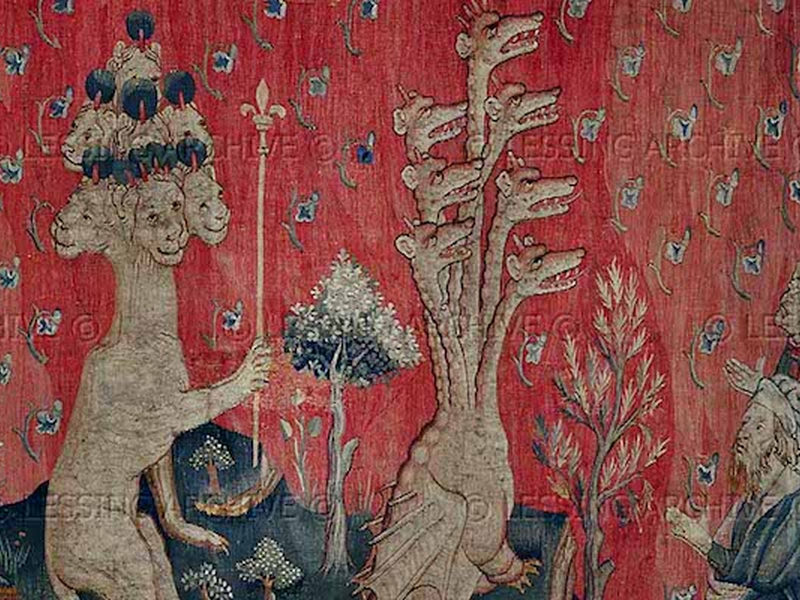
Flying scrolls. Red horses. Beasts coming out of the sea. Winged women. The list goes on. Apocalyptic literature in the Bible is like a cross between science fiction and Marvel comics. And the Bible has a fair bit of this sort of thing. Daniel sees visions in Babylon, Zechariah sees…

by Toby SumpterNovember 4, 2014

bhm-skyline-2
Theopolis News

New Name, New Look

Trinity House Institute has taken a new name, the Theopolis Institute. This striking new name expresses our unique vision and mission and captures the unified purpose behind all our specific programs and activities. We still have Bible, liturgy, and culture in our tagline. We still offer the same courses on…

by TheopolisNovember 4, 2014
istock_000012860926small
Atonement

Not Fearing the Devil

Adam Kotsko offers a socio-political variation on the Christus Victor atonement theory in his 2010 study, The Politics of Redemption: The Social Logic of Salvation . He does this by explaining "the devil" in terms of the Hegelian concept of "objective spirit," Geist . As Kotsko puts it, Geist "refers…

by Peter LeithartOctober 13, 2014
jez-timms-8muutamcwu4-unsplash
Leviticus

The Meaning of Sacrifice

Two factors keep Nahtali Meshel from discussing the meaning of sacrifice until late in his The "Grammar" of Sacrifice . The first has to do with the texts he draws from: "P says little about the meaning of its rituals" (174). The other has to do with the grammatical theory…

by Peter LeithartOctober 8, 2014
jez-timms-8muutamcwu4-unsplash
Leviticus

Praxemics

Chapter 5 of Naphtali Meshel's The "Grammar" of Sacrifice focuses on "praxemics," the physical actions of sacrificial ritual. Praxemes are constituted by six elements: an "atomact," an elementary physical act or gesture; an actor; an object that is acted up; a target for the action and often for the object…

by Peter LeithartOctober 6, 2014
markus-winkler-aid-xyrtlec-unsplash
Leviticus

Jugation and Hierarchy

Two chapters of Naphtali Meshel’s The “Grammar” of Sacrifice cover what he calls “jugation” and “hierarchies.” The first involves the addition of other materials to an animal offering. Jugates include wine, cereal, and oil that are added to the animals (zoemes) that are offered in sacrifice. Some jugates are coordinated…

by Peter LeithartOctober 1, 2014

Showing page 167 of 309

See all
See all

Exhortation, June 20

According to the traditional church calendar, we are several Sundays into Trinity season. Trinity season begins with Trinity Sunday, which is the first Sunday after Pentecost, and Trinity season stretches through the summer and into the autumn, until the beginning of Advent. It is the longest of the seasons of…

June 20, 2004

Eucharistic Meditation, June 20

Numbers 13:32 Throughout the OT, the land promised to Israel is described as a ?land flowing with milk and honey.?E This is an image of rich abundance, of course, but it is particularly an image of the rich abundance of food. God did not choose a land where Israel would…

June 20, 2004

Huntington and Mexico

Enrique Krauze provides some powerful criticisms of Samuel Huntington’s claims about the influence of Mexican immigration on American cultural identity in the June 21 issue of TNR . Huntington argues in his recent book that there is a core American culture, and it is “Anglo-Protestant.” Mexicans, Spanish-speaking and Catholic, threaten…

June 19, 2004
Literature

Freud and Theory

James Woods perceptively notes that the triumph of theory in literary studies is less the triumph of Marx than the triumph of Freud: “One of the decisive changes that theory effected was to introduce the idea that texts do not know themselves. It is the critic’s business to reveal their…

June 19, 2004
Literature

The Original Bobo

Writing on Joyce’s Ulysses just before the 100th anniversary of Bloomsday, Declan Kiberd notes the oddity of the ending: “the climax of Ulysses is a meeting between two men, the young poet Stephen Dedalus and the older ad-canvasser Leopold Bloom . . . . The meeting of Dedalus and Bloom…

June 19, 2004

Distance

Can there be a Creator-creature distinction without the Trinity? It would seem not. For a unitarian theology “distance” is introduced only with the world; for a unitarian god to be at a distance, there must be something to be at a distance FROM. But because “distance” is not of the…

June 18, 2004

Showing page 2081 of 2212

Browse by Category

In Medias Res

Your weekly digest for all things Theopolis.

Donate

Theopolis is nearly 100% donor-supported. Consider joining us on our mission.