
Theopolis Logo

Writing

Explore our collection of theological essays, biblical studies, and reflections on faith and culture.

See all
giammarco-zeh-ljawhtg-unsplash
Biblical Horizons

OPEN BOOK: Views and Reviews

Isaac E. Mozeson, The Word: The Dictionary that Reveals the Hebrew Sources of English (Northvale, NJ: Jacob Aaronson Inc., 1995), 310 pp. Reviewed by James B. Jordan. Once there was only one language in the world, the language God spoke to Adam. At the Tower of Babel, there came to…

by James B. JordanJune 28, 1996
tim-wildsmith-j6jv-mkdzqs-unsplash
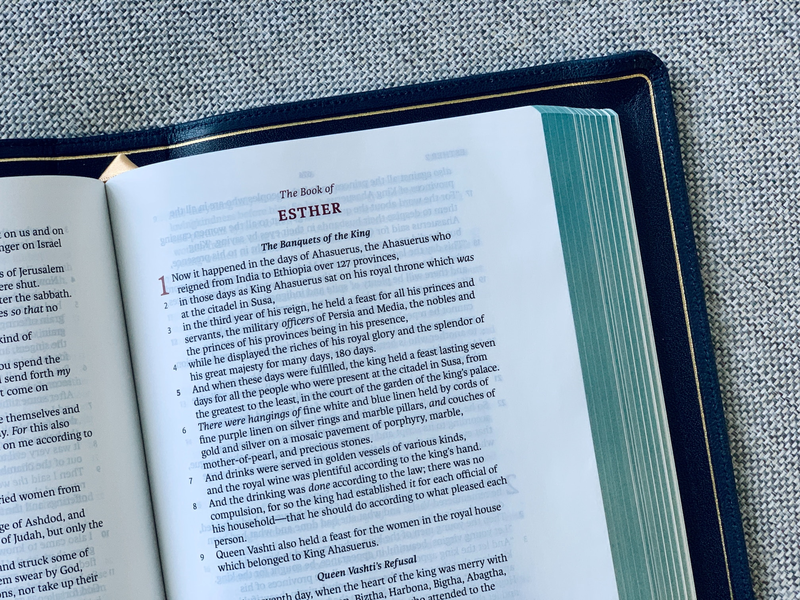
Esther

Esther: Historical & Chronological Comments (IV)

2. The Setting of the Book of Esther A. Xerxes (continued from previous issue) Ezra 6:14 says that the Jews finished building "according to the command of the God of Israel and the decree of Cyrus and Darius and Artaxerxes king of Persia." The problem with this verse is that…

by James B. JordanJune 28, 1996
ales-krivec-4mibe6zg5r0-unsplash
Acts

Jesus and Amalek

This essay goes with our previous study of the Amalek pattern back in Biblical Horizons No. 2. Since many do not have this essay, entitled "The Battle of Gog and Magog," let me cite the relevant paragraphs: Note in Genesis 12-15 that Abram moves into the land after escaping Pharaoh…

by James B. JordanJune 28, 1996
aaron-burden-1ebsmyrau-s-unsplash
Proverbs

The Strange Woman

Proverbs 7:6-23 is one of several passages early in the Proverbs in which Solomon warns his son about the wiles and dangers of the "strange woman." It is certainly quite proper to take these as straightforward warnings against sexual sins, and these are certainly warnings that need to be impressed…

by Peter LeithartJune 27, 1996
jan-kahanek-g3o5ztrk2e4-unsplash
Biblical Studies

Some Observations

1. In Luke 4:20 we read that after Jesus finished reading from Isaiah, "the eyes of all in the synagogue were fixed upon Him." This is usually taken in a psychological sense: They were amazed at Jesus somehow. I suggest that, as always, a merely psychological reading is a modern…

by James B. JordanMay 28, 1996
tim-wildsmith-j6jv-mkdzqs-unsplash
Esther

Esther: Historical & Chronological Comments (III)

2. The Setting of the Book of Esther Up to now we have assumed what we must prove, that the king in Esther is Darius the Great. While Biblical chronologists have usually taken this position, commentators on the book of Esther have often taken others as the king. One view,…

by James B. JordanMay 28, 1996

Showing page 265 of 309

See all
See all

Shopping

The Winter 2004 issue of The Wilson Quarterly has several intriguing articles on shopping and the institution of the shopping mall. The articles cover the rise of the shopping, consumer culture; the strategies behind the arrangement of various departments of a mall store; and moral concerns with materialism and hedonism.…

March 10, 2004
Theology

Christianity and the Religions

A review of a new history of modernity in the TLS raises a number of intriguing questions. The author of the volume claims that the age of nations is over, and that history writing has to catch up. History writing is still too much stuck in the rapidly vanishing world…

March 9, 2004
Literature

Milton’s Satan

A student points out a weakness in Stanley Fish ‘s reader-response treatment of Milton’s Satan, the notion that Milton deliberately makes Satan attractive and powerful not because Milton is of the devil’s party but because he is trying to run the reader through the same experience of temptation that Adam…

March 9, 2004
Literature

Milton’s Satan

A student points out a weakness in Stanley Fish ‘s reader-response treatment of Milton’s Satan, the notion that Milton deliberately makes Satan attractive and powerful not because Milton is of the devil’s party but because he is trying to run the reader through the same experience of temptation that Adam…

March 9, 2004
Literature

Short Story: The Accidental Ecumenist

I. Sir Reginald Piddleby-Squeak was in a pickle. The pickle he was in was no ordinary pickle, but a pickle of the most unusual size and sourness, a pickle from which he had no prospects of being rapidly extracted. He expected at any moment that he would begin turning green…

March 6, 2004
Literature

Essay: Introduction to Julius Caesar

Introduction Elizabethans viewed Rome through two historical lenses. On the one hand, Rome was for Elizabethans the great civilization of antiquity. They knew less of Greece than we do, and almost nothing of ancient Egypt or Babylon, much less China. When they traced their cultural genealogy, they traced it back…

March 6, 2004

Showing page 2113 of 2212

Browse by Category

In Medias Res

Your weekly digest for all things Theopolis.

Donate

Theopolis is nearly 100% donor-supported. Consider joining us on our mission.