
Theopolis Logo

Writing

Explore our collection of theological essays, biblical studies, and reflections on faith and culture.

See all
giammarco-zeh-ljawhtg-unsplash
Biblical Horizons

OPEN BOOK: Views and Reviews

Isaac E. Mozeson, The Word: The Dictionary that Reveals the Hebrew Sources of English (Northvale, NJ: Jacob Aaronson Inc., 1995), 310 pp. Reviewed by James B. Jordan. Once there was only one language in the world, the language God spoke to Adam. At the Tower of Babel, there came to…

by James B. JordanJune 28, 1996
tim-wildsmith-j6jv-mkdzqs-unsplash
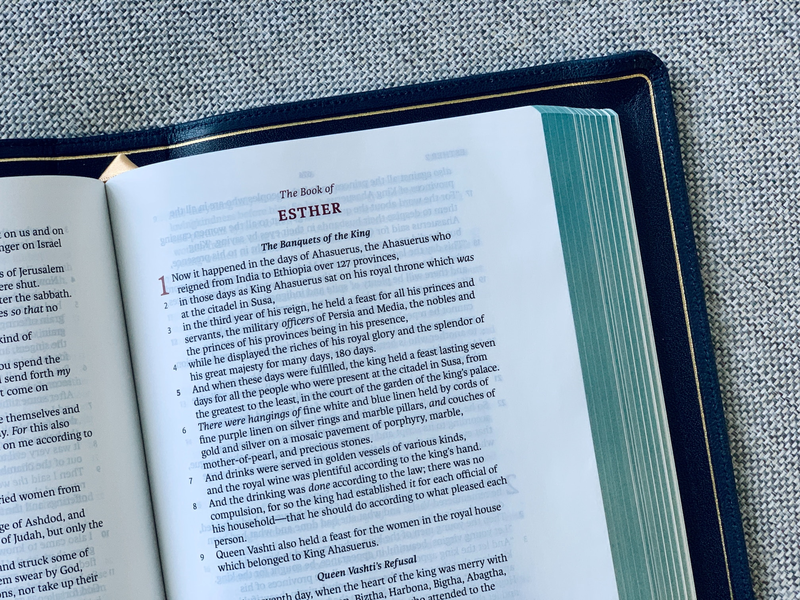
Esther

Esther: Historical & Chronological Comments (IV)

2. The Setting of the Book of Esther A. Xerxes (continued from previous issue) Ezra 6:14 says that the Jews finished building "according to the command of the God of Israel and the decree of Cyrus and Darius and Artaxerxes king of Persia." The problem with this verse is that…

by James B. JordanJune 28, 1996
ales-krivec-4mibe6zg5r0-unsplash
Acts

Jesus and Amalek

This essay goes with our previous study of the Amalek pattern back in Biblical Horizons No. 2. Since many do not have this essay, entitled "The Battle of Gog and Magog," let me cite the relevant paragraphs: Note in Genesis 12-15 that Abram moves into the land after escaping Pharaoh…

by James B. JordanJune 28, 1996
aaron-burden-1ebsmyrau-s-unsplash
Proverbs

The Strange Woman

Proverbs 7:6-23 is one of several passages early in the Proverbs in which Solomon warns his son about the wiles and dangers of the "strange woman." It is certainly quite proper to take these as straightforward warnings against sexual sins, and these are certainly warnings that need to be impressed…

by Peter LeithartJune 27, 1996
jan-kahanek-g3o5ztrk2e4-unsplash
Biblical Studies

Some Observations

1. In Luke 4:20 we read that after Jesus finished reading from Isaiah, "the eyes of all in the synagogue were fixed upon Him." This is usually taken in a psychological sense: They were amazed at Jesus somehow. I suggest that, as always, a merely psychological reading is a modern…

by James B. JordanMay 28, 1996
tim-wildsmith-j6jv-mkdzqs-unsplash
Esther

Esther: Historical & Chronological Comments (III)

2. The Setting of the Book of Esther Up to now we have assumed what we must prove, that the king in Esther is Darius the Great. While Biblical chronologists have usually taken this position, commentators on the book of Esther have often taken others as the king. One view,…

by James B. JordanMay 28, 1996

Showing page 265 of 309

See all
See all

Money and Sexuality

Bailey makes a perceptive comment at one point, drawing on the experience of a Jesuit psychologist of his acquaintance. This psychologist found that he could fairly quickly get his patients to talk openly about their sexual histories and sins, but that when he began to ask them about their finances,…

January 12, 2004

Bailey on the Prodigal Son

Kenneth Bailey’s recent monograph on the prodigal son, Jacob and the Prodigal (IVP), is full of stimulating insights. A long-time Christian teacher in Arabic and Syriac-speaking countries, Bailey always brings to his interpretations a wealth of knowledge of the cultural background and attitudes of men of the Near East. Also,…

January 12, 2004

Eucharistic Meditation, January 11

Communion meditation, January 11: If you want to have a calm meal, don’t invite Jesus. Over and over in Luke’s gospel, Jesus uses mealtime to confront the Pharisees, to challenge their unforgiving Spirit, to castigate them for neglecting the weightier matters of the law, to charge them with killing prophets.…

January 11, 2004

Exhortation, January 11

Exhortation for January 11: In the sermon text this morning, we see that Jesus is establishing and organizing His kingdom by changing practices at the table. This seems to be an odd way to establish a kingdom. We think of kingdoms being established through conquest, war, palace coups, or popular…

January 11, 2004

Parable of the Banquet

Green denies that the parable of the banquet in Luke 14:16ff is about the Messianic banquet. It suggests that God at one time did NOT want the poor to His banquet, but included them as a kind of afterthought; this not only is unflattering to God, but goes contrary to…

January 11, 2004

Grammatical Shift in Luke 14:23, 24

Green points out too the grammatical shift between Luke 14:23 and v 24: He moves from narrating a story in third person to a direct address. This is still the master speaking to the slave, but it is also the master speaking over the head of the slave to the…

January 11, 2004

Showing page 2139 of 2212

Browse by Category

In Medias Res

Your weekly digest for all things Theopolis.

Donate

Theopolis is nearly 100% donor-supported. Consider joining us on our mission.