Theopolis Logo

Writing

Explore our collection of theological essays, biblical studies, and reflections on faith and culture.

See all
kelly-sikkema-gpoh17dxqdm-unsplash
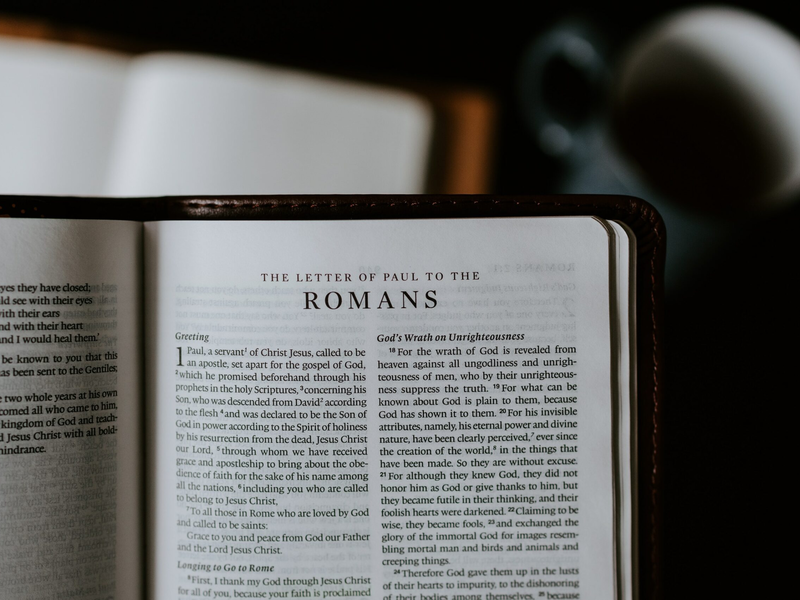
Romans

Paul’s Gospel & the Theme of Romans

Paul, a bond-servant of Christ Jesus, called as an apostle, set apart for the gospel of God, which He promised beforehand through His prophets in the holy Scriptures, concerning His Son, who was born of a descendant of David according to the flesh, who was declared the Son of God…

by Mark HorneJune 6, 2003

screenshot-2023-07-27-at-10-25-35-am
History

The Nelda Boswell Scroll: The Apostle Paul’s Town Hall Meeting in Iconium

With the surprising discovery of the Nelda Boswell scroll historians have deciphered its contents and concluded that the apostle Paul returned to the region of Galatia shortly after he wrote the letter that we call Galatians. The evidence suggests that a number of local pastors, elders, and deacons, along with…

by Jeff MeyersJune 6, 2003
aaron-burden-qjdzyt_k8xg-unsplash
Jonah

Jonah, the Judaizers, and the Gospel

Second Temple Judaism was a form of covenantal nomism, according to E. P. Sanders’ terminology. This means that Torah-observance was a way of expressing loyalty to the Lord of the covenant who had graciously elected Israel. I think Sanders’ view (taken up in bits and pieces and with some modifications…

by Rich LuskJune 6, 2003
Theologia

Gratitude or Faith?

We often hear that the key to Christian obedience is thankfulness for what God has done. But the Bible stresses faith and hope much more than gratitude. The Baptist pastor and author John Piper has written, “Nowhere in the Bible is gratitude connected explicitly with obedience as a motivation. We…

by Mark HorneJune 6, 2003
aaron-burden-qjdzyt_k8xg-unsplash
Federal Vision

God’s Righteousness & Our Justification

One of the questions that is commonly asked about Tom Wright regards his teaching about how Paul uses the term “the righteousness of God.” Since Wright’s interpretation of the term in Paul’s epistles is commonly mentioned in passing but rarely analyzed, it seems like a good idea to explicitly spell…

by Mark HorneJune 6, 2003
jordan-wozniak-xp_agmeea6s-unsplash
Genesis

Forever Means Forever: God’s Promises to the Jews

If God promised a certain land to the seed of Abraham, saying that it would be theirs “forever” (Gen. 13:15), why do Reformed churches teach that the Jews permanently lost their right to the land? What about all these Old Testament “forever” promises and prophesies made to the Jews? How…

by Jeff MeyersJune 6, 2003

Showing page 230 of 309

See all
See all

Kantian Eschatology

I n his essay on “The End of All Things,” Kant analyzes the “pious language” that speaks of “a person who is dying as going out of time into eternity.” Kant finds no comfort in the thought. On the contrary there is “something horrifying” about it. The end of time…

January 4, 2017

Urban Utopia

E ric Gilchrest ( Revelation 21-22 in the Light of Jewish and Greco-Roman Utopianism ) suggests that the conclusion vision of Revelation would receive a quite different reaction from its original readers, depending on whether they had been schooled in Jewish or in Greco-Roman Utopian traditions. For a Jewish reader,…

January 3, 2017

Watchers

T he angelic “guards” at the gates of the new Jerusalem are, argues Margaret Barker ( Revelation of Jesus Christ , 323), “probably a memory of the ancient guardians of the city known to Isaiah, ‘the watchmen set on the walls' (Isa. 62.6).” Barker claims that “These ‘watchers' are concealed…

January 3, 2017

Merry Christmas

I ‘m taking a break from blogging over the Christmas holidays. For daily seasonal musings and meditations, see the Theopolis blog .

December 19, 2016
Poetry

Poetic Apocalypse

C hristian Wiman ( My Bright Abyss , 51-2) claims that some poets—“surprisingly few”—possess “a very particular gift for making a thing at once shine forth in its ‘thingness' and ramify beyond its own dimensions.” He sites several lines from Norman MacCaig: “Straws like tame lightnings lie about the grass…

December 16, 2016

Enemy to Life

C hristian Wiman ( My Bright Abyss , 41) quotes a poem, “These Poems, She Said” by Robert Bringhurst, which Wiman says he “carried . . . in my mind like a totem.” It begins: These poems, these poems, these poems, she said, are poems with no love in them.…

December 16, 2016

Showing page 221 of 2212

Browse by Category

In Medias Res

Your weekly digest for all things Theopolis.

Donate

Theopolis is nearly 100% donor-supported. Consider joining us on our mission.