Theopolis Logo

Writing

Explore our collection of theological essays, biblical studies, and reflections on faith and culture.

See all
tanner-mardis-xuxghzhibn4-unsplash-1-2
Biblical Studies

Tweets-turned-Notes on the Bible’s Chronology

Summary In what follows, I will consider the “year-stamps” employed in Scripture, i.e., statements of the form, “Such-and-such an event took place in the Xth year of Y.” In the process, I will suggest some ways in which the Biblical narrative might relate to events in the extra-Biblical world, though…

by James BejonJuly 16, 2019
durer-prodigal-son-2
Luke

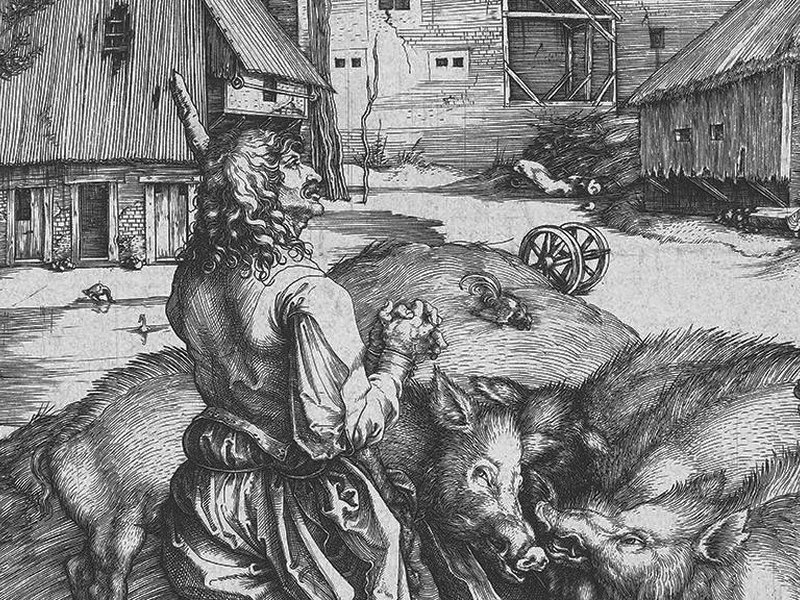
Perspectives on the Prodigal, (Part 2)

In the first essay on the parable of the Prodigal Son, I suggested that the problems commentators and others encounter in interpreting Jesus three-part parable are not accidental. These are not just problems in our ignorance of cultural background. They are intentional features of the stories —stories designed to poke…

by Ralph Allan SmithJuly 11, 2019
durer-prodigal-son-2
Luke

Perspectives on the Prodigal, (Part 1)

The story of the Prodigal Son is perhaps the most well-known story in the Bible. As others have observed, it may also be one of the most misunderstood. In two short essays, I will point out features of this story that are commonly neglected, aspects of Jesus’ parable that might…

by Ralph Allan SmithJuly 9, 2019
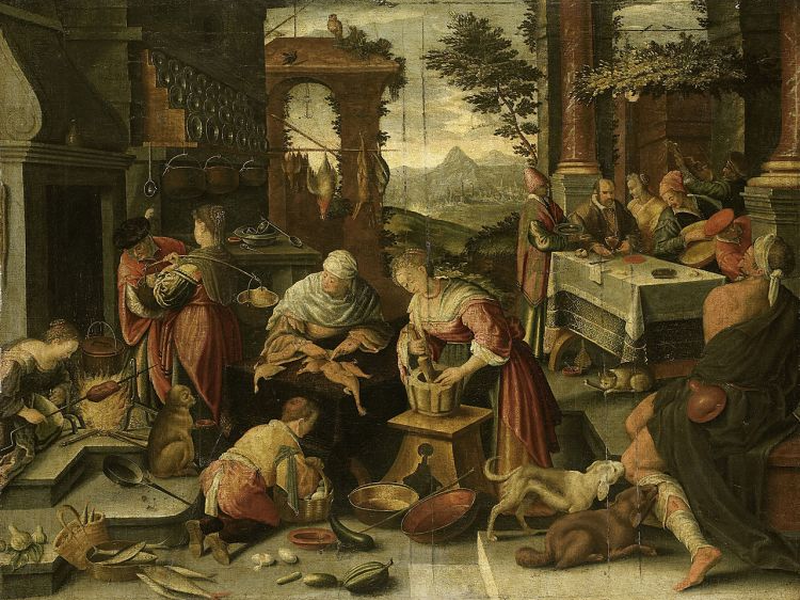
de-rijke-man-en-de-arme-lazarus-by-jacopo-da-ponte-16th-century
Luke

Lazarus and the Rich Man

The parable of Lazarus and the nameless rich man is not an independent story. It is part of a long context that begins in Luke 15:1, where Jesus is eating with tax collectors and sinners and the scribes and Pharisees grumble. In response to their hardheartedness, Jesus tells a three-part…

by Ralph Allan SmithJuly 4, 2019
aaron-burden-uynrnfdkjwg-unsplash
Luke

Everybody has Dropsy - Luke 14:1-24

The Bible is written so that even when a reader cannot pick up on what might be deeper or more detailed aspects of a text, there is virtually always a message to be heard. In the ancient world, where the “reader” of Scripture would likely be a church official facing…

by Ralph Allan SmithJuly 2, 2019
communion
Biblical Theology

Fruit Trees and Grain Plants

The distinction between garden (or vineyard) and field begins in Genesis 2. This relates to the ordering of the formless world. Plants of the field are contrasted with the garden planted by God in Genesis 2:5&8. Later on, under the Old Covenant the Israelites will be required to keep their…

by James B. JordanJune 27, 2019

Showing page 77 of 309

See all
See all

Kantian Eschatology

I n his essay on “The End of All Things,” Kant analyzes the “pious language” that speaks of “a person who is dying as going out of time into eternity.” Kant finds no comfort in the thought. On the contrary there is “something horrifying” about it. The end of time…

January 4, 2017

Urban Utopia

E ric Gilchrest ( Revelation 21-22 in the Light of Jewish and Greco-Roman Utopianism ) suggests that the conclusion vision of Revelation would receive a quite different reaction from its original readers, depending on whether they had been schooled in Jewish or in Greco-Roman Utopian traditions. For a Jewish reader,…

January 3, 2017

Watchers

T he angelic “guards” at the gates of the new Jerusalem are, argues Margaret Barker ( Revelation of Jesus Christ , 323), “probably a memory of the ancient guardians of the city known to Isaiah, ‘the watchmen set on the walls' (Isa. 62.6).” Barker claims that “These ‘watchers' are concealed…

January 3, 2017

Merry Christmas

I ‘m taking a break from blogging over the Christmas holidays. For daily seasonal musings and meditations, see the Theopolis blog .

December 19, 2016
Poetry

Poetic Apocalypse

C hristian Wiman ( My Bright Abyss , 51-2) claims that some poets—“surprisingly few”—possess “a very particular gift for making a thing at once shine forth in its ‘thingness' and ramify beyond its own dimensions.” He sites several lines from Norman MacCaig: “Straws like tame lightnings lie about the grass…

December 16, 2016

Enemy to Life

C hristian Wiman ( My Bright Abyss , 41) quotes a poem, “These Poems, She Said” by Robert Bringhurst, which Wiman says he “carried . . . in my mind like a totem.” It begins: These poems, these poems, these poems, she said, are poems with no love in them.…

December 16, 2016

Showing page 221 of 2212

Browse by Category

In Medias Res

Your weekly digest for all things Theopolis.

Donate

Theopolis is nearly 100% donor-supported. Consider joining us on our mission.