Theopolis Logo

Writing

Explore our collection of theological essays, biblical studies, and reflections on faith and culture.

See all
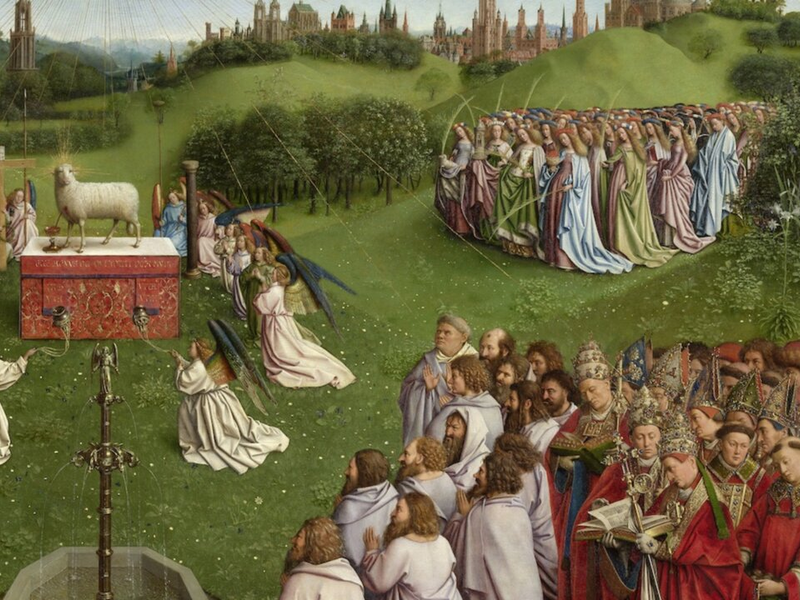
20_van-eyck_bavo-altar_adoration-of-the-lamb-copy-67f4f94b
Culture

An Introduction to the Sacred Music of Josquin

This essay is adapted from my articles in Theopolis’s In Medias Res as a series of Holy Week meditations. Like many celebrities such as Kanye or Beyoncé or Adele, Josquin des Prez (d. 1521) was often known only by his first name, in his own time as now. “Josquin” is…

by John AhernJuly 29, 2025
screenshot-2025-07-22-at-11-57-58-am
Numbers

Sight and Memory: Examining the Monuments of Numbers

Sight is a major theme in the scriptures. The church has long identified sight’s relationship to the future fulfillment of the eschaton. As Paul says, “For now we see only a reflection as in a mirror; then we shall see face to face” (1 Cor 13.12). Sight is associated with…

by Matthew DarbyJuly 22, 2025
tengyart-aaz5-as3io-unsplash
Biblical Theology

Yahweh’s Flame: the Gospel through Symbolism

What is the chief end of man? —yes, to glorify God and enjoy him forever. But how ought man–and all creation–so glorify him? I propose a Theopolitan addition to the catechism, question and answer number 1.5, begun in the last question and answered as follows: Earth’s inhabitants were created to…

by Ben LoveladyJuly 16, 2025
screenshot-2025-07-08-at-8-31-22-am
Culture

Morality and the Practice of Poetry

Naphtali is a hind let loose: he giveth goodly words. Genesis 49:21 Frederick Buechner once said, “We move into the extraordinary by way of the ordinary.” In poetry, this happens by way of a compressed code of analogs; often, two or more very ordinary things begin to reveal something that…

by Garrett SoucyJuly 8, 2025
screenshot-2025-07-03-at-9-26-50-am
Ephesians

The Trinitarian Structure of Obedience

The evangelical milieu of America has often lost a vision of the fruit of repentance. We tend to simplify repentance by asking for forgiveness. After all, Jesus tells Peter to forgive 70 times 7. This verse must be paired with Paul’s scoffing at the question: why not sin more so…

by Matthew CoreyJuly 3, 2025
33255drsdl
Luke

The Hemorrhaging Woman, the Eucharist, and the Sermon

I. The hemorrhaging woman. En route to Jairus’ house, Jesus is touched by a woman with a hemorrhage of blood (Matt 9:18–26; Mk 5:21–34; Lk 8:40–48). The story is one that many of us know very well. She has been yoked to her illness for twelve years, all of her…

by Mark BriansJuly 1, 2025

Showing page 7 of 309

See all
See all

Augustinian Optimism and Modern Science

P eter Harrison points out in his The Fall of Man and the Foundations of Science (10–11) that the Reformation coincided with the rediscovery of ancient skepticism. While the Reformers were undermining traditional Catholic sources of authority from one side, Montaigne and others were corroding certainty from the other. Descartes…

December 12, 2016

Apocalypse Preserved

Karl Shuve's contribution to Apocalypses in Context traces the Christian use of Jewish apocalyptic, especially of the Book of the Watchers from 1 Enoch, which even makes it into the universal canon of the New Testament (Jude). The Watcher story appears in Justin, who “blames ‘every evil' on the Watcher…

December 9, 2016

Constructing Modernity

Thomas Fabisiak wonders, What does the New Jerusalem have to do with modernity? ( Apocalypses in Context ). Ask most modern philosophers, and the answer will be, Not much. Fabisiak speaks of the “'rhetorical construction' of modernity” that takes the form of a dismissal or expulsion of apocalyptic and all…

December 9, 2016

Chess and Soviet Man

In a 2011 New Yorker profile of Norwegian chess champion Magnus Carlsen, D.T. Max digresses to explain the logic behind the Soviet interest in chess: “Lenin, an enthusiastic player, made the game a priority for the new nation. In 1920, Alexander Ilyin-Zhenevsky, a commissar of Soviet chess, wrote that chess,…

December 9, 2016

Erotics of Reading

In the middle stanzas of “Erotikos Logos,” watching someone else reading, Scott Cairns ( Slow Pilgrim , 278) writes, “So much, of course, depends upon your own willingness to find something worthy here, even as you bring - as you must - something worthy to the effort. So much of…

December 9, 2016

From Polemic to Propaganda

Andrew Pettegree ( Reformation and the Culture of Persuasion ) observes a shift in rhetorical tone in Protestant-Catholic debates between the early and mid sixteenth century: “While much of the polemical writing of Luther’s day was rumbustious in tone, making liberal use of ridicule and ad hominem attacks, it still…

December 9, 2016

Showing page 224 of 2212

Browse by Category

In Medias Res

Your weekly digest for all things Theopolis.

Donate

Theopolis is nearly 100% donor-supported. Consider joining us on our mission.