Theopolis Logo

Writing

Explore our collection of theological essays, biblical studies, and reflections on faith and culture.

See all
tanner-mardis-xuxghzhibn4-unsplash-1-2
Biblical Studies

Tweets-turned-Notes on the Bible’s Chronology

Summary In what follows, I will consider the “year-stamps” employed in Scripture, i.e., statements of the form, “Such-and-such an event took place in the Xth year of Y.” In the process, I will suggest some ways in which the Biblical narrative might relate to events in the extra-Biblical world, though…

by James BejonJuly 16, 2019
durer-prodigal-son-2
Luke

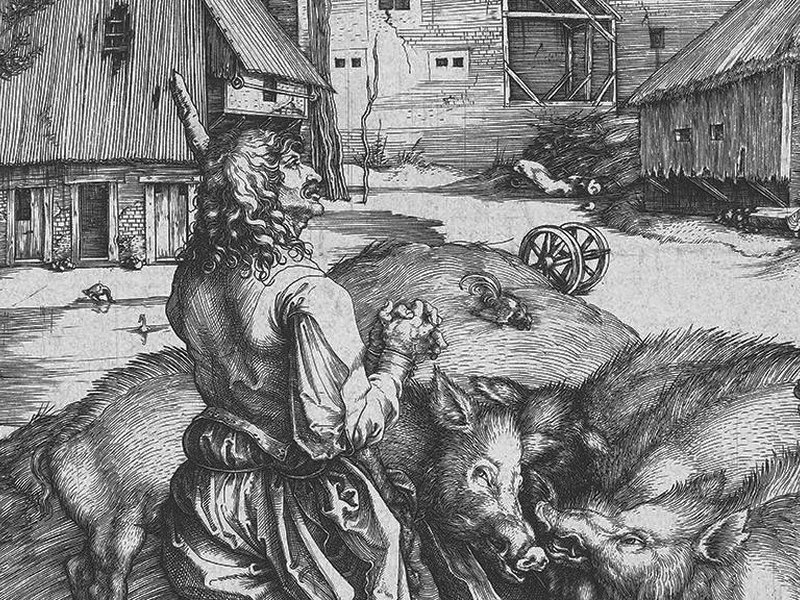
Perspectives on the Prodigal, (Part 2)

In the first essay on the parable of the Prodigal Son, I suggested that the problems commentators and others encounter in interpreting Jesus three-part parable are not accidental. These are not just problems in our ignorance of cultural background. They are intentional features of the stories —stories designed to poke…

by Ralph Allan SmithJuly 11, 2019
durer-prodigal-son-2
Luke

Perspectives on the Prodigal, (Part 1)

The story of the Prodigal Son is perhaps the most well-known story in the Bible. As others have observed, it may also be one of the most misunderstood. In two short essays, I will point out features of this story that are commonly neglected, aspects of Jesus’ parable that might…

by Ralph Allan SmithJuly 9, 2019
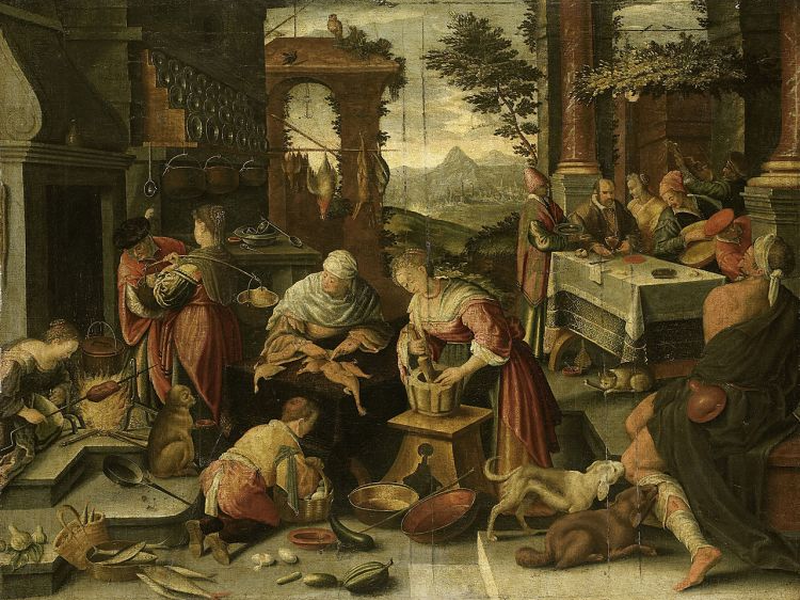
de-rijke-man-en-de-arme-lazarus-by-jacopo-da-ponte-16th-century
Luke

Lazarus and the Rich Man

The parable of Lazarus and the nameless rich man is not an independent story. It is part of a long context that begins in Luke 15:1, where Jesus is eating with tax collectors and sinners and the scribes and Pharisees grumble. In response to their hardheartedness, Jesus tells a three-part…

by Ralph Allan SmithJuly 4, 2019
aaron-burden-uynrnfdkjwg-unsplash
Luke

Everybody has Dropsy - Luke 14:1-24

The Bible is written so that even when a reader cannot pick up on what might be deeper or more detailed aspects of a text, there is virtually always a message to be heard. In the ancient world, where the “reader” of Scripture would likely be a church official facing…

by Ralph Allan SmithJuly 2, 2019
communion
Biblical Theology

Fruit Trees and Grain Plants

The distinction between garden (or vineyard) and field begins in Genesis 2. This relates to the ordering of the formless world. Plants of the field are contrasted with the garden planted by God in Genesis 2:5&8. Later on, under the Old Covenant the Israelites will be required to keep their…

by James B. JordanJune 27, 2019

Showing page 77 of 309

See all
See all

Is Anonymity Still a Thing?

T he literary world is atwitter this week with the revelation of the real identity of Elena Ferrante, the pseudonym used by the author of the acclaimed Neopolitan Quartet. Italian journalist Claudio Gatti reported on his months-long investigation in the New York Review . Gatti’s conclusion, based on real estate…

October 7, 2016
Liberalism

Infantilism and Anti-Paternalism

J ohn Milbank and Adrian Pabst ( Politics of Virtue , 17) claim that “politics should revert to its ancient character as a ‘politics of the soul,’ concerned above all to nurture virtuous citizens, just as parents are concerned above all with the character of their children, precisely because they…

October 7, 2016

Disembedding

J ohn Milbank and Adrian Pabst ( Politics of Virtue , 47) observe that the liberal state claims to release “the economic and social spheres to be pre-politically themselves as natural, meaning true to human biological needs and inclinations.” In fact, however, it “politically produces this sphere of man as…

October 7, 2016

Scarcity

S carcity is one of the central premises of economic theory. John Milbank and Adrian Pabst see the premise of scarcity as one of a triad of pessimistic assumptions that found liberal order - the other two are “ontological violence and natural egoism” ( Politics of Virtue , 48). They…

October 7, 2016

Your Brain On Paper

M atthew Crawford ( The World Beyond Your Head ) observes that we can do simple mathematics in our heads. We can even multiply bigger numbers by breaking them down into smaller ones. At some point, though, most of us lost track: “If one has to multiply 356 by 911,…

October 7, 2016

God's Gift to God

1 Chronicles 17 is the Chronicler’s account of the Davidic covenant, Yahweh’s commitment to the Davidic dynasty. In his response to the Lord’s pledge, David summarizes the aims of the exodus (v. 21). Following the Hebrew word order, we can see a somewhat irregular chiasm: A. And what one nation…

October 6, 2016

Showing page 246 of 2212

Browse by Category

In Medias Res

Your weekly digest for all things Theopolis.

Donate

Theopolis is nearly 100% donor-supported. Consider joining us on our mission.