Theopolis Logo

Writing

Explore our collection of theological essays, biblical studies, and reflections on faith and culture.

See all
aaron-burden-1ebsmyrau-s-unsplash
Biblical Horizons

The Sin of Ham and the Curse of Canaan, Part 1

The history of the sin of Ham and the curse of Canaan comes in the middle of the Generations of Noah, a section of Genesis that begins at Genesis 6:9 and extends to the closing notice, Genesis 11:9. To understand the story better, it is necessary to get in mind…

by James B. JordanJune 3, 1997

david-weber-f_nj26i9wyo-unsplash-1
Eucharist

You and Your Son and Daughter: Christ’s Communion with Young Children

This paper was written to persuade people who were members of the Presbyterian Church in America. It should be accessible to anyone who believes in baptizing infants–especially to those who consider themselves a part of the Reformation Tradition. References to “our Confession” or “our standards” invoke the Westmeinster Confession of…

by Mark HorneJune 3, 1997
screenshot-2023-07-27-at-10-25-35-am
Baptism

The Westminster Standards & Sacramental Efficacy

Version 1.2 I write this brief essay in order to address a problem I have encountered. I keep reading explanations of doctrine of the sacraments fundamentally empty of the content which was once held by virtually all Reformed confessions and formulations. Furthermore, I read explanations and commentaries on the Westminster…

by Mark HorneJune 3, 1997
aaron-burden-h8s0pf2rcqs-unsplash
Biblical Chronology

John Sailhamer Weighs In, Part 2

We continue our analysis of John Sailhamer’s book *Genesis Unbound: A Provocative New Look at the Creation Account* (Multnomah Books, 1996), which argues that Genesis 1:2ff. is not about the creation of the whole world, but about the preparation of the Land of Eden, which is also the Promised Land.…

by James B. JordanMay 31, 1997
screenshot-2023-08-30-at-11-50-23-am
Matthew

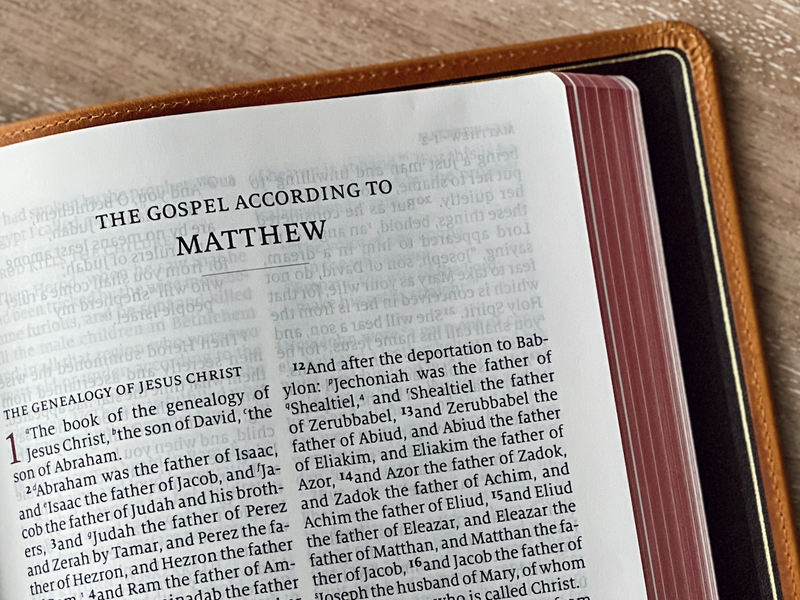
Toward a Chiastic Understanding of the Gospel According to Matthew, Part 2

III. Death of God’s Firstborn in the real Egypt: This huge chiasm has as its center the betrayal of Peter, as the leader of the disciples himself rejects Jesus. Peter holds an oficial position as high priest among the disciples of the incarnate Lord. His rejection of Jesus is the…

by James B. JordanMay 31, 1997
aaron-burden-qjdzyt_k8xg-unsplash
Eucharist

A Response to Rev. Bacon’s Argument that Manna was not a Sacrament

I wrote a response to Rev. Richard Bacon’s tract, What Mean Ye by This Service , a copy of which I borrowed from the library at Covenant Theological Seminary. However, I recently discovered that a new appendix was added to the version available on the Blue Banner’s web page. This…

by Mark HorneMay 29, 1997

Showing page 257 of 309

See all
See all

Guilt and Guilt-Bearing

B rad Littlejohn presents a number of criticisms of my account of penal substitution in Delivered from the Elements of the World . I won’t attempt to address all of them, but focus—at once too briefly and at tedious length—on Brad’s central substantive question, which concerns guilt and Jesus’ guilt-bearing.…

September 20, 2016

Atomizing and Abstraction

I ’ve been reading commentaries on Revelation 1:12–20, learning a great deal, but getting increasingly frustrated. Even the best commentators sometimes fall into the twin faults of contemporary interpretation—atomization and abstraction. Let’s take the “robe” that Jesus wears. Many have suggested that the robe designates Jesus as a priest, but…

September 20, 2016

Beyond Language?

I n his Anchor Bible commentary on Revelation , Craig Koester says this about John's initial vision of Jesus: “ The figure’s appearance defies easy description: hair that is white like wool or snow, eyes like a flame of fire, a voice like rushing water, a face like the sun.…

September 19, 2016

Macbeth’s Three Murders

I n a contribution to Harold Bloom’s collection of essays on Macbeth , Robert Lanier Reid observes that ” Interpreters of Macbeth have focused almost exclusively on the first murder, the killing of a king in Acts 1–2, as the basis for understanding the play—its social, psychological, and metaphysical meanings.…

September 16, 2016

Motiveless Malignity

“W hat purpose do the Weird Sisters have for confronting the hero—or what is their masters’ purpose, if they in fact have such masters?” asks Susan Snyder in her contribution to Macbeth . She doesn’t think the play gives a clear answer, and she adds that the play doesn’t explain…

September 16, 2016

Macbeth and the Bible

P eter Milward writes of “meta-drama” in Hamlet and Macbeth in his contribution Shakespeare’s Christianity . He argues (unconvincingly) that Shakespeare had in mind the situation of recusant Catholics in England. Milward’s analysis of the biblical features of the play is more compelling. He notes that “already from the opening…

September 16, 2016

Showing page 252 of 2212

Browse by Category

In Medias Res

Your weekly digest for all things Theopolis.

Donate

Theopolis is nearly 100% donor-supported. Consider joining us on our mission.