Theopolis Logo

Writing

Explore our collection of theological essays, biblical studies, and reflections on faith and culture.

See all
tanner-mardis-xuxghzhibn4-unsplash-1-2
Biblical Studies

Tweets-turned-Notes on the Bible’s Chronology

Summary In what follows, I will consider the “year-stamps” employed in Scripture, i.e., statements of the form, “Such-and-such an event took place in the Xth year of Y.” In the process, I will suggest some ways in which the Biblical narrative might relate to events in the extra-Biblical world, though…

by James BejonJuly 16, 2019
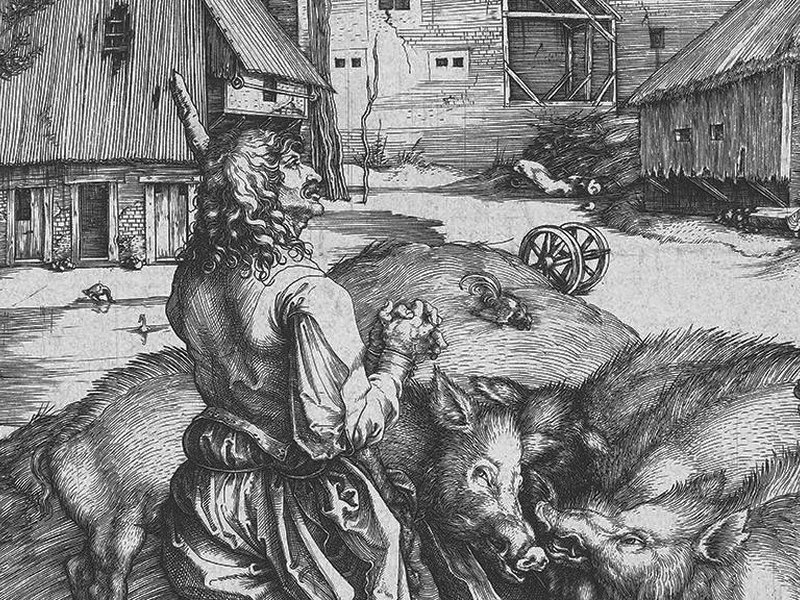
durer-prodigal-son-2
Luke

Perspectives on the Prodigal, (Part 2)

In the first essay on the parable of the Prodigal Son, I suggested that the problems commentators and others encounter in interpreting Jesus three-part parable are not accidental. These are not just problems in our ignorance of cultural background. They are intentional features of the stories —stories designed to poke…

by Ralph Allan SmithJuly 11, 2019
durer-prodigal-son-2
Luke

Perspectives on the Prodigal, (Part 1)

The story of the Prodigal Son is perhaps the most well-known story in the Bible. As others have observed, it may also be one of the most misunderstood. In two short essays, I will point out features of this story that are commonly neglected, aspects of Jesus’ parable that might…

by Ralph Allan SmithJuly 9, 2019
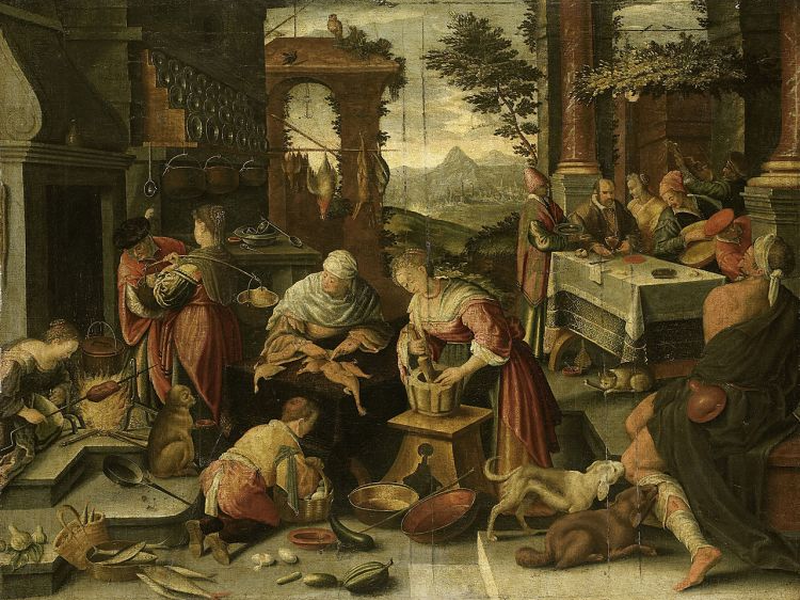
de-rijke-man-en-de-arme-lazarus-by-jacopo-da-ponte-16th-century
Luke

Lazarus and the Rich Man

The parable of Lazarus and the nameless rich man is not an independent story. It is part of a long context that begins in Luke 15:1, where Jesus is eating with tax collectors and sinners and the scribes and Pharisees grumble. In response to their hardheartedness, Jesus tells a three-part…

by Ralph Allan SmithJuly 4, 2019
aaron-burden-uynrnfdkjwg-unsplash
Luke

Everybody has Dropsy - Luke 14:1-24

The Bible is written so that even when a reader cannot pick up on what might be deeper or more detailed aspects of a text, there is virtually always a message to be heard. In the ancient world, where the “reader” of Scripture would likely be a church official facing…

by Ralph Allan SmithJuly 2, 2019
communion
Biblical Theology

Fruit Trees and Grain Plants

The distinction between garden (or vineyard) and field begins in Genesis 2. This relates to the ordering of the formless world. Plants of the field are contrasted with the garden planted by God in Genesis 2:5&8. Later on, under the Old Covenant the Israelites will be required to keep their…

by James B. JordanJune 27, 2019

Showing page 77 of 309

See all
See all

Guilt and Guilt-Bearing

B rad Littlejohn presents a number of criticisms of my account of penal substitution in Delivered from the Elements of the World . I won’t attempt to address all of them, but focus—at once too briefly and at tedious length—on Brad’s central substantive question, which concerns guilt and Jesus’ guilt-bearing.…

September 20, 2016

Atomizing and Abstraction

I ’ve been reading commentaries on Revelation 1:12–20, learning a great deal, but getting increasingly frustrated. Even the best commentators sometimes fall into the twin faults of contemporary interpretation—atomization and abstraction. Let’s take the “robe” that Jesus wears. Many have suggested that the robe designates Jesus as a priest, but…

September 20, 2016

Beyond Language?

I n his Anchor Bible commentary on Revelation , Craig Koester says this about John's initial vision of Jesus: “ The figure’s appearance defies easy description: hair that is white like wool or snow, eyes like a flame of fire, a voice like rushing water, a face like the sun.…

September 19, 2016

Macbeth’s Three Murders

I n a contribution to Harold Bloom’s collection of essays on Macbeth , Robert Lanier Reid observes that ” Interpreters of Macbeth have focused almost exclusively on the first murder, the killing of a king in Acts 1–2, as the basis for understanding the play—its social, psychological, and metaphysical meanings.…

September 16, 2016

Motiveless Malignity

“W hat purpose do the Weird Sisters have for confronting the hero—or what is their masters’ purpose, if they in fact have such masters?” asks Susan Snyder in her contribution to Macbeth . She doesn’t think the play gives a clear answer, and she adds that the play doesn’t explain…

September 16, 2016

Macbeth and the Bible

P eter Milward writes of “meta-drama” in Hamlet and Macbeth in his contribution Shakespeare’s Christianity . He argues (unconvincingly) that Shakespeare had in mind the situation of recusant Catholics in England. Milward’s analysis of the biblical features of the play is more compelling. He notes that “already from the opening…

September 16, 2016

Showing page 252 of 2212

Browse by Category

In Medias Res

Your weekly digest for all things Theopolis.

Donate

Theopolis is nearly 100% donor-supported. Consider joining us on our mission.