Theopolis Logo

Writing

Explore our collection of theological essays, biblical studies, and reflections on faith and culture.

See all
andriy-nestruiev-gdbrwwh6doc-unsplash
Biblical Studies

Funerals and Flutes

Matthew 8-9 records three clusters of miracles, interspersed with snatches of Jesus’ teaching about various aspects of discipleship. Just as the Sermon on the Mount displays the authority of Jesus’ Word in teaching, these chapters display the authority of Jesus’ Word over sickness, uncleanness, the creation, demons, and death. In…

by Peter LeithartApril 17, 1992

michal-parzuchowski-w9uljjwg2fa-unsplash
Baptism

Daddy, Why Was I Excommunicated?

Since the early 1980s, several of the conservative Reformed Churches have debated and wrestled with the issue of paedocommunion (infant communion). The PCA and the OPC assigned study committees to examine the question, both of which produced useful reports both in support of and against the position. Though the debate…

by Peter LeithartApril 13, 1992
skyler-gerald-akljfvj5ym4-unsplash
Biblical Chronology

Chronologies and Kings, Part 9: Jehu, Hazael, and Assyria

(This issue of Biblical Chronology concludes a discussion of the Biblical and Assyrian chronologies, begun in previous posts. Click on the category link of "Biblical Chronology" above to see previous issues. Did Shalmaneser Know Jehu? Allis writes: "The Black Obelisk of Shalmaneser contains, in addition to brief accounts of the…

by James B. JordanMarch 23, 1992
denise-jans-dpemksg59la-unsplash
American Culture

Arts and Play, Part 4

Movies Movies as an art form have a powerful impact because they take place in a dark room, on a large screen, with no distractions, and because they entail many of the arts: music, acting, choreography, design and color, etc. A movie can be an overwhelming experience for a young…

by James B. JordanMarch 23, 1992
sincerely-media-bhaswrjttzw-unsplash-2
Leviticus

The Ecology of the Tribute Offering

The Hebrew word translated as "grain offering" or "cereal offering" is minchah . Like the translation of `olah as "burnt offering," the translation of minchah as "grain offering" is somewhat deceiving, since minchah does not refer to grain or cereal. In liturgical contexts outside of Leviticus, in fact, the word…

by Peter LeithartMarch 13, 1992
sincerely-media-bhaswrjttzw-unsplash-2
Ascension

Skinned and Cut

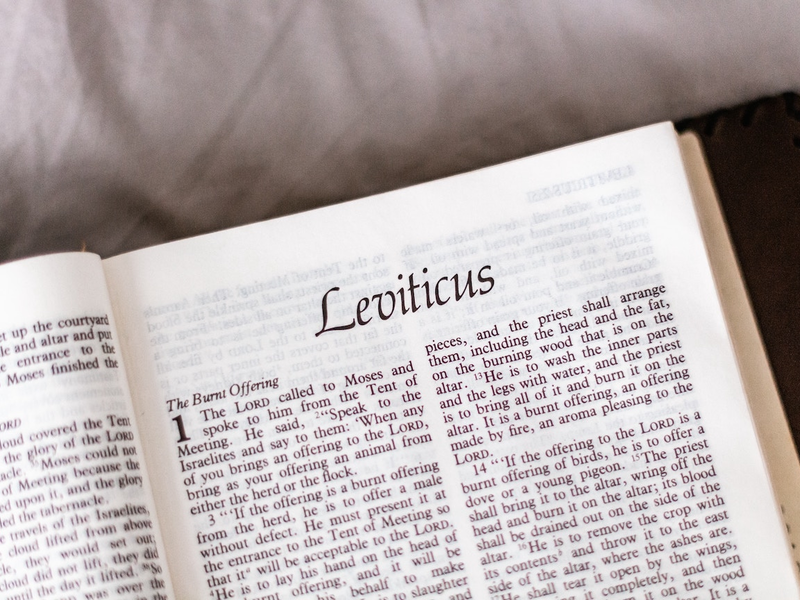
"He shall then skin the burnt offering and cut it into its pieces" (Leviticus 1:6). The normal word ( `olah ) that is translated as "burnt offering" and "whole burnt offering" has nothing to do with either burning or wholeness. It is the noun form of a verb meaning "to…

by Peter LeithartMarch 13, 1992

Showing page 291 of 309

See all
See all

The Beast

I n an 1881 article , F.W. Farrar examined the case for Nero as the sea beast of Revelation 13. Many contemporary scholars dismiss this because they believe that Revelation was written decades after Nero. Farrar makes a circumstantial and exegetical case for the identification, and in the process provides…

August 23, 2016

It Takes A City

I n a 1977 Daedalus article on “ The Family and the City ,” French historian Philippe Aries argued that “the real roots of the present domestic crisis lie not in our families, but in our cities.” As cities “deterioriated” and urban culture weakened, “the omnipotent, omnipresent family took upon…

August 23, 2016

Born in Zion

P salm 87 is a hymn to Zion. The name “Zion” occurs four times, and the Psalm declares Yahweh's love for Zion (v. 1), the glory of Zion as city of God (v. 2), the joy that fills Zion (v. 6). It could be a “nationalistic” hymn to Israel's ancient…

August 22, 2016

Purity System

I n her contribution to The Peace of God , Amy Remensnyder examines the eleventh-century crackdown on simony, clerical marriage and unchastity, and the clergy's involvement in war. These were characterized as pollutions of the clergy and the church, and the rules were framed as purity prohibitions. Gregory VII denounced…

August 19, 2016
American Religion

Nature's Nation

A mericans have often justified American order and American exceptionalism by invoking “the myth of nature,” write Robert Hughes and C. Leonard Allen in Illusions of Innocence (205). They “first employed this myth to justify freedom from tyranny. But they soon began equating nature with particular dimensions of national life…

August 19, 2016

Mary Douglas and Taboo

I n a review of Jacob Milgrom's Anchor Bible Leviticus commentary, Jonathan Klawans provides a helpful summary of the achievement of Mary Douglas's Purity and Danger : Against especially Robertson Smith and Frazer, Douglas argued that avoidance behaviors could no longer be dismissed as something inherently or distinctly primitive. Douglas…

August 19, 2016

Showing page 262 of 2212

Browse by Category

In Medias Res

Your weekly digest for all things Theopolis.

Donate

Theopolis is nearly 100% donor-supported. Consider joining us on our mission.