Theopolis Logo

Writing

Explore our collection of theological essays, biblical studies, and reflections on faith and culture.

See all
tanner-mardis-xuxghzhibn4-unsplash-1-2
Biblical Studies

Tweets-turned-Notes on the Bible’s Chronology

Summary In what follows, I will consider the “year-stamps” employed in Scripture, i.e., statements of the form, “Such-and-such an event took place in the Xth year of Y.” In the process, I will suggest some ways in which the Biblical narrative might relate to events in the extra-Biblical world, though…

by James BejonJuly 16, 2019
durer-prodigal-son-2
Luke

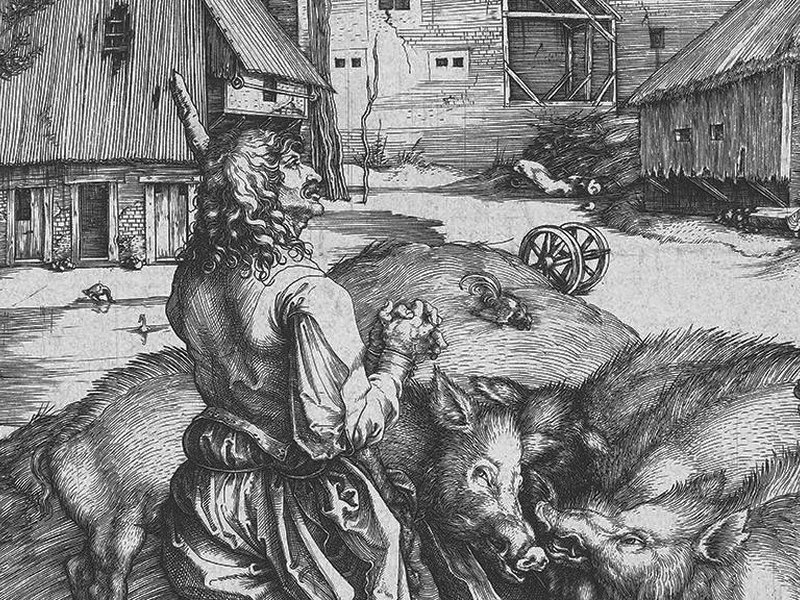
Perspectives on the Prodigal, (Part 2)

In the first essay on the parable of the Prodigal Son, I suggested that the problems commentators and others encounter in interpreting Jesus three-part parable are not accidental. These are not just problems in our ignorance of cultural background. They are intentional features of the stories —stories designed to poke…

by Ralph Allan SmithJuly 11, 2019
durer-prodigal-son-2
Luke

Perspectives on the Prodigal, (Part 1)

The story of the Prodigal Son is perhaps the most well-known story in the Bible. As others have observed, it may also be one of the most misunderstood. In two short essays, I will point out features of this story that are commonly neglected, aspects of Jesus’ parable that might…

by Ralph Allan SmithJuly 9, 2019
de-rijke-man-en-de-arme-lazarus-by-jacopo-da-ponte-16th-century
Luke

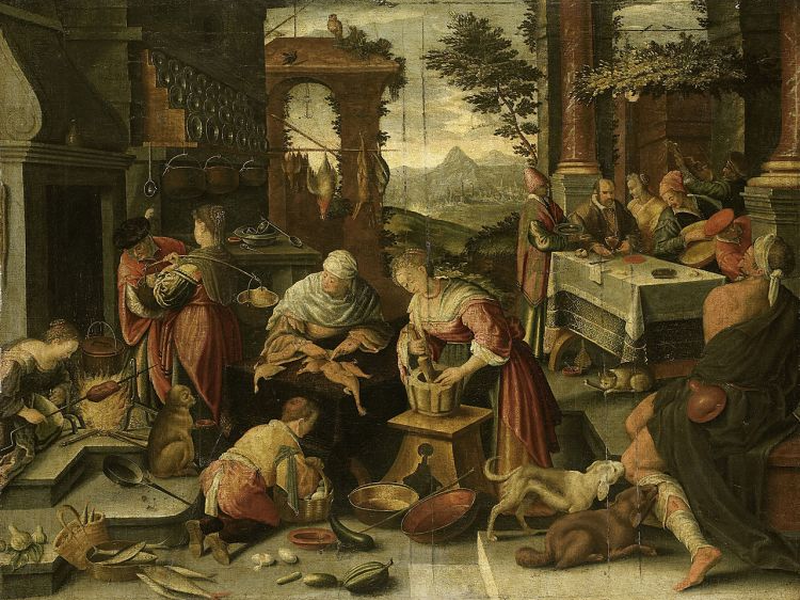
Lazarus and the Rich Man

The parable of Lazarus and the nameless rich man is not an independent story. It is part of a long context that begins in Luke 15:1, where Jesus is eating with tax collectors and sinners and the scribes and Pharisees grumble. In response to their hardheartedness, Jesus tells a three-part…

by Ralph Allan SmithJuly 4, 2019
aaron-burden-uynrnfdkjwg-unsplash
Luke

Everybody has Dropsy - Luke 14:1-24

The Bible is written so that even when a reader cannot pick up on what might be deeper or more detailed aspects of a text, there is virtually always a message to be heard. In the ancient world, where the “reader” of Scripture would likely be a church official facing…

by Ralph Allan SmithJuly 2, 2019
communion
Biblical Theology

Fruit Trees and Grain Plants

The distinction between garden (or vineyard) and field begins in Genesis 2. This relates to the ordering of the formless world. Plants of the field are contrasted with the garden planted by God in Genesis 2:5&8. Later on, under the Old Covenant the Israelites will be required to keep their…

by James B. JordanJune 27, 2019

Showing page 77 of 309

See all
See all

Israel My FIrstborn

T he genealogies of Chronicles begin with “Adam,” and the ancestors of the Chronicler's people Israel appear only after a half-chapter of names. Yet the Chronicler, like other Old Testament writers, considers Israel the “firstborn” nation (Exod. 4:23). As Scott Hahn puts it ( The Kingdom of God as Liturgical…

June 21, 2016

Treasure in Heaven

J esus can be an embarrassment, not least to disciples. Peter Brown points to an example in his recent The Ransom of the Soul , Jesus's statement to the rich young ruler to “go and sell what you possess and give to the poor, and you will have treasure in…

June 21, 2016

City of the Dead

I n his stimulating meditation on The Dominion of the Dead , Robert Pogue Harrison observes, following Fustel de Coulanges, that “the ancient house and in its turn the ancient city, were founded upon such sepulchers” (26). Even empires are so founded. Witness The Aeneid : “After the destruction of…

June 20, 2016

What Happened to Post-structuralism?

W hatever happened to post-structuralism? asks Terry Eagleton in the TLS . Born in the latter part of the 1960s in reaction to the structural linguistics of Saussure and the structural anthropology of Levi-Strauss, post-structuralism presented itself as a liberation movement: “Structures were to be unmasked as less stable than…

June 20, 2016

Divine Hydroponics

Y ahweh promised Abraham a land and a seed to plant in it. He planted a vineyard and it filled the land. Then He drive them from the land, scattered them out among the Gentiles. “Cast your bread on the water,” Solomon says. “For you will find it after many…

June 20, 2016

New Israel

1 Chronicles 9:1 sounds like closure. Israel's genealogies are enrolled, and the Chronicler cites the source of his information, the book of the Kings of Israel. Judah is off in Babylonian exile because of her unfaithfulness. Yet the text moves on, and the genealogy isn't yet done. After the end,…

June 17, 2016

Showing page 277 of 2212

Browse by Category

In Medias Res

Your weekly digest for all things Theopolis.

Donate

Theopolis is nearly 100% donor-supported. Consider joining us on our mission.