
Theopolis Logo

Writing

Explore our collection of theological essays, biblical studies, and reflections on faith and culture.

See all
giammarco-zeh-ljawhtg-unsplash
Biblical Horizons

OPEN BOOK: Views and Reviews

Isaac E. Mozeson, The Word: The Dictionary that Reveals the Hebrew Sources of English (Northvale, NJ: Jacob Aaronson Inc., 1995), 310 pp. Reviewed by James B. Jordan. Once there was only one language in the world, the language God spoke to Adam. At the Tower of Babel, there came to…

by James B. JordanJune 28, 1996
tim-wildsmith-j6jv-mkdzqs-unsplash
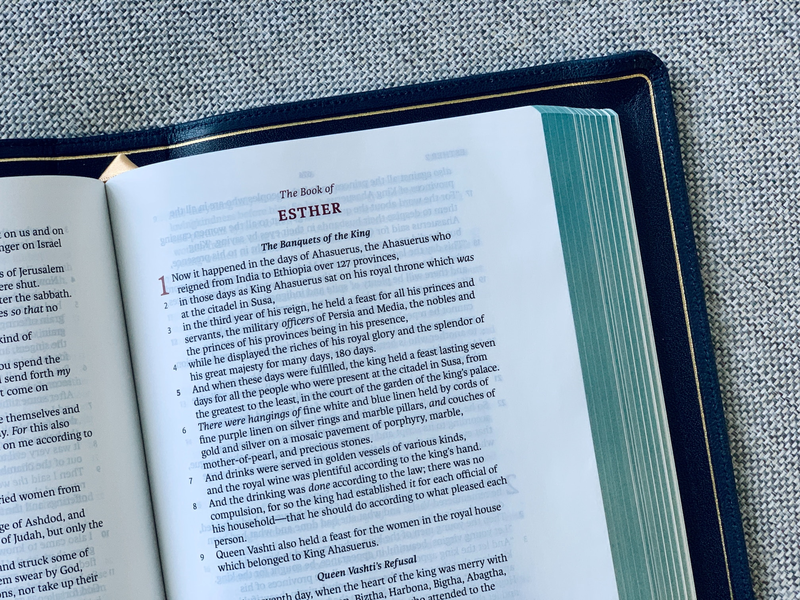
Esther

Esther: Historical & Chronological Comments (IV)

2. The Setting of the Book of Esther A. Xerxes (continued from previous issue) Ezra 6:14 says that the Jews finished building "according to the command of the God of Israel and the decree of Cyrus and Darius and Artaxerxes king of Persia." The problem with this verse is that…

by James B. JordanJune 28, 1996
ales-krivec-4mibe6zg5r0-unsplash
Acts

Jesus and Amalek

This essay goes with our previous study of the Amalek pattern back in Biblical Horizons No. 2. Since many do not have this essay, entitled "The Battle of Gog and Magog," let me cite the relevant paragraphs: Note in Genesis 12-15 that Abram moves into the land after escaping Pharaoh…

by James B. JordanJune 28, 1996
aaron-burden-1ebsmyrau-s-unsplash
Proverbs

The Strange Woman

Proverbs 7:6-23 is one of several passages early in the Proverbs in which Solomon warns his son about the wiles and dangers of the "strange woman." It is certainly quite proper to take these as straightforward warnings against sexual sins, and these are certainly warnings that need to be impressed…

by Peter LeithartJune 27, 1996
jan-kahanek-g3o5ztrk2e4-unsplash
Biblical Studies

Some Observations

1. In Luke 4:20 we read that after Jesus finished reading from Isaiah, "the eyes of all in the synagogue were fixed upon Him." This is usually taken in a psychological sense: They were amazed at Jesus somehow. I suggest that, as always, a merely psychological reading is a modern…

by James B. JordanMay 28, 1996
tim-wildsmith-j6jv-mkdzqs-unsplash
Esther

Esther: Historical & Chronological Comments (III)

2. The Setting of the Book of Esther Up to now we have assumed what we must prove, that the king in Esther is Darius the Great. While Biblical chronologists have usually taken this position, commentators on the book of Esther have often taken others as the king. One view,…

by James B. JordanMay 28, 1996

Showing page 265 of 309

See all
See all

Simon, Son of John

A fter sharing a breakfast of fish at the shore of Tiberius with his disciples, Jesus speaks directly to Peter (John 21). Peter had denied Jesus three times; now Jesus confirms his love three times. Peter denied Jesus at a charcoal fire in the high priest's court; now he's restored…

May 30, 2016

Choosing Apocalyptics

I n the closing chapter of Heaven on Earth , Richard Landes considers the import of the two major apocalyptic threats of the early twenty-first century—anthropogenic global warming (AGW) and global jihad warming (GJW). Both seem to portend TEOTWAWKI, the end of the world as we know it. What we…

May 27, 2016

DysUtopian Literature

I n his study of The Dystopian Impulse in Modern Literature , Keith Booker observes that “much of the history of recent utopian thought can be read as a gradual shift from utopian to dystopian emphases, while utopian thought itself has come more and more to be seen as escapist…

May 27, 2016

God-Fearers

W e are apt to think of a deeply religious person as a ‘true believer,' writes Howard Wettstein in The Significance of Religious Experience . In the Hebrew Bible, though, “there is no expression . . . that corresponds to our term, ‘believer.' The phrase that comes closest is ‘…

May 27, 2016

Varieties of Apocalypse

R ichard Landes's Heaven on Earth is a study of millennial apocalyptic movements, that is, movements that share a belief in “ a millennial vision of the world transformed, and an apocalyptic belief in that transformation’s imminence ” (22). Though the movement he explores share a belief in the transformation…

May 26, 2016

Millennial Modernity

According to Richard Landes ( Heaven on Earth ), traditional societies are organized by a “prime divider,” a boundary between elites and commoners. He follows Ernest Gellner in called these “agro-literate” societies, since that phrase names two key technologies that mark the division. More generally, “Elites construct prime dividers along…

May 26, 2016

Showing page 285 of 2212

Browse by Category

In Medias Res

Your weekly digest for all things Theopolis.

Donate

Theopolis is nearly 100% donor-supported. Consider joining us on our mission.