Theopolis Logo

Writing

Explore our collection of theological essays, biblical studies, and reflections on faith and culture.

See all
hebrew-manuscript-2
John

And the Holy of Holies Became Flesh

And the Word became flesh and tabernacled among us, and we beheld His glory...(John 1:14) Commentaries on John, discussing the Word or Logos in John 1, routinely turn to Greek philosophy and say that John is using a term and at least part of an idea familiar in the ancient…

by James B. JordanMarch 8, 2016

img_4660-2
Contentment

Defining Contentment

Jeremiah Burroughs defines contentment as “that sweet, inward, quiet, gracious frame of spirit, which freely submits to and delights in God’s wise and fatherly disposal in every condition” Contentment is one Christian virtue that Americans have an incredibly hard time understanding and applying. We have such comfortable lives that we…

by Lindsey TollefsonMarch 3, 2016
img_7652-2
Course Recap

Out of Exodus

"The goal I have for myself, my family, and my church is total bible saturation. I expected the Exodus Intensive class to help me with that, but I am shocked just how much it did," said Mark Balthrop, a pastor in Oklahoma City who attended Theopolis' recent course on the…

by Brian MoatsMarch 2, 2016
cross-2
Atonement

Gospel as Atonement Theory

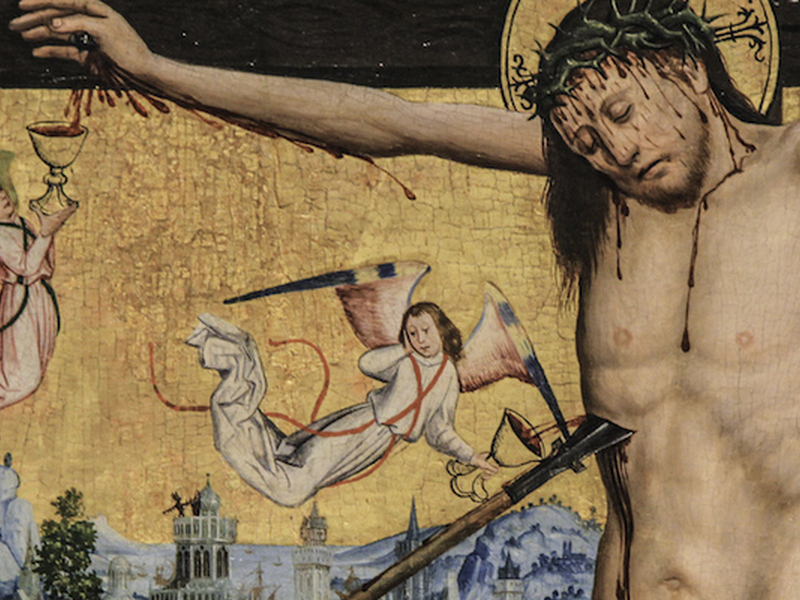
In a characteristically pithy essay, Robert Jenson has decried the “two paired errors” of traditional atonement theory. On the one hand, the cross is separated “from its future, in the resurrection” and, on the other, from “its past in the canonical history of Israel.” For the apostles, crucifixion is “anything…

by Peter LeithartMarch 1, 2016
sailing-shop-storm-crop
Biblical Theology

What is Systematic Typology? - Part One

The Historical-Grammatical Nanny State Typological interpretation is either abused or frowned upon, a domain relegated to mystics and charlatans, where the angels of modern academia fear to tread. But what if the Bible itself contained safeguards against irresponsible flights of fancy? And if it did, what would they look like?…

by Mike BullFebruary 25, 2016
sparkler
Contentment

Beginning Contentment

It is harsh advice for a suffering soul to be told to be content, to be happy, to be delighting in the rough circumstances. Is Christian contentment something we should automatically have as a result of being in Christ? Is it something we do? Is it an action or is…

by Lindsey TollefsonFebruary 23, 2016

Showing page 135 of 309

See all
See all
Modernity

Multiple Modernities

“Classic theories of modernization, from the 1950s,” write the editors of Reflections on Multiple Modernities , “identified the core of modernity, of modern social structure, as the decomposition of older ‘closed' formations and . . . of the growing potential for social mobilization, and the concomitant development of new structural,…

May 3, 2016

Signs of the Times

In a 2009 University of Michigan dissertation, Richard Persky explores the cultural meaning of time in ancient Greece, focusing on the concept of kairos . According to Persky, “a kairos is a moment of opportunity, the right time to do some particular thing. The allegorical sculpture made by Lysippos and…

May 2, 2016

Jerusalem's Jasper Walls

Jerusalem descends from heaven a jeweled bride, with the luminosity of a precious stone, a “crystal-clear jasper” (v. 11; hos litho iaspidi krustallizonti ). She is also surrounded by a jasper wall (v. 18). How might the city be related to the wall? The structure of 21:18-22 gives us a…

May 2, 2016

Shakespeare and Chivalry

In the Weekly Standard , Paul Cantor explains that both Shakespeare and Cervantes aimed their writing at a common target: Chivalry. He describes chivalry as “a noble ideal and at its best it did much to refine an otherwise coarse and brutal world, but it rested on shaky foundations and…

May 2, 2016

Liturgy and Charity

Susan Holman ( The Hungry Are Dying ) draws on recent scholarship to argue that “food doles, communal religious feasts, public works, or subsidized public entertainment prior to the Christianization of Graeco-Roman culture did not function out of any concern to alleviate poverty per se.” These “public works” or leitourgia…

April 29, 2016

Bring Us To God

Peter tells us that Jesus was the “just” man who suffered for the sins of the “unjust,” and that the purpose of this suffering was to “bring us to God.” William Dalton ( Christ's Proclamation to the Spirits ) points out that the verb prosago has technical legal meaning in…

April 29, 2016

Showing page 294 of 2212

Browse by Category

In Medias Res

Your weekly digest for all things Theopolis.

Donate

Theopolis is nearly 100% donor-supported. Consider joining us on our mission.