
Theopolis Logo

Writing

Explore our collection of theological essays, biblical studies, and reflections on faith and culture.

See all
giammarco-zeh-ljawhtg-unsplash
Biblical Horizons

OPEN BOOK: Views and Reviews

Isaac E. Mozeson, The Word: The Dictionary that Reveals the Hebrew Sources of English (Northvale, NJ: Jacob Aaronson Inc., 1995), 310 pp. Reviewed by James B. Jordan. Once there was only one language in the world, the language God spoke to Adam. At the Tower of Babel, there came to…

by James B. JordanJune 28, 1996
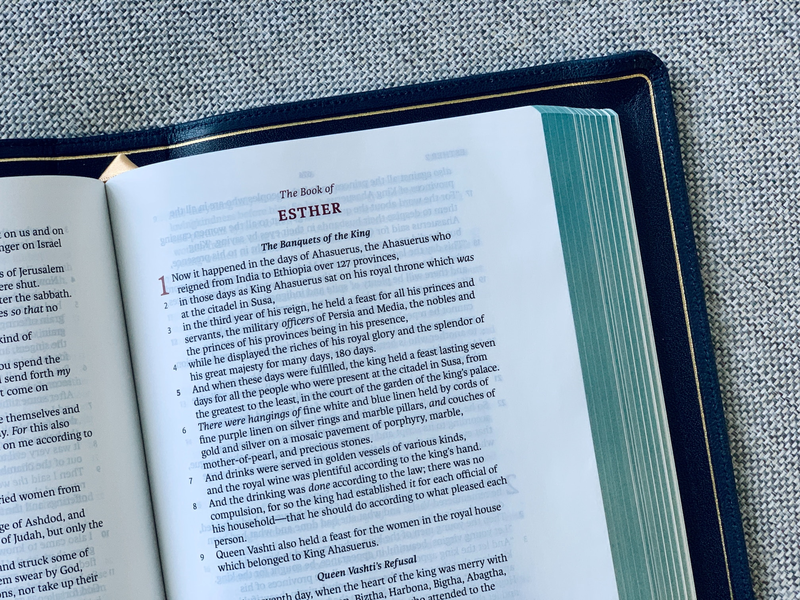
tim-wildsmith-j6jv-mkdzqs-unsplash
Esther

Esther: Historical & Chronological Comments (IV)

2. The Setting of the Book of Esther A. Xerxes (continued from previous issue) Ezra 6:14 says that the Jews finished building "according to the command of the God of Israel and the decree of Cyrus and Darius and Artaxerxes king of Persia." The problem with this verse is that…

by James B. JordanJune 28, 1996
ales-krivec-4mibe6zg5r0-unsplash
Acts

Jesus and Amalek

This essay goes with our previous study of the Amalek pattern back in Biblical Horizons No. 2. Since many do not have this essay, entitled "The Battle of Gog and Magog," let me cite the relevant paragraphs: Note in Genesis 12-15 that Abram moves into the land after escaping Pharaoh…

by James B. JordanJune 28, 1996
aaron-burden-1ebsmyrau-s-unsplash
Proverbs

The Strange Woman

Proverbs 7:6-23 is one of several passages early in the Proverbs in which Solomon warns his son about the wiles and dangers of the "strange woman." It is certainly quite proper to take these as straightforward warnings against sexual sins, and these are certainly warnings that need to be impressed…

by Peter LeithartJune 27, 1996
jan-kahanek-g3o5ztrk2e4-unsplash
Biblical Studies

Some Observations

1. In Luke 4:20 we read that after Jesus finished reading from Isaiah, "the eyes of all in the synagogue were fixed upon Him." This is usually taken in a psychological sense: They were amazed at Jesus somehow. I suggest that, as always, a merely psychological reading is a modern…

by James B. JordanMay 28, 1996
tim-wildsmith-j6jv-mkdzqs-unsplash
Esther

Esther: Historical & Chronological Comments (III)

2. The Setting of the Book of Esther Up to now we have assumed what we must prove, that the king in Esther is Darius the Great. While Biblical chronologists have usually taken this position, commentators on the book of Esther have often taken others as the king. One view,…

by James B. JordanMay 28, 1996

Showing page 265 of 309

See all
See all

Apocalyptic Spenser

In her contribution to The Apocalypse in English Renaissance Thought and Literature , Florence Sandler suggests that “Spenser presents to the Elizabethan reader a moral allegory with an Erasmian cast,” a “poem modelled on the Apocalypse” (150). The whole first book of the Fairie Queene , she suggests, can be…

January 21, 2016
Music

Heaven's Song

God is a God of speech. Robert Jenson has said we worship a talkative God, The first thing we learn about God is that He creates by speaking. John 1 deepens our understanding of that by telling us that God not only speaks, but that speech is one of His…

January 21, 2016

Anglicans and Religious Liberty

Over at The Spectator , James Mumford offers a hard-hitting analysis of the response to the recent Anglican summit. Mumford doesn't analyze the summit itself, but the blustering response from politicians and the press: “On Thursday the Labour shadow cabinet minister and former Anglican priest, Chris Bryant, declared he had…

January 21, 2016

Apocalypse Against Empire

Catherine Keller argues ( God and Power ) that apocalyptic vision turned “a local, territorializing Israelite faith” into a global one. Apocalyptic “formed first as a response to the imperial aggression of Babylon, which had traumatically deterritorialized Israel; then the Babylon of Isaianic apocalyptic became code for Rome.” In Christian…

January 20, 2016

Panic in Jerusalem

“For three transgressions of Damascus and for four. . . . for three transgressions of Gaza and for four. . . . For three transgressions of Tyre and for four. . . . For three transgressions of Edom and for four.” That is how Amos opens his prophecy: A series…

January 20, 2016

Literal and Figurative

Biblical scholars commonly criticize other biblical scholars for being inconsistent in their handling of literal and figurative language. If one bit of a text is literal, it is assumed, the whole must be; and vice versa. This demand for consistency is mistaken, and can only lead to absurdities. Take the…

January 20, 2016

Showing page 330 of 2212

Browse by Category

In Medias Res

Your weekly digest for all things Theopolis.

Donate

Theopolis is nearly 100% donor-supported. Consider joining us on our mission.