Theopolis Logo

Writing

Explore our collection of theological essays, biblical studies, and reflections on faith and culture.

See all
tanner-mardis-xuxghzhibn4-unsplash-1-2
Biblical Studies

Tweets-turned-Notes on the Bible’s Chronology

Summary In what follows, I will consider the “year-stamps” employed in Scripture, i.e., statements of the form, “Such-and-such an event took place in the Xth year of Y.” In the process, I will suggest some ways in which the Biblical narrative might relate to events in the extra-Biblical world, though…

by James BejonJuly 16, 2019
durer-prodigal-son-2
Luke

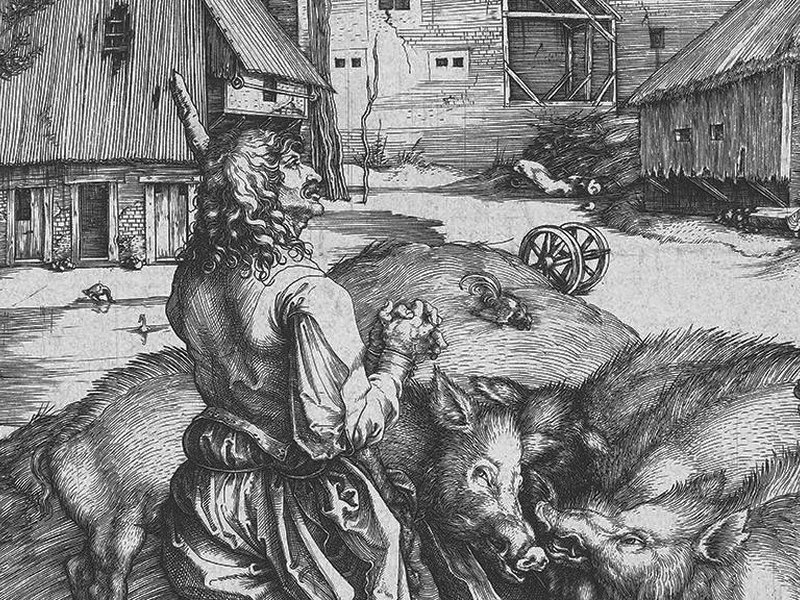
Perspectives on the Prodigal, (Part 2)

In the first essay on the parable of the Prodigal Son, I suggested that the problems commentators and others encounter in interpreting Jesus three-part parable are not accidental. These are not just problems in our ignorance of cultural background. They are intentional features of the stories —stories designed to poke…

by Ralph Allan SmithJuly 11, 2019
durer-prodigal-son-2
Luke

Perspectives on the Prodigal, (Part 1)

The story of the Prodigal Son is perhaps the most well-known story in the Bible. As others have observed, it may also be one of the most misunderstood. In two short essays, I will point out features of this story that are commonly neglected, aspects of Jesus’ parable that might…

by Ralph Allan SmithJuly 9, 2019
de-rijke-man-en-de-arme-lazarus-by-jacopo-da-ponte-16th-century
Luke

Lazarus and the Rich Man

The parable of Lazarus and the nameless rich man is not an independent story. It is part of a long context that begins in Luke 15:1, where Jesus is eating with tax collectors and sinners and the scribes and Pharisees grumble. In response to their hardheartedness, Jesus tells a three-part…

by Ralph Allan SmithJuly 4, 2019
aaron-burden-uynrnfdkjwg-unsplash
Luke

Everybody has Dropsy - Luke 14:1-24

The Bible is written so that even when a reader cannot pick up on what might be deeper or more detailed aspects of a text, there is virtually always a message to be heard. In the ancient world, where the “reader” of Scripture would likely be a church official facing…

by Ralph Allan SmithJuly 2, 2019
communion
Biblical Theology

Fruit Trees and Grain Plants

The distinction between garden (or vineyard) and field begins in Genesis 2. This relates to the ordering of the formless world. Plants of the field are contrasted with the garden planted by God in Genesis 2:5&8. Later on, under the Old Covenant the Israelites will be required to keep their…

by James B. JordanJune 27, 2019

Showing page 77 of 309

See all
See all

Ritual and Spontaneity

For the first 1500 years of its existence, Christianity was a liturgical faith. That began to change with Wyclif and the Hussites, and the Reformation produced permanent forms of un- and even anti-liturgical Christianity. Ceremony took on negative connotations, synonymous with hollowness and superstition. Ritual was no longer seen as…

October 13, 2015

Locusts and Honey

John the Baptist is presented in the gospels as the fulfillment of the Old Testament promise that God would send His messenger to prepare the way for the coming of the glory of the Lord (Isaiah 40), and the promise to send Elijah before Him to turn the people to…

October 12, 2015
Eucharist

Showing the Lord's Death

How does the Lord’s Supper proclaim the death of Jesus until He comes? (1 Corinthians 11:26). Historically, liturgists have attempted to locate some act in the rite of the Supper that corresponds to the death of Jesus: the fraction (breaking of bread), or the fact that bread and wine are…

October 12, 2015

Eucharistic Modalism

One of the earliest Trinitarian heresies is called “modalism.” It taught that the “persons” of the Trinity are not distinct persons, but only the masks or roles that the one Person of God adopts at various times. The fundamental problem with modalism is that it stretches out a veil, or…

October 12, 2015

Irritability and Intellect

We like to pretend our notions are the product of careful study and rational analysis. We like to pretend our likes and dislikes are deeply rooted in principle. Montaigne thought otherwise. In “An Apology for Raymond Sebond,” he wrote, “I have seen some, who without infringing their patience, could not…

October 12, 2015

From the Mouth

Four times Revelation refers to the sword that comes from the mouth of Jesus, twice at the beginning of the book (1:16; 2:16) and twice at the end (19:15, 21). Jesus' mouth-sword frames the book, and the four uses hint at His universal conquest: Jesus will extend the reign of…

October 9, 2015

Showing page 365 of 2212

Browse by Category

In Medias Res

Your weekly digest for all things Theopolis.

Donate

Theopolis is nearly 100% donor-supported. Consider joining us on our mission.