Theopolis Logo

Writing

Explore our collection of theological essays, biblical studies, and reflections on faith and culture.

See all
banner
Theopolis News

Theopolis Fellows Program Postponed

Since Theopolis began in 2013, we have been aiming for the fall of 2016 as the launch date for our year-long Fellows Program. As it turned out, we had only a handful of applicants, most withdrew for one reason or another (none for lack of interest), and we are left…

by Peter LeithartJuly 6, 2016
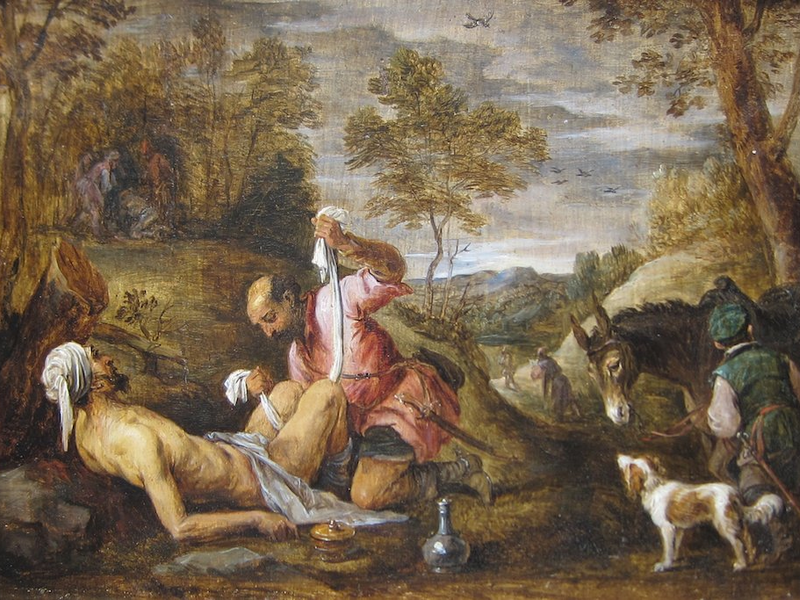
good-samaritan-2
Justice

Aiming at Shalom, (Part 1)

Charles Spurgeon once quipped, “If you give a man the gospel, wrap it in a sandwich. And if you give a man a sandwich, wrap it in the gospel.” With those words, the great Baptist preacher captured the essence of the church’s mission in the world. The church’s mission is…

by Rich LuskJuly 5, 2016
city-heaven
Contentment

Learning Contentment, (Part 2)

This is a continuation of a previous essay by Lindsey Tollefson . 6. We own everything . Sometimes the biggest thing that is keeping us discontent is because we are not happy with what we have been given in material possessions. Especially in the United States it is so easy…

by Lindsey TollefsonJune 30, 2016
medievalilluminatedmanuscript

Do Not Forget

Proverbs 3:1-12 form a section marked off by the reference to the father-son relationship at the beginning and end (vv. 1, 12). Within this section, Solomon gives a series of six commands to his son (vv. 1, 3, 5, 7, 9, 11), the first and the last (vv. 1, 11)…

by Peter LeithartJune 28, 2016
e99a1883
Theopolis News

Year-End Letter

A letter from Theopolis President Peter Leithart as our fiscal year draws to an end . Dear Friend of Theopolis: It was one of those moments when you realize that other people understand you better than you understand yourself. I was having lunch with a pastor friend at a BJ’s…

by TheopolisJune 27, 2016
sky-from-bridge
Contentment

Learning Contentment, (Part 1)

Learning to be content and completely satisfied in Christ is certainly a life-long process and a lesson that we are always learning, and always being tested on. As I am learning and wrestling against discontent, I am always looking for practical and tangible ways to set my course towards joy…

by Lindsey TollefsonJune 23, 2016

Showing page 129 of 309

See all
See all

Anointed Bread

Leviticus is the oilest book of the Bible. The Hebrew shemen is used 42 times (6 x 7); the closest competitor is Numbers, with 34 uses. The uses of shemen are clustered. Leviticus 2 uses the word 9 times, all with reference to the preparation of the tribute offering (…

March 25, 2019
egptian-art

Broken Noses

Why do so many Egyptian statues have broken noses? Julia Wolkoff summarizes the answer of Brooklyn Museum curator Edward Bleiberg. Noses protrude, and so are more apt to be knocked off accidentally, but the pattern is too consistent to be accident. Erosion could account for some, but not all. Bleiberg…

March 20, 2019
13714bedda625c2ec1816f0890ed72f4-snow-storms-image-photography
Ecclesiology

Ecclesial Ethics

Some snippets from Philip Turner's Christian Ethics and the Church . The premise of Turner's book is well summarized by a passage he quotes from Sabina Lovibond's Ethical Formation : "The ethical, let us say, pertains to what people learn to value through immersion in a community acquainted with ideas…

March 13, 2019

Nose to Nose

Levitical offerings send a "soothing aroma" ( reyach nichoach ) to Yahweh. Israel needs to produce good smells because her sin is noxious to Yahweh. When Israel rebels, His "nose burns." By slaughtering a substitute animal and turing it to smoke, Israel soothes Yahweh's hot nose. But that can't be…

March 11, 2019
Pneumatology

Reading in the Spirit

“Spiritual reading” is usually associated with patristic, monastic, and medieval modes of reading. It's fruitful, however, to shift the focus and ask what the Spirit has to do with our reading. The Spirit is the enlivening breath of God, the water of God who makes us into a fruitful garden.…

March 6, 2019
capitol-dc
Liberalism

Liberalism and Ecclesia

Liberalism is "in origin primarily a refusal of ecclesial power." So write John Milbank and Adrian Pabst ( Politics of Virtue , 31). In refusing ecclesial power, early modern political theorists renounced the arrangement of Latin Christendom. The "first polity knowing no bounds and truly based upon the rule of…

March 4, 2019

Showing page 46 of 2212

Browse by Category

In Medias Res

Your weekly digest for all things Theopolis.

Donate

Theopolis is nearly 100% donor-supported. Consider joining us on our mission.