Theopolis Logo

Writing

Explore our collection of theological essays, biblical studies, and reflections on faith and culture.

See all
tanner-mardis-xuxghzhibn4-unsplash-1-2
Biblical Studies

Tweets-turned-Notes on the Bible’s Chronology

Summary In what follows, I will consider the “year-stamps” employed in Scripture, i.e., statements of the form, “Such-and-such an event took place in the Xth year of Y.” In the process, I will suggest some ways in which the Biblical narrative might relate to events in the extra-Biblical world, though…

by James BejonJuly 16, 2019
durer-prodigal-son-2
Luke

Perspectives on the Prodigal, (Part 2)

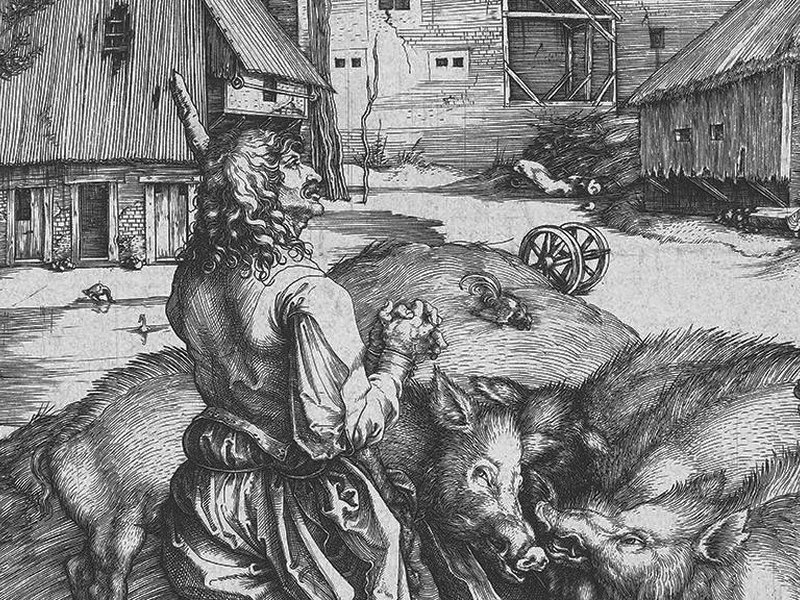
In the first essay on the parable of the Prodigal Son, I suggested that the problems commentators and others encounter in interpreting Jesus three-part parable are not accidental. These are not just problems in our ignorance of cultural background. They are intentional features of the stories —stories designed to poke…

by Ralph Allan SmithJuly 11, 2019
durer-prodigal-son-2
Luke

Perspectives on the Prodigal, (Part 1)

The story of the Prodigal Son is perhaps the most well-known story in the Bible. As others have observed, it may also be one of the most misunderstood. In two short essays, I will point out features of this story that are commonly neglected, aspects of Jesus’ parable that might…

by Ralph Allan SmithJuly 9, 2019
de-rijke-man-en-de-arme-lazarus-by-jacopo-da-ponte-16th-century
Luke

Lazarus and the Rich Man

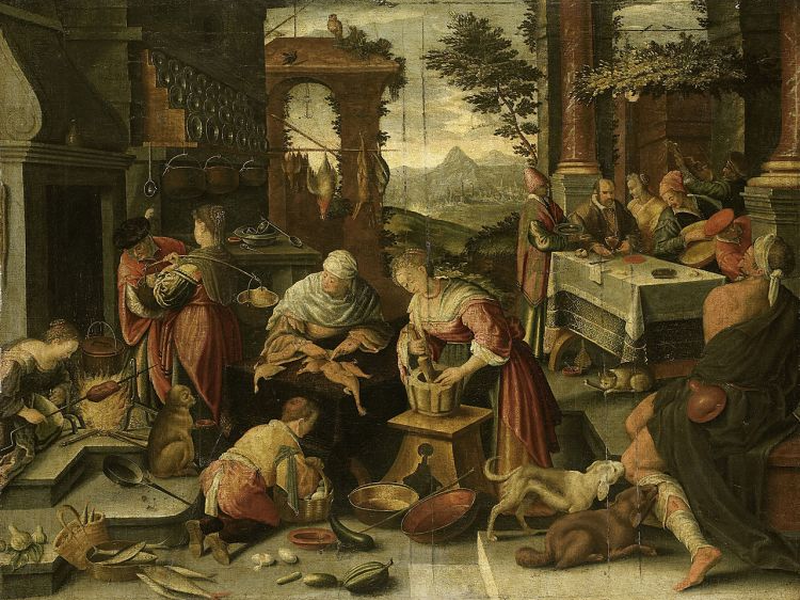
The parable of Lazarus and the nameless rich man is not an independent story. It is part of a long context that begins in Luke 15:1, where Jesus is eating with tax collectors and sinners and the scribes and Pharisees grumble. In response to their hardheartedness, Jesus tells a three-part…

by Ralph Allan SmithJuly 4, 2019
aaron-burden-uynrnfdkjwg-unsplash
Luke

Everybody has Dropsy - Luke 14:1-24

The Bible is written so that even when a reader cannot pick up on what might be deeper or more detailed aspects of a text, there is virtually always a message to be heard. In the ancient world, where the “reader” of Scripture would likely be a church official facing…

by Ralph Allan SmithJuly 2, 2019
communion
Biblical Theology

Fruit Trees and Grain Plants

The distinction between garden (or vineyard) and field begins in Genesis 2. This relates to the ordering of the formless world. Plants of the field are contrasted with the garden planted by God in Genesis 2:5&8. Later on, under the Old Covenant the Israelites will be required to keep their…

by James B. JordanJune 27, 2019

Showing page 77 of 309

See all
See all
Biblical Studies

Beastheology

God created two different kinds of land creatures, which are identified with two different sorts of names in the Old Testament. Wild animals are classified as “living things” ( chayyah ), while domesticated animals are classified as “cattle” ( behemah ). This is a division built into the original creation,…

October 24, 2014

From the Sea

At the beginning of Revelation 13, the dragon - Satan - goes to the seashore. He places himself in the same position as the Spirit at the beginning of creation, who hovered over the water and called up the land from the sea and the many other things from the…

October 24, 2014
Music

Musical Eschatology

In a 2009 First Things piece reprinted in It’s Not the End of the World: It’s Just the End of You , David P. Goldman explores how Western tonal music is able to capture higher orders of time and that evoke eternity. Drawing on Augustine’s account of time in terms…

October 24, 2014

Reconciling with Plato

One of the interesting findings of Patrick Fletcher’s Resurrection Realism , a study of Ratzinger’s Augustinian views on the resurrection, has to do with Ratzinger’s changing views of Platonism. Early on, Ratzinger saw Platonism as an enemy of Christian faith. He attempted to construct a “de-Platonized” eschatology that did not…

October 23, 2014
Communism

Communism, Lies and Illusion

Francois Furet’s Lies, Passions & Illusions is a best-seller in France. The little book is Furet’s portion of a conversation-debate with Paul Ricouer. Ricouer put aside his edited version of the conversation when Furet died in 1997, but Furet’s portion was completed and is not published. Furet’s analysis of twentieth…

October 23, 2014

Points of the Compass

In his Prison Notebooks , the Marxist writer Antonio Gramsci rebuts the abstracted philosophizing of Bertrand Russell: “Russell says approximately this: ‘We cannot, without the existence of man on the earth, think of the existence of London or Edinburgh, but we can think of the existence of two points in…

October 23, 2014

Showing page 509 of 2212

Browse by Category

In Medias Res

Your weekly digest for all things Theopolis.

Donate

Theopolis is nearly 100% donor-supported. Consider joining us on our mission.