Theopolis Logo

Writing

Explore our collection of theological essays, biblical studies, and reflections on faith and culture.

See all
308750rgsdl
Biblical Theology

Biblical Bestiary and Covenant Creatures, Part 3: Reunion of Man and Beast in Christ

Abbreviated Introduction to the Series Scripture is absolutely dripping with animal metaphors. Animal traits, characteristics, and appearances are attributed to God, Man, Angels, Nations, Armies. Since animals are the lowest creature in the three-tiered hierarchy, they are useful to metaphorically focus on a single aspect of God (bold like a…

by Jonathan WhiteOctober 27, 2025
screenshot-2025-10-21-at-2-22-31-pm
Matthew

Authority that Heals: Unpacking Matthew 4:18 – 10:4

Many years ago, while perusing Janice Anderson’s revised doctoral dissertation, Matthew’s Narrative Web: Over, and Over, and Over again , I was impressed by her attention to literary structures of repetition within and across Matthew’s Gospel. 1 Her research, in part, nudged me closer toward my present conviction that Matthew…

by Jonathan SedlakOctober 21, 2025
screenshot-2025-10-20-at-4-47-19-pm
Biblical Theology

Biblical Bestiary and Covenant Creatures, Part 2: The Animalistic Dehumanization of Sin

Abbreviated Introduction to the Series Scripture is absolutely dripping with animal metaphors. Animal traits, characteristics, and appearances are attributed to God, Man, Angels, Nations, Armies. Since animals are the lowest creature in the three-tiered hierarchy, they are useful to metaphorically focus on a single aspect of God (bold like a…

by Jonathan WhiteOctober 20, 2025
screen-shot-2025-10-14-at-7-34-36-am
Song of Songs

Like a Lily Among Thorns: Hailing the Suffering Christ in Canticles

“Like a lily among the thorns, so is my love among the maidens… My beloved is mine and I am his; he pastures among the lilies.” Song 2:2, 16 In chapter two of the Song of Solomon, the Beloved compares his Love to a lily among thorns. The language of…

by Mark BriansOctober 14, 2025
eric-welch-xuch5jnrfig-unsplash
Biblical Theology

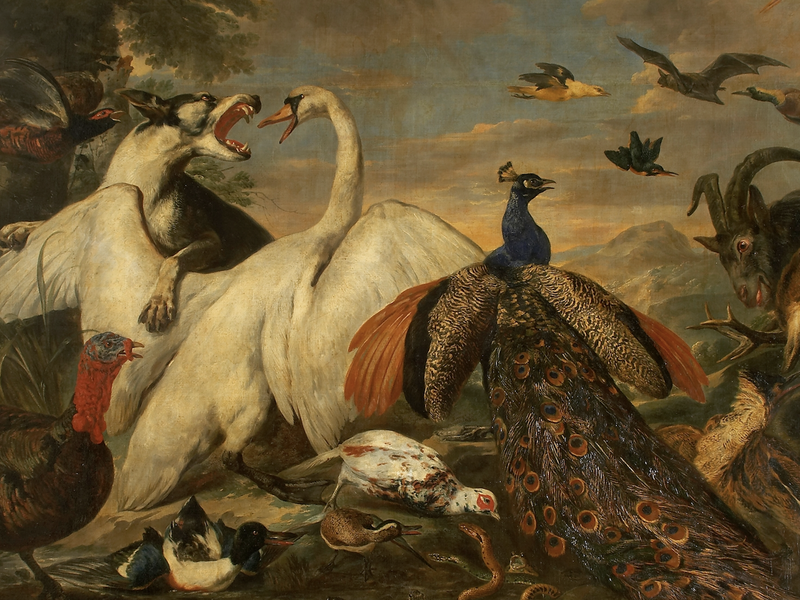
Biblical Bestiary and Covenant Creatures, Part 1: The Shared Spirit of Men and Beasts

Introduction From the very beginning, angels and animals have played mediating roles between God and Man. Just as the World was made three-tiered (Heaven, Earth, Deep), so the creatures were made (Angels, Men, Animals). Before Christ came to build the permanent bridge across the chasm between God and Man, various…

by Jonathan WhiteOctober 13, 2025
getty-images-nim1o1t51qq-unsplash
Matthew

Parables of Land and Sea in Matthew 13

Matthew 13, the third major discourse of the apostle’s gospel, is comprised almost entirely of parables. While it may seem that all the parables serve the same purpose in fulfilling the prophet Isaiah (Matthew 13:14), the parables found in verses 44–52, at the very least, function outside that purpose. This…

by David TownsendOctober 9, 2025
See all

Showing page 5 of 43

See all

Articulated time

According to Pickstock, Augustine’s musical ontology is not a mere subordination of space to time, or a univocal “Dionysian flow”: “just as important as the priority of time, for Augustine, is the insistence on articulation into distinct musical units or phrases, the very move which allows a stress upon the simultaneity…

September 14, 2009

Creation ex nihilo

Nothing comes from nothing.  That seems obvious, and Christians have traditionally had some difficulty explaining why creatio ex nihilo is a defensible violation of that basic principle. According to Catherine Pickstock, Augustine viewed creation ex nihilo as the most rational position.  All around us, “things are continuously coming to be…

September 14, 2009
Politics

Secular

In responding to Milbank’s analysis of Augustine on the secular, RA Markus ( Christianity And the Secular (Blessed Pope John XXIII Lecture Series in Theology and Culture) ) borrows MJ Hollerich’s summary of Milbank that there is no “neutral public sphere in which people can act politically without reference to…

September 14, 2009
Art

Kantradictions

Jean-Marie Schaeffer ( Art of the Modern Age: Philosophy of Art from Kant to Heidegger (New French Thought Series) has a blast pointing out the contradictions in Kant’s aesthetics. Most of them arise from Kant’s insistence that the judgment of taste is founded on “the form of a finality” that…

September 12, 2009
Philosophy

Effects and Causes

Can effects double as causes? Kant, still working with some form of final causality, thinks so: There are cases when “the thing that for the moment is designated effect deserves none the less, if we take the series regressively, to be called the cause of the thing of which it…

September 12, 2009
Art

Gnostikant

Evidence that Hamann had Kant right: In explaining taste as a common sense, he notes that this common sense of beauty can be arrived at by a process of stripping off whatever belongs to our perception and prejudice. That is, we put “ourselves in the position of every one else,…

September 12, 2009

Showing page 1351 of 2212

Browse by Category

In Medias Res

Your weekly digest for all things Theopolis.

Donate

Theopolis is nearly 100% donor-supported. Consider joining us on our mission.