Theopolis Logo

Writing

Explore our collection of theological essays, biblical studies, and reflections on faith and culture.

See all
alexander-mils-my9sd3hm3ja-unsplash
American Culture

Charlie Kirk and the Biblical Cycle of History: A Response to Mark Horne

Mark Horne has done a good job elucidating how martyrdom paves the way for revival and success of Christ’s kingdom in the world, just as it also can bring more hardship and suffering. The diverging wheat and tares both growing up together, both benefitting from the watering of blood on…

by Jackson WatersOctober 7, 2025
andre-chipurenko-4wue5dqnxsw-unsplash
Isaiah

Masters of Allusion: Prophecy as Spiritual War (Part 2)

For Part 1, click HERE . Anyone who has read James B. Jordan’s Through New Eyes: Developing a Biblical View of the World and appreciated it as a revelation of how God communicates in symbols and types—both in His Word and in the created order—understands what it is like to…

by Mike BullOctober 2, 2025
screenshot-2025-09-26-at-11-20-00-am
American Politics

What I Wish Christians Understood about Charlie Kirk's Murder

Abel was the first martyr in history. There is no evading this. Jesus pairs him with a murdered prophet (Matthew 23:35; 2 Chronicles 24:20-22). Abel’s blood was heard by God (Genesis 4:10), and God responded to the cry by driving out Cain, Abel’s killer, from the eastern borderland near Eden…

by Mark HorneSeptember 26, 2025
andre-chipurenko-4wue5dqnxsw-unsplash
Isaiah

Masters of Allusion: Prophecy as Spiritual War (Part 1)

Adapted from The Shape of Isaiah: A Covenant-Literary Analysis The prophetic texts are the most difficult parts of the Bible to understand. And when it comes to baffling the reader, they are no respecter of persons, perplexing with their Delphic wiles even the studied scholars. It has been said that…

by Mike BullSeptember 25, 2025
jonahwhale-1552x900
Jonah

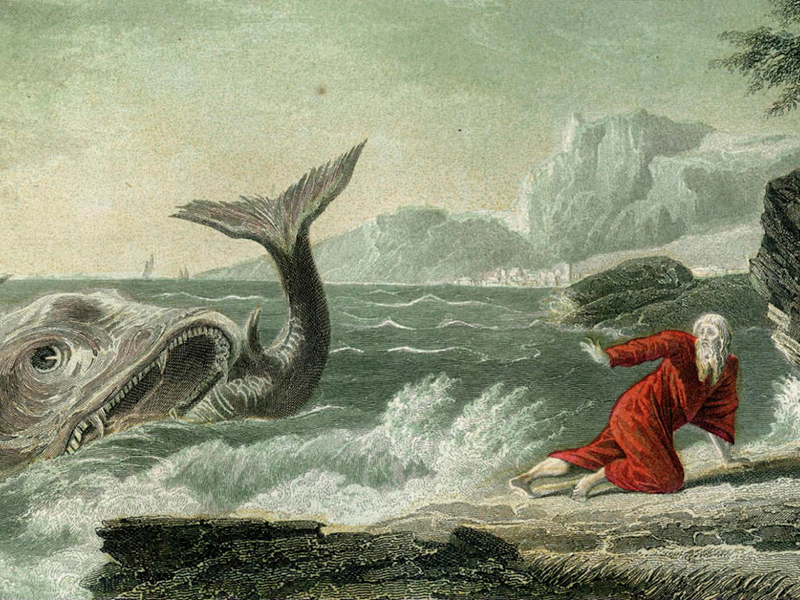
Is Jonah a True Story?

The subtitle for the 2004 film Dodgeball is “A True Underdog Story.” If the viewer lets the words pass by without a double-take, he or she will likely spend the rest of the movie, which applies the “unlikely teammates make the best teams” trope to the “sport” of dodgeball, asking,…

by Kelly HahnSeptember 23, 2025
screenshot-2025-09-18-at-9-14-57-am
Ezra

Holy Dishes

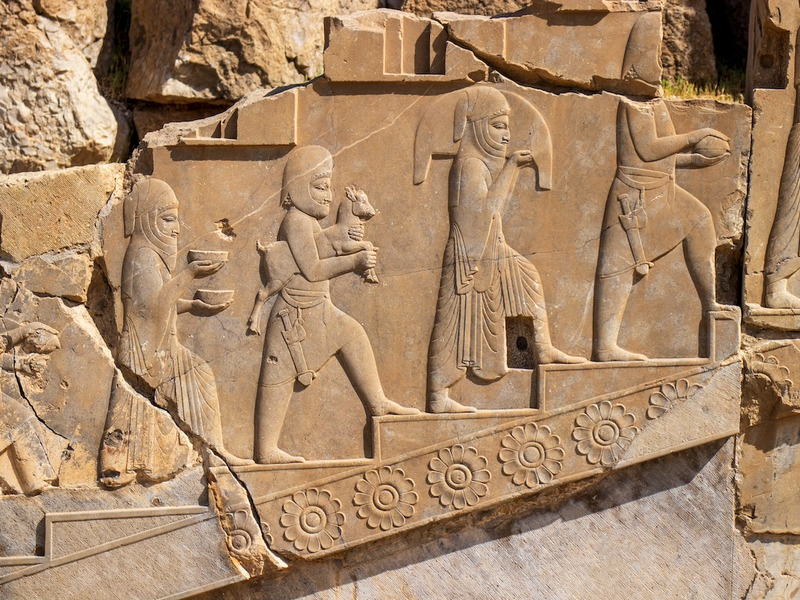
The book of Ezra gives an almost odd amount of attention to vessels. These holy vessels, whether cups, bowls, or flagons, are either dedicated as tribute or were used in temple service. The two Hebrew words translated as ‘vessel’ in most English translations are used a total of 14 times.…

by Jason SvintsitskySeptember 18, 2025
See all

Showing page 5 of 43

See all

Articulated time

According to Pickstock, Augustine’s musical ontology is not a mere subordination of space to time, or a univocal “Dionysian flow”: “just as important as the priority of time, for Augustine, is the insistence on articulation into distinct musical units or phrases, the very move which allows a stress upon the simultaneity…

September 14, 2009

Creation ex nihilo

Nothing comes from nothing.  That seems obvious, and Christians have traditionally had some difficulty explaining why creatio ex nihilo is a defensible violation of that basic principle. According to Catherine Pickstock, Augustine viewed creation ex nihilo as the most rational position.  All around us, “things are continuously coming to be…

September 14, 2009
Politics

Secular

In responding to Milbank’s analysis of Augustine on the secular, RA Markus ( Christianity And the Secular (Blessed Pope John XXIII Lecture Series in Theology and Culture) ) borrows MJ Hollerich’s summary of Milbank that there is no “neutral public sphere in which people can act politically without reference to…

September 14, 2009
Art

Kantradictions

Jean-Marie Schaeffer ( Art of the Modern Age: Philosophy of Art from Kant to Heidegger (New French Thought Series) has a blast pointing out the contradictions in Kant’s aesthetics. Most of them arise from Kant’s insistence that the judgment of taste is founded on “the form of a finality” that…

September 12, 2009
Philosophy

Effects and Causes

Can effects double as causes? Kant, still working with some form of final causality, thinks so: There are cases when “the thing that for the moment is designated effect deserves none the less, if we take the series regressively, to be called the cause of the thing of which it…

September 12, 2009
Art

Gnostikant

Evidence that Hamann had Kant right: In explaining taste as a common sense, he notes that this common sense of beauty can be arrived at by a process of stripping off whatever belongs to our perception and prejudice. That is, we put “ourselves in the position of every one else,…

September 12, 2009

Showing page 1351 of 2212

Browse by Category

In Medias Res

Your weekly digest for all things Theopolis.

Donate

Theopolis is nearly 100% donor-supported. Consider joining us on our mission.