Theopolis Logo

Writing

Explore our collection of theological essays, biblical studies, and reflections on faith and culture.

See all
31-03-0213
Hermeneutics

Apocalyptic Eyes

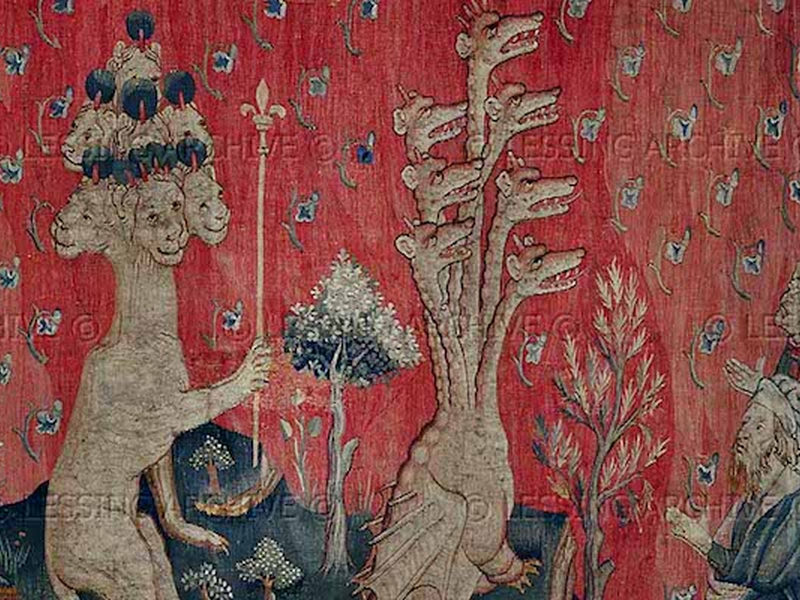
Flying scrolls. Red horses. Beasts coming out of the sea. Winged women. The list goes on. Apocalyptic literature in the Bible is like a cross between science fiction and Marvel comics. And the Bible has a fair bit of this sort of thing. Daniel sees visions in Babylon, Zechariah sees…

by Toby SumpterNovember 4, 2014

bhm-skyline-2
Theopolis News

New Name, New Look

Trinity House Institute has taken a new name, the Theopolis Institute. This striking new name expresses our unique vision and mission and captures the unified purpose behind all our specific programs and activities. We still have Bible, liturgy, and culture in our tagline. We still offer the same courses on…

by TheopolisNovember 4, 2014
istock_000012860926small
Atonement

Not Fearing the Devil

Adam Kotsko offers a socio-political variation on the Christus Victor atonement theory in his 2010 study, The Politics of Redemption: The Social Logic of Salvation . He does this by explaining "the devil" in terms of the Hegelian concept of "objective spirit," Geist . As Kotsko puts it, Geist "refers…

by Peter LeithartOctober 13, 2014
jez-timms-8muutamcwu4-unsplash
Leviticus

The Meaning of Sacrifice

Two factors keep Nahtali Meshel from discussing the meaning of sacrifice until late in his The "Grammar" of Sacrifice . The first has to do with the texts he draws from: "P says little about the meaning of its rituals" (174). The other has to do with the grammatical theory…

by Peter LeithartOctober 8, 2014
jez-timms-8muutamcwu4-unsplash
Leviticus

Praxemics

Chapter 5 of Naphtali Meshel's The "Grammar" of Sacrifice focuses on "praxemics," the physical actions of sacrificial ritual. Praxemes are constituted by six elements: an "atomact," an elementary physical act or gesture; an actor; an object that is acted up; a target for the action and often for the object…

by Peter LeithartOctober 6, 2014
markus-winkler-aid-xyrtlec-unsplash
Leviticus

Jugation and Hierarchy

Two chapters of Naphtali Meshel’s The “Grammar” of Sacrifice cover what he calls “jugation” and “hierarchies.” The first involves the addition of other materials to an animal offering. Jugates include wine, cereal, and oil that are added to the animals (zoemes) that are offered in sacrifice. Some jugates are coordinated…

by Peter LeithartOctober 1, 2014

Showing page 167 of 309

See all

Showing page 5 of 43

See all

Modern Sphinx

Modernity, Sergei Bulgakov once said, is a sphinx. It poses a riddle, and those who cannot or will not answer the riddle are devoured. The editors of Political Theology in Orthodox Christianity cite this at the beginning of their study to highlight the ambivalence of modernity. It has both constructive…

September 22, 2017

Bach the Modern?

"One of the factors that has rendered [Bach's] Matthew Passion so successful over the course of its reception," writes John Butt ( Bach's Dialogue with Modernity , 36), "lies in its evocation of subjectivities that somehow resonate with those of the broader modern condition." Bach's Passions target "the individual believer,…

September 22, 2017

Liturgy In Secular Imagination

Alastair Roberts's contribution to Our Secular Age , a collection of essays on Charles Taylor's A Secular Age , focuses on the effect of secularism on liturgical piety. Taylor identifies "authenticity" as one of the features of our secular age, and Roberts observes that this can take the form of…

September 22, 2017

US By TR

Graham Allison's Destined for War is a study of contemporary politics, Sino-American relations in particular. Along the way, he asks what we would think if China started acting like the U.S. did as we rose to global prominence. The career of Teddy Roosevelt makes the point: “ In the decade…

September 22, 2017

Late Bloomer

William Golding, writes Allan Massie in a review of John Carey's biography in the TLS , was "a late starter, one oppressed in youth by doubts and feelings of social, and perhaps intellectual, inferiority. Until his middle forties he was a poor, reluctant and unsatisfied provincial schoolmaster." He more than…

September 22, 2017

Fire Makes the Man

John Lanchester reviews James Scott's latest ( Against the Grain ) in the New Yorker . Scott contends that human civilization is the product of our mastery of fire. Fire enabled humans to cook food, and that gave us, Scott argues, and evolutionary advantage. Chimps put a lot of (unconscious)…

September 22, 2017

Showing page 141 of 2212

Browse by Category

In Medias Res

Your weekly digest for all things Theopolis.

Donate

Theopolis is nearly 100% donor-supported. Consider joining us on our mission.