Theopolis Logo

Writing

Explore our collection of theological essays, biblical studies, and reflections on faith and culture.

See all
tanner-mardis-xuxghzhibn4-unsplash-1-2
Deuteronomy

The Second Word II: Seeing & Hearing; Exposition

Hearing, Seeing, and History God is Word, not picture. He speaks, but He is not visible in Himself. Thus, God initiates history through language. He speaks the world into existence, and speaks to us to bring us out of formlessness and emptiness into the fullness of being His Bride. Similarly,…

by James B. JordanAugust 10, 1994
tim-wildsmith-jyculofqjak-unsplash-1
Biblical Studies

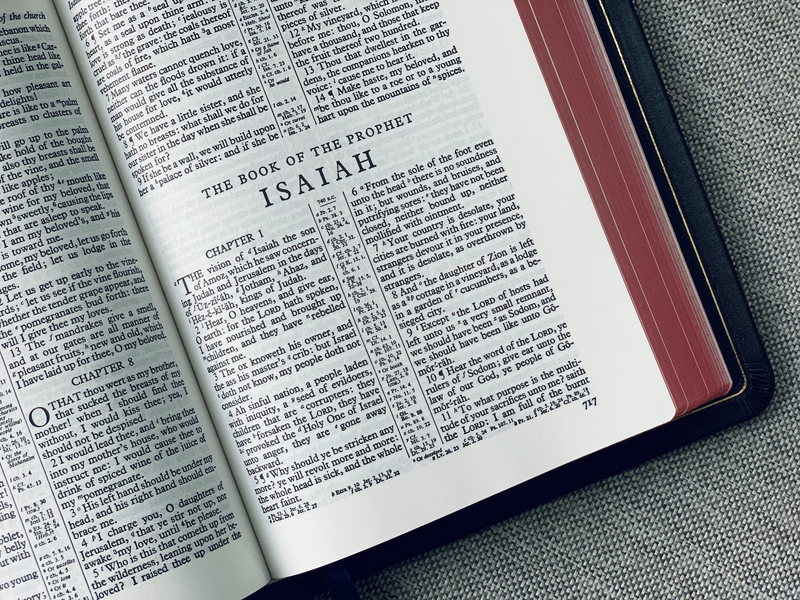
Passover and Exodus in Isaiah

The consensus of modern critical scholarship is that the book assigned to Isaiah was in fact composed by several different hands. "Deutero-Isaiah" supposedly begins with Isaiah 40:1. There are many good reasons for rejecting this conclusion. Among these, the narrative pattern of chapters 36-39 is a neglected piece of evidence.…

by Peter LeithartJuly 23, 1994
davide-ragusa-slgtmf8ejye-unsplash
Biblical Horizons

Human Life in Four Directions

Eugen Rosenstock-Huessy has pointed out throughout his many fascinating and occasionally quixotic writings and lectures that human life exists in four directions. These four directions are inward, outward, backward, and forward. In this article I want to explore these as they relate to the work of the Church. Each of…

by James B. JordanJuly 10, 1994
jan-kahanek-g3o5ztrk2e4-unsplash
Biblical Chronology

The Chronology of the Pentateuch (Part 5)

14. Joseph and Judah Genesis 38 tells us about Judah’s sons and grandsons, and if we try to get these events into the time before the descent of the Hebrews into Goshen, it is very difficult to do so. But this passage is almost certainly dischronologized. Thematically Genesis 38 is…

by James B. JordanJuly 10, 1994
trnava-university-sd8ujsf4xm4-unsplash
Art

A Short Survey of Good Fantasy and Science Fiction for Christian Schools and Home Schools

From time to time I am asked what is good SF and fantasy that teenagers in Christian and home schools might enjoy. The following brief discussion is my answer that question. I’ve tried to point out authors and stories that are not widely known, and therefore have set aside G.…

by James B. JordanJuly 10, 1994
whichbooksbelongintheot
Hermeneutics

Daniel 12:2

"And many of those who sleep in the dust of the ground will awaken, some to life everlasting and others to disgrace, to contempt everlasting." This verse is often cited as proof that there was a belief in the resurrection of the body in the Old Testament times. In fact,…

by James B. JordanJune 10, 1994

Showing page 277 of 309

See all

Showing page 5 of 43

See all
History

German Modernity

In the course of a review of Timothy Ryback’s recent book on Hitler’s library, Anthony Grafton comments on the connection between critique and occultism in early twentieth-century thought: “it is wrong to dismissed the esoteric strains in German thought in the early decades of the twentieth century simply because they…

December 20, 2008
Economics

Economies, Advanced and Primitive

Christopher Caldwell ends an intriguing article on William Bagehot ( Weekly Standard , 12/22) with this: “To be blunt, credit is successfully reestablished when financial elites say, ‘When.’ Credit is close to a synonym for the mood of the ruling class. To say an economy is based on credit is…

December 20, 2008

Wise Men

Mike Bull from Australia sent the following, which I reproduce with his permission: “We don’t know how many wise men travelled from the east, but perhaps we can make a guess via God’s deliberate typology. “We do know there were three gifts. With Christ as the human Ark of the…

December 18, 2008

India Islamicism

Philip Jenkins has an excellent brief introduction to the thought of the Indian Muslim thinker, Syed Abul Ala Mawdudi, in the December 24 issue of TNR . He writes: “His guiding assumption was a totalistic view of Islam: Everything in the universe was God’s creation, so Muslims could freely use…

December 17, 2008
Biblical Studies

Scapegoat

Priests used lots to select a scapegoat on the day of atonement (Leviticus 16:8-10). Joshua used lots to locate Achan the troubler of Israel; Achan was a scapegoat, whose death cleansed the people so they could defeat Ai. Haman threw lots, trying to pinpoint the time for offering the scapegoat…

December 17, 2008

Judaizing and the church calendar

Some Reformed charge that celebration of the seasons of the church calendar is Judaizing, a reversion to the slavery of the Old Covenant. More the opposite: The Reformed anti-calendar view says that we keep appointments with God only when He strictly and explicitly commands it. They do not think human…

December 14, 2008

Showing page 1435 of 2212

Browse by Category

In Medias Res

Your weekly digest for all things Theopolis.

Donate

Theopolis is nearly 100% donor-supported. Consider joining us on our mission.