Theopolis Logo

Writing

Explore our collection of theological essays, biblical studies, and reflections on faith and culture.

See all
hebrew-manuscript-2
Hebrews

The Unseen Things

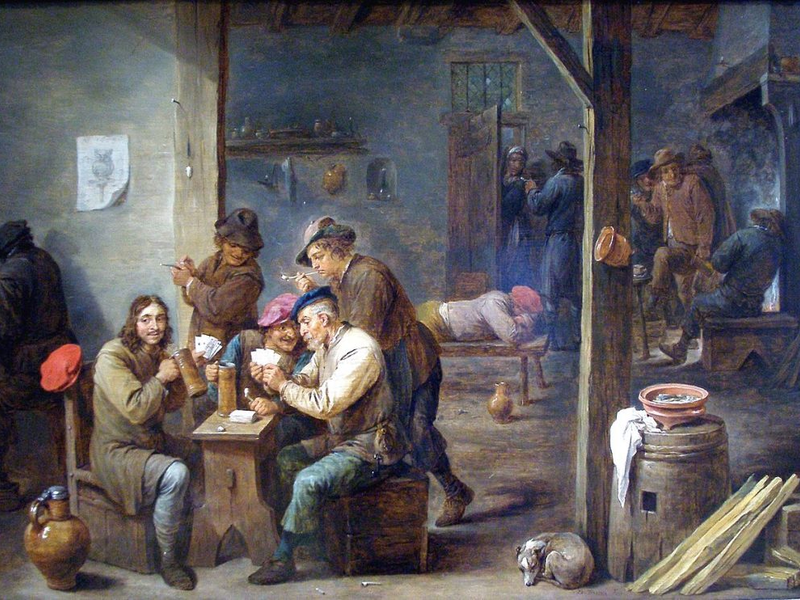
Now faith is the substance of things hoped for, the evidence of things not seen (Hebrews 11:1). The famous definition of faith with which the eleventh chapter of Hebrews opens has received a number of different interpretations. The crux of the problem is the interpretation of the words translated in…

by Peter LeithartJune 26, 2018
1200px-tavern_scene-1658-david_teniers_ii
John

The Gospel of John, Friendship, and the Homoerotic

This essay is an exploration of one element of the final of the four Gospels, the Gospel of John. My thesis is that the Gospel of John answers the issue of "friendship" being a homoerotic category. It challenges the "Greek Way of Love and Friendship" 1 It is indeed the…

by Richard BledsoeJune 21, 2018
e99a2225
Matthew

Building the Church

"And I also way to you that you are Peter, and upon this rock I will build My church; and the gates of Hades shall not overpower it" (Matthew 16:18). Matthew 16:13ff. has historically been one of the most oft-cited passages of Scripture. Throughout the Middle Ages, it was used…

by Peter LeithartJune 19, 2018
screenshot-2023-08-30-at-11-50-23-am
Matthew

Funerals and Flutes

Matthew 8-9 records three clusters of miracles, interspersed with snatches of Jesus’ teaching about various aspects of discipleship. Just as the Sermon on the Mount displays the authority of Jesus’ Word in teaching, these chapters display the authority of Jesus’ Word over sickness, uncleanness, the creation, demons, and death. In…

by Peter LeithartJune 14, 2018
screen-shot-2018-06-12-at-10-23-11-am
Biblical Theology

The Ecclesiology of Wells

The association of women and wells in the Scriptures has long been noted by theologians, a symbolism closely connected to marriage which begins in Genesis and climaxes in Revelation. There is a lesson drawn in the water of wells that I’d like to explore, but before that I must trace…

by Remy WilkinsJune 12, 2018
sleep
Proverbs

Was Solomon Paleo? Primal Reality and the Wisdom of Proverbs

Of course, since the Israelites had agriculture, Solomon was not paleolithic as that term is used today. But "paleo" is simply a prefix meaning old or previous , the opposite of "neo." In that sense, I wonder if we might understand Solomon better if we interpret his statements and riddles…

by Mark HorneJune 7, 2018

Showing page 92 of 309

See all

Showing page 5 of 43

See all
History

Constantine, ecumenist

In 325, Constantine wrote a letter announcing the deposition of Eusebius of Nicomedia. As Timothy Barnes points out, it exemplifies the “pattern of respect tempered with frustration” that characterized Constantine’s relations with the bishops. One passage is reminiscent of Paul’s rebuke of the Galatians: “it was truly worthy of wonder…

November 19, 2008

Eucharistic meditation

2 Chronicles 3:1: Solomon began to build the house of Yahweh in Jerusalem on Mount Moriah, where the Lord had appeared to his father David, at the place that David had prepared, on the threshing floor of Ornan the Jebusite. Naomi gives Ruth specific instructions for her approach to Boaz:…

November 16, 2008

Exhortation

Ruth 3 begins and ends with “rest.” Naomi seeks “rest” for Ruth (v. 1), and after Ruth meets Boaz on the threshing floor, Naomi assures her daughter-in-law and Boaz will not “rest” until he has finished the task. That’s his job as a redeemer: To bring rest. Redeemers buy brothers…

November 16, 2008

Public liturgy

Fenn quotes Daniel Bell’s complaints that liturgies “drain” energies that should belong to useful institutions like political parties and comments “On this view, the genuine public sphere is outside the church, which becomes the sphere of private self-absorption and self-celebration.” By contrast, “to the believer, it is the liturgy that…

November 15, 2008

Liturgical politics

Fenn again: Liturgy is the public work of the people and thus “to be a person . . . meant [for the Greeks] precisely to have a role in the public work of the community.” Thus, “to take part in the Christian liturgy is to take on one’s role in…

November 15, 2008
History

Witness, Liturgy, Modernity

Richard Fenn writes, “In secularized Western societies . . . many individuals are caught in a double-bind. On the one hand, they take seriously the role of the credible witness, and seek, on grounds of their own testimony, to be taken seriously, whether they are reporting what they saw on…

November 15, 2008

Showing page 1447 of 2212

Browse by Category

In Medias Res

Your weekly digest for all things Theopolis.

Donate

Theopolis is nearly 100% donor-supported. Consider joining us on our mission.