Theopolis Logo

Writing

Explore our collection of theological essays, biblical studies, and reflections on faith and culture.

See all
screen-shot-2020-03-05-at-9-00-10-am
Motherhood

Raising Children in a Gender Confused World

Raising children in a world that is increasingly rebellious against God-given gender is quite a challenge. I believe that every generation has their own unique challenges to face, and LGBTQ is ours. It is the movement that steals our terminology (love, kindness, community) and our symbol of promise (the rainbow)…

by Lindsey TollefsonJune 29, 2021

herode-tissot-crop
2 Thessalonians

The Lawless Man: When Christ Exposed a Conspiracy

While there are many tricky verses in the Bible, it’s clear that some of them were never intended to give us so much trouble. Paul’s mysterious mention of the “restrainer” in 2 Thessalonians 2 is a perfect example, but perhaps we have been looking at it the wrong way. Reading…

by Mike BullJune 22, 2021
mark-rabe-p0gsveiycqu-unsplash
Christian Nationalism

Catholicity, the Church, and Christian Nationalism?

A common assumption of those most critical of “Christian nationalism” is that such a conception is inherently racist and opposed to the universal nature of the Christian faith. Many argue that Christian nationalism undermines a catholic sensibility by tethering Christianity to the particularities of the nation, and usually to a…

by James WoodJune 17, 2021
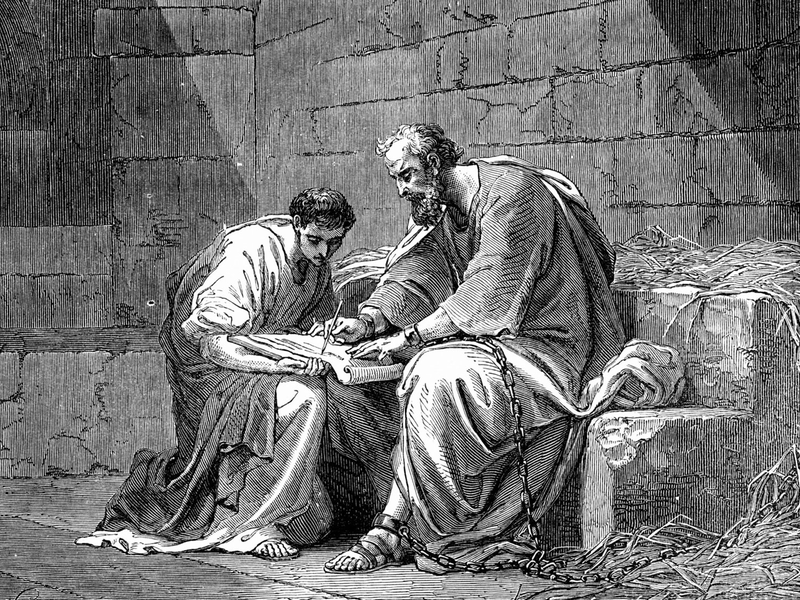
paul-the-apostle-epistle-prison-ephesians
Galatians

Ahab in Galatia

In his letter to the Galatians, Paul speaks of those who “trouble” their congregations: “[T]here are some who trouble you and want to distort the gospel of Christ” (1:7). 1 The word “trouble” caught my attention here, because in 1 Kings 18:17, King Ahab refers to Elijah the prophet as…

by Daniel HoffmanJune 15, 2021
margaux-bellott-r5tmusupjwa-unsplash
American Culture

What To Do When Your Boss Encourages You To Support The Moral Revolution

Many Christians find themselves working for businesses or corporations that encourage compliance with the moral revolution. Perhaps their company wants them to participate in gay pride month. Perhaps they require employees to use the preferred gender pronouns of their co-workers. Or maybe they require them to sign a statement affirming…

by Jason CherryJune 11, 2021
tim-marshall-k2u71wv2ei4-unsplash-1
Matthew

Masculinity in Jesus and John

“For John came neither eating nor drinking, and they say, He hath a devil. The Son of man came eating and drinking, and they say, Behold a man gluttonous, and a winebibber, a friend of publicans and sinners. But wisdom is justified of her children.” – Matthew 11:18-19 When conservative…

by Matthew CarpenterJune 10, 2021

Showing page 54 of 309

See all

Showing page 5 of 43

See all

Essential/Accidental Meaning

Gracia’s own suggestion is that we can make sense of the determinateness and indeterminateness of meaning by distinguishing between “essential” and “accidental” meanings: “although texts may have a well-delimited core of meaning (an essential meaning), they may have other meanings that are the result of contingent conditions, such as changes…

June 6, 2008

No Smoking

In the entry on meaning in the Dictionary for Theological Interpretation of the Bible (Baker), Jorge Gracia responds to the view that textual meaning has no limits with this: It is true that “texts are understood by different persons, or even by the same person at different times, to mean…

June 6, 2008

Tallis

Joel Garver writes, in response to several posts from Raymond Tallis’s Not Saussure : “Most post-structuralist authors I’ve read aren’t dealing with things such as cups or trees or rocks, but rather things such as rationality, madness, criminality, virtue, etc. Foucault, for instance, seems to take bodies as ontologically basic,…

June 5, 2008
Literature

Bible and poetry

Fisch yet again: After reviewing the influence of the Old Testament, especially the Psalms, on prose writing in the seventeenth century, he adds: “it is worth bearing in mind that this is not only a matter of the seventeenth century. It is found earlier in the antiphonal plain-song of the…

June 5, 2008
Literature

Hebraic prose

Fisch again: Hebraic prose is different from the grand style of the sixteenth century, and different too from the pared-down plain style shared by many Puritans and all Baconians. It is a rhetoric, not an anti-rhetoric, but it is a rhetoric purified by Puritanism, Senecanism, and scientism. It is biblical…

June 5, 2008
Literature

Jerusalem and Albion

In his 1964 book, Jerusalem and Albion: The Hebraic Factor in Seventeenth-Century Literature , Harold Fisch argues that Blake provides a more insightful and broader account of the seventeenth century’s “dissociation of sensibility” than Eliot, who coined the phrase. For Blake, the great crisis of England was the dissociation of…

June 5, 2008

Showing page 1507 of 2212

Browse by Category

In Medias Res

Your weekly digest for all things Theopolis.

Donate

Theopolis is nearly 100% donor-supported. Consider joining us on our mission.