Theopolis Logo

Writing

Explore our collection of theological essays, biblical studies, and reflections on faith and culture.

See all
e99a9334
Advent

Stretching Christmas

For many people Christmas comes on December 25 and is over December 26. The tree is taken down along with the lights and the other decorations, and everyone begins setting the house in order for the new year. No more Christmas hymns. No more celebrations (well, until New Year’s Eve).…

by Steve WilkinsDecember 24, 2016
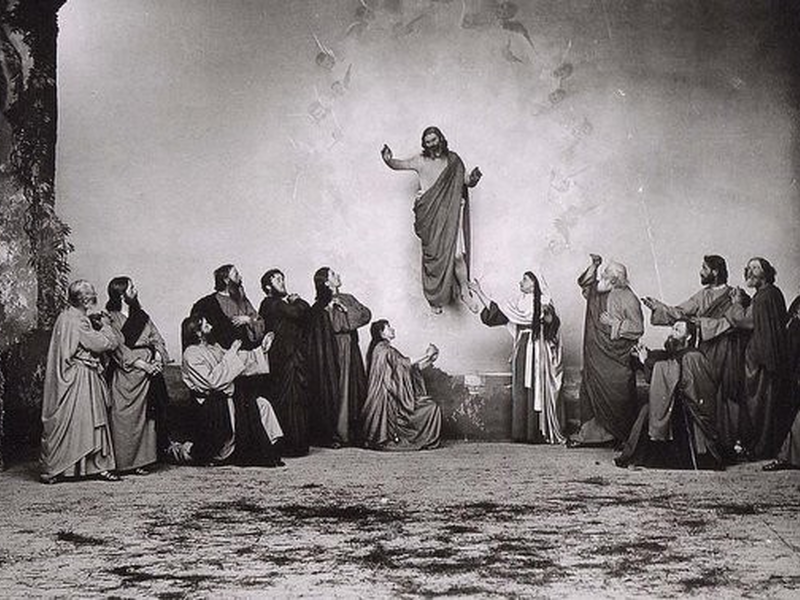
ascension
Advent

Ascension and Incarnation

The Ascension and the Incarnation should not be disconnected in our Christmas thinking or celebrations. As N.T. Wright notes, the ascension is "a central and vital feature without which all sorts of other things start to go demonstrably wrong. . . . where the ascension has been ignored or misunderstood,…

by Roy AtwoodDecember 23, 2016
nativity-rembrandt
Advent

Christmas Light

“In the Word was life, and the life was the light of men. And the light shines in the darkness.” Thus John describes the incarnation of the Son. He comes as the living and life-giving light of the world. That’s good news. In the beginning, God spoke and light shone…

by Peter LeithartDecember 23, 2016
nativity-chagall
Advent

The Spirit of Christmas

Christmas is all about Jesus. The angels announce Jesus’ birth, shepherds and wise men come to see Jesus, Herod wants to kill Jesus. We occasionally think of the Father who sent the Son, but we keep returning to the Son made flesh in Bethlehem’s manger. Meanwhile, as always, the Spirit…

by Peter LeithartDecember 22, 2016
nativity
Advent

The Humility of God

Christmas is about many things, but one of the chief things revealed in the gospel of Christmas is the humility of God. We don't often think of humility as an attribute of God. If God is glorious and exalted, we think, He must be haughty and proud and self-centered. We…

by Peter LeithartDecember 21, 2016
screenshot-2025-12-15-at-8-35-45-am
Advent

Advent of Unity

John famously begins his Gospel with a piece of theology: “In the beginning was the Word, and the Word was with God, and the Word was God.” Matthew starts with a genealogy. John celebrates Advent with a hymn, Matthew with a list. For John, Jesus is the Word of creation…

by Peter LeithartDecember 20, 2016

Showing page 120 of 309

See all

Showing page 5 of 43

See all

Multiple Meanings

What do we do when we disagree about what the Scriptures say? Augustine's answer to that question has rarely been put into practice. This from The Literal Meaning of Genesis : “And when we read in the divine books such a vast array of true meanings, which can be extracted…

August 11, 2017

Searching for Sincerity

Jon Baskin's piece on David Foster Wallace is the best thing I've come across on Wallace. He starts with the arresting claim that in time “it will be recognized that Wallace had less in common with Eggers and Franzen than he did with Dostoevsky and Joyce.” His fiction is a…

August 10, 2017

Creative Destruction

H ezekiah “completes” a Passover (2 Chronicles 31:1a), then starts breaking things. He continues until the destruction is also “complete” (2 Chronicles 31:1b; Heb. kalah ). He breaks pillars, cuts down Asherim, and pulls down high places and altars. Hezekiah's purge is described in a single complex verse, 2 Chronicles…

August 9, 2017

Kantian Emotions

A “Kantian chapter on emotion and responsibility,” write John Sabini and Maury Silver ( Emotion, Character, and Responsibility ), ...is easy to write and quick to read: the domain of the moral is the domain of the will expressed in action; it is the domain of that for which we…

August 8, 2017

Reformation Disenchantment?

S ince at least Max Weber, historians and sociologists have assumed that the Reformation contributed to what Weber called the “disenchantment” of the world. The thesis has inspired rich historical, sociological, and philosophical studies, from Keith Thomas's Religion and the Decline of Magic to Charles Taylor's A Secular Age .…

August 8, 2017

Liturgical Repentance

T he Chronicler's account of Hezekiah's Passover (2 Chronicles 30:1–12) is arranged in a neat chiasm: A. Hezekiah sent letters of invitation to Israel to join in Passover, vv. 1–4 B. Couriers take decree throughout the land, vv. 5–6a C. Content of the invitation/decree, vv. 6b–9 B'. Couriers pass through…

August 7, 2017

Showing page 154 of 2212

Browse by Category

In Medias Res

Your weekly digest for all things Theopolis.

Donate

Theopolis is nearly 100% donor-supported. Consider joining us on our mission.