Theopolis Logo

Writing

Explore our collection of theological essays, biblical studies, and reflections on faith and culture.

See all
armitage-edward-the-festival-of-esther
Biblical Studies

Esther and Ruth, Grain and Fruit

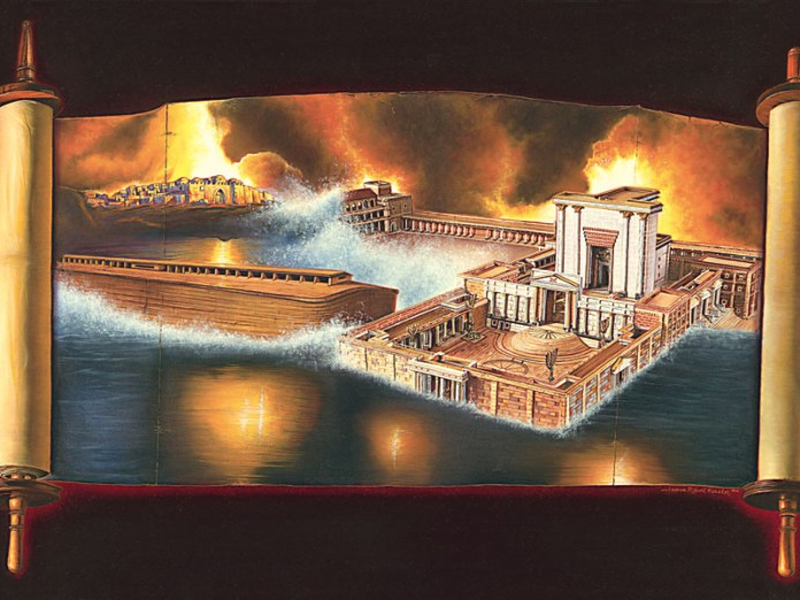
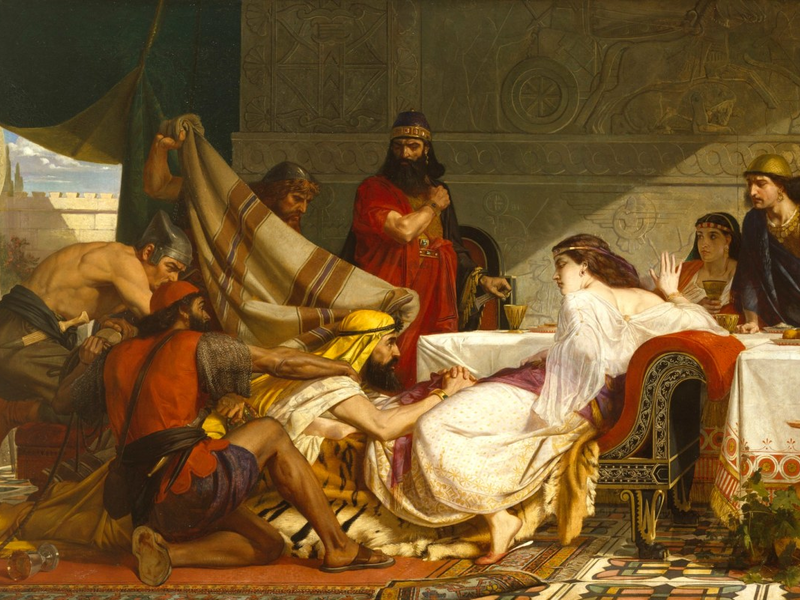
1 Introduction ESTHER and RUTH are similar stories. Each details the changing fortunes of a young woman. Each begins with the protagonist in a destitute situation. The fortunes of each reverses by story’s end. Intriguing parallels exist: Scenes : The stories transition through a similar set of scenes, see Table…

by Scott FairbanksApril 29, 2021

dariusz-sankowski-abamxzlot8e-unsplash
Biblical Studies

A Hermeneutic of Riddles

Maybe this is not the best venue to reveal that I sometimes wonder about all that deep exegesis: the chiasms, the numerology, vowel modifications, the typological labyrinthes, the innumerable exodus patterns that are so often limned by Peter Leithart or James Jordan or Alastair Roberts. Maybe it’s because I am…

by John AhernApril 27, 2021
fabian-keller-kqjpiatm-om-unsplash
Culture

Building New Watchtowers

In 1923, J. Gresham Machen wrote the book he is perhaps most remembered for, “Christianity and Liberalism”. Machen wrote it to help map out the cultural currents that were impacting the church with the hope that the church could be vigilant against the dangers theological liberalism posed to historic Christianity.…

by Steve GreggApril 22, 2021
download
Matthew

THE ANNUNCIATION TO JOSEPH | (Matthew 1:18-25)

March 25, nine months before Christmas, is the date that is often associated with the Annunciation to Mary, Gabriel’s announcement to Mary that, by the coming of the Spirit upon her, she would conceive and bear the heir to David’s throne, whose kingdom would have no end. The story is…

by John BarachApril 20, 2021
screen-shot-2021-04-14-at-8-50-22-am
Book Review

Book Review: Race and Covenant: Recovering the Religious Roots for American Reconciliation

Race and Covenant: Recovering the Religious Roots for American Reconciliation , edited by Gerald R. McDermott (Grand Rapids, MI: Acton Institute), 278 pp. A group of notable thinkers gathered to discuss biblical resources for addressing racial conflict in America in February 2019 at Samford University in Birmingham. Race and Covenant…

by Ben PetersonApril 15, 2021
beyond-creation-science-illustration
Matthew

Full Preterism’s Fatal Fractal Fracture

“Covenant Creationism,” which might be the most consistent brand of full preterism, is merely dispensationalism turned inside-out. The main cause of disputes over the interpretation of the Scriptures is the practice of interpreting texts in isolation. This applies not only to interpreting a passage without reference to other passages, but…

by Mike BullApril 13, 2021

Showing page 56 of 309

See all

Showing page 5 of 43

See all
Literature

Sympathy for Bertram

Coleridge, on the other hand, stood up for Bertram: “I cannot agree with the solemn abuse which the critics have poured out upon Bertram in All’s Well that ends Well . He was a young nobleman in feudal times, just bursting into manhood, with all the feelings of pride of…

February 6, 2008
Literature

All’s Well?

Samuel Johnson said of Bertram in Shakespeare’s All’s Well that Ends Well : “I cannot reconcile my heart to Bertram, a man noble without generosity, and young without truth, who marries Helena as a coward and leaves her as a profligate; when she is dead by his unkindness, sneaks home…

February 6, 2008
Literature

Shakespeare the Christian

Belated help for a friend: Pastor Ralph Smith of the Mitaka Evangelical Church in Tokyo has produced an course entitled “Shakespeare the Christian.” The lectures cover Shakespeare’s debts to Christianity and his use of the Bible, and then analyze 10 of the plays in detail. Ralph has done his homework,…

February 6, 2008

Universal choir

Augustine on Psalm 149: “Chorus Christi jam totus mundus est.” Christ’s choir is now the whole world.

February 5, 2008
Theology

Augustine, postmodern cynic

Behind Varro’s classification of Roman religion into mythical, natural, and civic, Augustine discerns an interest, and a political one. Varro speaks harshly about the mythic or fabulous religions, for violating the dignity of immortal gods. Yet, the classification system serves to protect civic religion from similar condemnation. On Augustine’s reading,…

February 5, 2008
Politics

Musical city

Augustine quotes Cicero saying, “quae harmonia a musicis dicitur in cantu, eam esse in civitate concordiam.” That is, somewhat loosely, “what musicians call harmony in singing is concord in the city.”

February 5, 2008

Showing page 1572 of 2212

Browse by Category

In Medias Res

Your weekly digest for all things Theopolis.

Donate

Theopolis is nearly 100% donor-supported. Consider joining us on our mission.