Theopolis Logo

Writing

Explore our collection of theological essays, biblical studies, and reflections on faith and culture.

See all
chris-bair-ndczc5739ck-unsplash
Ephesians

“Be Holy for I am Holy”

Below is an excerpt from Mark Horne’s manuscript from his forthcoming commentary on Ephesians, specifically on Paul’s reference to Christians as “saints” (Ephesians 1:1). “Paul, an apostle of Christ Jesus by the will of God, to the saints who are in Ephesus, and are faithful in Christ Jesus.” Paul greets…

by Mark HorneMarch 25, 2025
300129rgsdl
Exodus

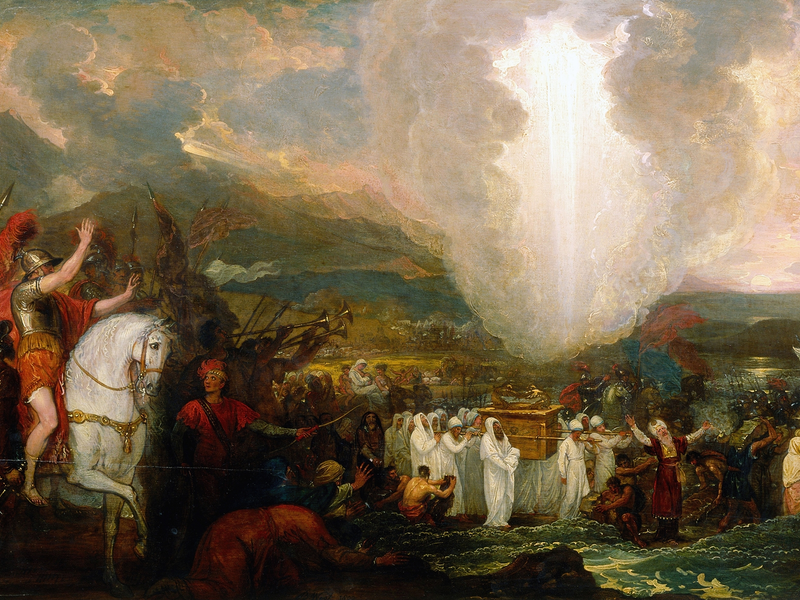
The Perishable in the Ark of the Covenant

There was nothing in the ark except the two tablets that Moses put there at Horeb, where the LORD made a covenant with the people of Israel, when they came out of Egypt (2 Chronicles 5:10). When Solomon finally brought the ark of the covenant to the finished temple in…

by Jonathan WhiteMarch 18, 2025
tim-marshall-k2u71wv2ei4-unsplash
Exodus

The Stages of a Man’s Life and the Second Table of the Law

In As You Like It , Shakespeare famously describes the seven ages of a man’s life. The division of man’s life into stages is not an invention by Shakespeare, nor merely a common medieval artifice, but an expression of the real journey taken in life. Shakespeare seems to divide up…

by Ryan HandermannMarch 13, 2025
brent-cox-2plebdf1nba-unsplash
Christology

The Essence of God’s Image

Is there a chief characteristic which best illumines the image of God in Man? What is it exactly that makes Man as a lens through which to see God? Moses thoughtfully and deliberately escorts the reader to the characteristic showcased above all else: humility. Though much ink has been spilled…

by Ben LoveladyMarch 11, 2025
josh-applegate-toksfdmznkg-unsplash
Liturgy

Two Ways of Being Liturgical: A Baptist Response to the High Church Exodus

Note: This essay is adapted from a talk delivered at the Howell E. Jackson Committee conference on “Foundations of Baptist Education,” held at Union University, Oct. 4-5, 2024. It’s no secret that evangelicals are converting to High Church traditions, a term I will use to refer to Anglo-Catholicism, Roman Catholicism,…

by Ryan SinniMarch 4, 2025
raimond-klavins-mdlseox3vzo-unsplash
Icons

Don’t Convert: Icons and Images in the Early Church

In recent years, there has been a flurry of conversions from Protestant Christianity towards Eastern Orthodoxy and Roman Catholicism, at least in part due to their supposed early church heritage relative to Protestantism. In the words of Rod Dreher, a former Methodist who converted to Eastern Orthodoxy, “Many evangelicals seek…

by John CarpenterFebruary 25, 2025

Showing page 12 of 309

See all

Showing page 5 of 43

See all
Politics

War’s balance sheet

Citing a still-unknown Greek writer, Kant shrewdly said, “War . . . creates more evil men than it takes away.”

September 5, 2007
Politics

War’s balance sheet

Citing a still-unknown Greek writer, Kant shrewdly said, “War . . . creates more evil men than it takes away.”

September 5, 2007
Philosophy

Honor and cruelty

In a reduction worthy of Nietzsche (or Augustine), Kant explores the motives behind honor: “the perpetual war between the Arathapescaw Indians and the Dog Rib Indians has no other aim than mere slaughter. In the savages’ opinion, bravery in war is the highest virtue. In the civilized state too, bravery…

September 5, 2007
Uncategorized

Radical Evil

Kant’s theory of radical evil, which he develops in the first part of Religion Within the Limits of Reason Alone , rests on a number of basic assumptions. 1) Man is free, and his moral actions are undetermined by anything outside himself or even by anything within himself other than…

September 5, 2007
Philosophy

Solomon on Kant

Robert Solomon offers a helpful fairly traditional summary of Kant’s philosophy in his little book on Continental Philosophy. Kant’s overall agenda, Solomon says, was (in Kant’s own words) to “deny knowledge, in order to make room for faith.” Much as he admired the advances of post-Newtonian science, he worried that…

September 4, 2007
Philosophy

Caputo on Kant’s Theology

One of Kant’s central contributions to philosophy was the invention of the notion of “critical philosophy,” which means epistemology, which means philosophy as a critique of knowledge. Philosophy is the queen of the sciences that polices the borders between sciences and keeps everyone safely in his or her own department.…

September 4, 2007

Showing page 1635 of 2212

Browse by Category

In Medias Res

Your weekly digest for all things Theopolis.

Donate

Theopolis is nearly 100% donor-supported. Consider joining us on our mission.