
Theopolis Logo

Writing

Explore our collection of theological essays, biblical studies, and reflections on faith and culture.

See all
dan-burton-nrw4i8kuyd8-unsplash-2

Tyranny of the Agreeable

Inspired by the “Moscow Mood” Debate In a shocking 1961 study, Yale psychologist Stanley Milgram would don an official-looking white lab coat and tell a volunteer to administer increasing shocks to another “volunteer” in an adjacent room strapped into an “electric chair” just out of sight. The shocks were incrementally…

by John CarpenterJuly 22, 2024
screen-shot-2023-03-21-at-10-37-03-am
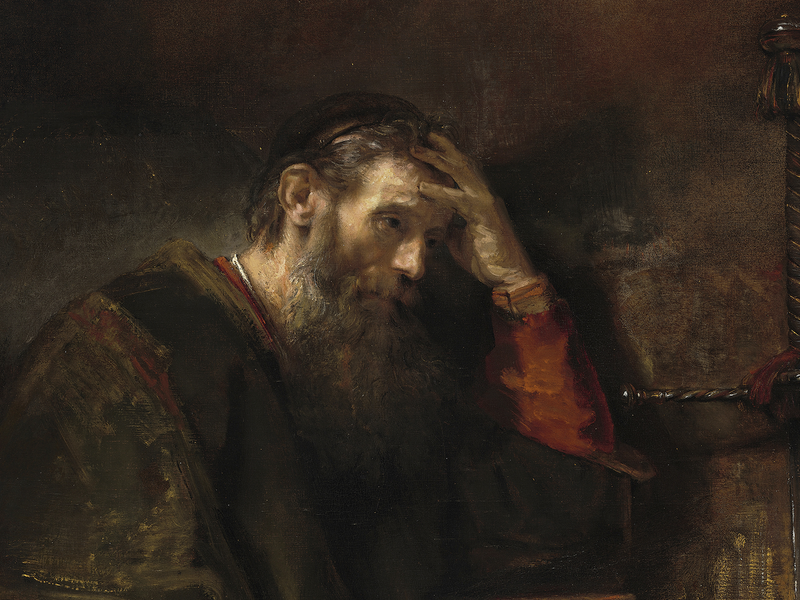
Apostle Paul

Why Doesn’t Paul Quote Jesus?

My title and the substance of the article are borrowed from a section of David Wenham’s excellent book, Paul: Follower of Jesus or Founder of Christianity? I am appropriating ideas from the pages in his book which address the question, “Why Does Paul refer to Jesus’ Life and Ministry so…

by Ralph Allan SmithJuly 9, 2024
screenshot-2024-07-04-at-8-35-35-am
James

The Epistle of James: Shotgun or Sniper

Some of us may be familiar with the notion that the epistle of James is like a New Testament version of Proverbs or other wisdom literature. According to this line of thinking, the epistle of James (together with the other wisdom literature) is basically a collection of timeless sayings without…

by Chris JohnsonJuly 4, 2024
metin-ozer-v4q9cqeashy-unsplash
Virtue

Doing What You Don’t Want to Do

This summer I started walking a long trail that ran north from our home. On my best days, I would walk a total of five miles at a brisk pace. This trail follows the power lines that serve a significant portion of North Dallas and stretches far past the two…

by Mandi GerthJune 25, 2024
screenshot-2024-06-18-at-12-49-58-pm
American Culture

Is Queer Theology Christian?

I am an Australian. I went to the American Academy of Religion mega-fest last year to meet up with some friends, to present a paper at a ‘science and religion’ panel, and to marvel at the sheer scale of how Americans do things. It was quite a ride. Looking at…

by Paul TysonJune 18, 2024
thomas-vitali-owhtrwwtpku-unsplash
Ecclesiology

Consumerism, Oikos, and the Role of Women in the Church (Part 4)

Part 1 Part 2 Part 3 We evangelicals do not often understand the roles of men and women in ministry. Because our consumerist culture has gutted the notion of family as it was historically understood, all Biblical passages about women in church ministry (a familial organism) are almost incomprehensible to…

by John CarpenterJune 11, 2024

Showing page 19 of 309

See all

Showing page 5 of 43

See all

Exhortation

Most of the Beatitudes in Matthew are stated in third person. “Blessed are the poor in spirit, for theirs is the kingdom of heaven.” ” They shall be comforted,” ” they shall inherit the earth,” ” they shall be called the sons of God.” At the end, Jesus changes the…

September 2, 2007
Theology

Music, Time, and Augustine

One of the best discussions of Augustine’s views on time comes from Jeremy Begbie’s Theology, Music, and Time (ch. 3). Following Ricoeur’s discussion, Begbie claims that Augustine’s distentio “is conceived as the three-fold present, and the threefold present as distentio . The distentio consists in the non-coincidence of the mind’s…

August 30, 2007
Theology

Escaping time

John Rist offers some important insights into Augustine’s view of time. He notes, as many commentators do, that Augustine is not aiming to provide a definition of time but to answer the question of how time can be measured. The dilemma is: If the past no longer is, and the…

August 30, 2007

Distention and eschatology

In a 1957 essay in Man and Time , Gilles Quispel claims that Augustine’s views of time have been extracted from the “great struggle between a cyclical and a historical view of the world, between archaism and Christianity,” and therefore have been misunderstood. Augustine “comes to grips with the Neoplatonists…

August 30, 2007
Philosophy

Augustine’s non-Aristotelian Universe

Augustine argues in Confessions that time is not reducible to the movement of the celestial bodies. Aristotle agreed; but, as Ricoeur points out, the arguments that Augustine used departed radically from Aristotle. First, if the sun and stars stopped moving, and yet a potter’s wheel continued to move, time would…

August 30, 2007

Showing page 1638 of 2212

Browse by Category

In Medias Res

Your weekly digest for all things Theopolis.

Donate

Theopolis is nearly 100% donor-supported. Consider joining us on our mission.