Theopolis Logo

Writing

Explore our collection of theological essays, biblical studies, and reflections on faith and culture.

See all
motoki-tonn-nau5bxei9p4-unsplash
Epistemology

The Scattering Integrative Life

Can it be that it has been two whole years since I contributed a Theopolis Post! I had been pursuing the topic of integration: “Seeking Integration in a Fragmented World.” I had defined “integration,” simply, as creative putting together. I had posed that seeking it calls for a fundamentally integrative…

by Esther Lightcap MeekAugust 10, 2021
screen-shot-2021-08-03-at-1-08-28-pm
John

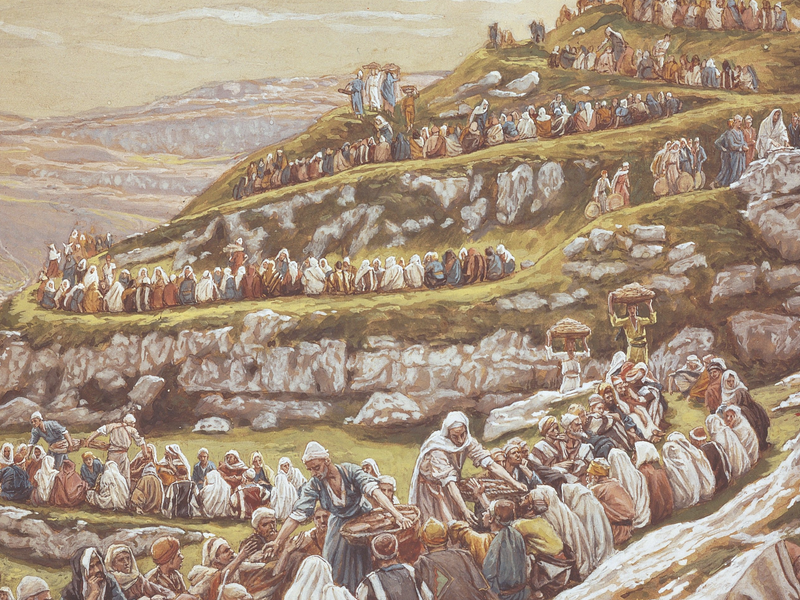
Understanding the Loaves

What is known as the miracle of the “Feeding of the Five Thousand” occurs in Mark’s Gospel in chapter 6. As with other gospel writers, Mark has a few different points to make as he moves through this story (included in all four gospel accounts) and its surrounding material. Three…

by Eric RobinsonAugust 3, 2021
kalen-emsley-bkci_8qcdvq-unsplash-1
Biblical Theology

The Sequence of Events in the Creation Week

To begin with the source of this narrative: Since no human being was present to observe these events, we must assume that this narrative was revealed directly by God to a human author. There are three ways this might have happened. First, we might read, "God said to Abraham (or…

by James B. JordanJuly 28, 2021
isaac_blessing_jacob
Biblical Theology

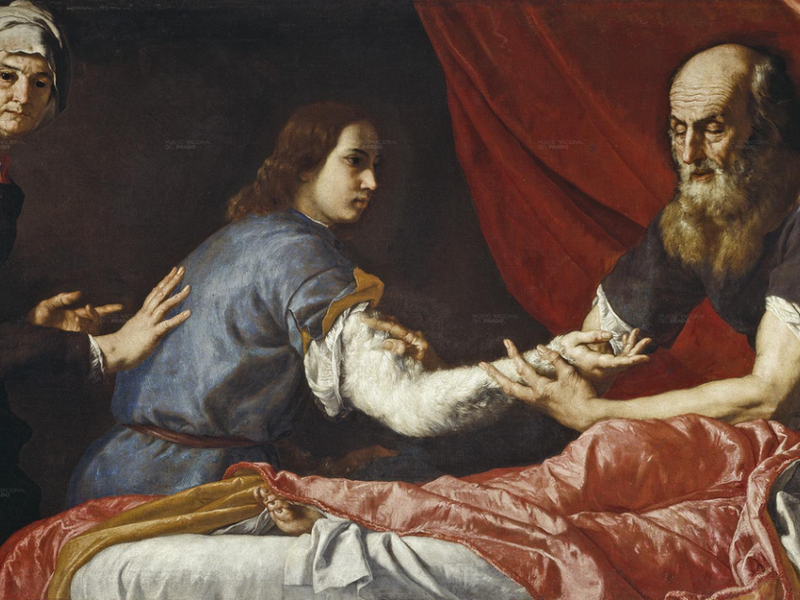
Genesis 27: In the Likeness of Sinful Man

The serious Bible student cannot help but be struck by the deviousness of Jacob in Genesis 27. If one already expected some underhanded dealings from this twin-born-second whose name means “supplanter” and whose bargaining with his brother for the birthright in Genesis 25 seemed incredibly weighted in his own favor,…

by Eric RobinsonJuly 20, 2021
stephen-radford-86qxyjwq8lu-unsplash
Manhood

Chief Hunger

From Barna stats to mainstream headlines, it seems as though the discordant nature of this last year has taken such a toll on churches in the United States that, for many, the injuries have been fatal. It has become a regular occurrence to hear about a congregation that continues to…

by Garrett SoucyJuly 13, 2021
screen-shot-2021-07-06-at-2-50-52-pm
Movies

Good News in "The Bad News Bears"

In The Bad News Bears (1976), a city councilman hires a washed-up minor league baseball player with a drinking problem to coach a little league team of leftover misfits. Underdog sports movies are usually full of sentimentalism and dramatic victories, but this film is a commentary on the failing dream…

by Jacob GuckerJuly 6, 2021

Showing page 53 of 309

See all

Showing page 5 of 43

See all

Exhortation

Most of the Beatitudes in Matthew are stated in third person. “Blessed are the poor in spirit, for theirs is the kingdom of heaven.” ” They shall be comforted,” ” they shall inherit the earth,” ” they shall be called the sons of God.” At the end, Jesus changes the…

September 2, 2007
Theology

Music, Time, and Augustine

One of the best discussions of Augustine’s views on time comes from Jeremy Begbie’s Theology, Music, and Time (ch. 3). Following Ricoeur’s discussion, Begbie claims that Augustine’s distentio “is conceived as the three-fold present, and the threefold present as distentio . The distentio consists in the non-coincidence of the mind’s…

August 30, 2007
Theology

Escaping time

John Rist offers some important insights into Augustine’s view of time. He notes, as many commentators do, that Augustine is not aiming to provide a definition of time but to answer the question of how time can be measured. The dilemma is: If the past no longer is, and the…

August 30, 2007

Distention and eschatology

In a 1957 essay in Man and Time , Gilles Quispel claims that Augustine’s views of time have been extracted from the “great struggle between a cyclical and a historical view of the world, between archaism and Christianity,” and therefore have been misunderstood. Augustine “comes to grips with the Neoplatonists…

August 30, 2007
Philosophy

Augustine’s non-Aristotelian Universe

Augustine argues in Confessions that time is not reducible to the movement of the celestial bodies. Aristotle agreed; but, as Ricoeur points out, the arguments that Augustine used departed radically from Aristotle. First, if the sun and stars stopped moving, and yet a potter’s wheel continued to move, time would…

August 30, 2007

Showing page 1638 of 2212

Browse by Category

In Medias Res

Your weekly digest for all things Theopolis.

Donate

Theopolis is nearly 100% donor-supported. Consider joining us on our mission.