
Theopolis Logo

Writing

Explore our collection of theological essays, biblical studies, and reflections on faith and culture.

See all
lightstock_568139_medium_christ_hold_fast
Eucharist

Eucharistic Remembrance as Godward: The Evidence of Historic Liturgical Practice

Meanings of Remembrance Both Luke’s account of the upper room (Luke 22:14–23) and Paul’s recounting in 1 Corinthians 11:23–25 record Jesus’ words that the Supper in the distribution of bread: “do this in remembrance of me” (τοῦτο ποιεῖτε εἰς τὴν ἐμὴν ἀνάμνησιν). 1 1 Corinthians 11:25 repeats the words in…

by Christopher KouNovember 19, 2024
screenshot-2024-11-12-at-4-59-16-pm
Genesis

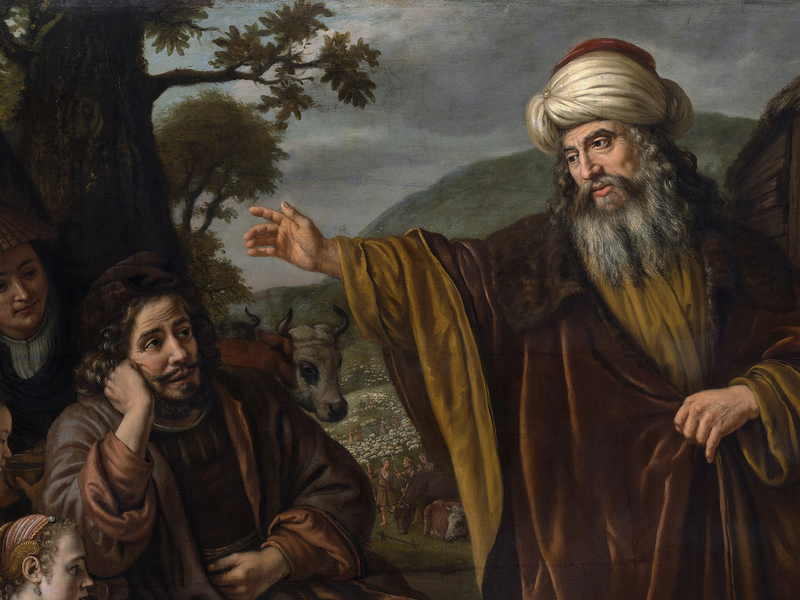
Brother Abraham

Genesis is a story of brotherly violence. Cain kills Abel. Jacob flees from Esau, his brother, to live with Laban, his mother’s brother, and ends up in a conflict with him too. Joseph’s brothers assault him, sell him away as a slave, and fake his death. All of this frames…

by Donald LinnemeyerNovember 13, 2024
natalia-y-hrklteauoi-unsplash
American Politics

Covenantal Politics

America is like a secular Holy Roman Empire. Contrary to dissidents who expect a collapse of the federal government, the implosion of the fiat dollar, or a national divorce into Jesusland and the United States of Canada, America will persist. Whether as a world hegemon or regional superpower, there is…

by Cal CrucisNovember 5, 2024
katie-moum-o0kbc907i20-unsplash-3
Pentecost

Pentecost and the Gift of a New Politics

Many readers of the New Testament will, at some point or other, be troubled by the question of why Jesus’ earthly ministry did not address the Roman occupation. Perhaps as a child in Sunday school you were taught that the Jews were expecting a military deliverer, and that the form…

by Alastair RobertsNovember 1, 2024
valentino-mazzariello-ndm1hhicwhc-unsplash-2
Culture

On the Pursuit of Status

In a recent tweet , which he later expanded into a Substack post , Aaron Renn wrote about the importance of ‘picking the right ladders to climb’. One of our most critical life decisions, Renn argues, is that of choosing the right ‘status hierarchies’ to which we will commit ourselves;…

by Alastair RobertsOctober 25, 2024
sixteen-miles-out-d40gdcd_-he-unsplash
Biblical Law

The Law in the Christian Life

The Third Use of the Created Word “Lord have mercy upon us, and incline our hearts to keep this law.” Those words are reflexive for almost any Anglican. Repeated nine times weekly at least during Lent and Advent if not year round, they are said between 54 and 468 times…

by Jackson WatersOctober 22, 2024

Showing page 16 of 309

See all

Showing page 5 of 43

See all
Philosophy

Mirrors, ancient and modern

In her recent book The Mirror of the Self , Shadi Bartsch argues that ancient notions of introspection and self-examination do not employ the image of the mirror in the way we do in post-Cartesian philosophy. In the words of the TLS reviewer, for the ancients “the mirror was the…

June 27, 2007

Enjoyment in God

Wilken summarizes Augustine’s social vision of perfection this way: “This peace for which the city of God yearns is a ‘perfectly ordered and harmonious fellowship in the enjoyment of God,’ a peace of ‘enjoying one another in God.’ Notice that Augustine’s language is social, not individualistic. He does not say,…

June 26, 2007

Ecclesiology of perfection

When Plato thought about politics, he thought about an ideal city (at least in the Republic ). Not Augustine. Augustine recognized that Plato had portrayed “what kind of city ought there to be.” But Augustine was after something different. He presented an actual human society, a city of God in…

June 26, 2007
Theology

Empty minds

Aquinas wrote: “If the teacher determines the question by appeal to authorities only, the student will be convinced that the thing is so, but will have acquired no knowledge or understanding, and he will go away with an empty mind.”

June 26, 2007

Cyril and the Bible

In his wonderful book, The Spirit of Early Christian Thought , Robert Louis Wilken criticizes the Formula of Chalcedon as “formulaic and abstract,” which described Jesus as “one person,” but “seemed to divide Christ into a divine nature that, for example, healed the sick and raised the dead and a…

June 26, 2007
History

No heavenly good

Alcinous, a pagan philosopher of the second century AD claimed that God is “eternal, ineffable, self-sufficient, without need . . . and perfect in every respect.” The only way to know such a God was to ascend from earthly things to higher realities: “First one contemplates the beauty found in…

June 26, 2007

Showing page 1663 of 2212

Browse by Category

In Medias Res

Your weekly digest for all things Theopolis.

Donate

Theopolis is nearly 100% donor-supported. Consider joining us on our mission.