Theopolis Logo

Writing

Explore our collection of theological essays, biblical studies, and reflections on faith and culture.

See all
0_rnxvdtak7rmxjjy
Abortion

Lady Macbeth Christians

I was still a high school student the first time I read Fyodor Dostoyevsky’s Crime and Punishment, but I will never forget the powerful impact the book had on me. Of course, as a second year student, I did not fully digest the book. In spite of subsequent readings, I…

by Ralph Allan SmithJanuary 26, 2021

cristina-gottardi-bj7pt0zmbok-unsplash
Book Review

Embracing Orthodoxy and Complexity: A Review of Orthodox Anglican Identity by Charles Erlandson

Crises force questions of identity. Identities may remain assumed until some event, or series of events, challenge what may have been taken for granted. The search for identity is an anxious one precisely because it tends to happen in times of upheaval and uncertainty. In his recent book, Orthoxox Anglican…

by Blake JohnsonJanuary 19, 2021
arseny-togulev-apq9q5pkits-unsplash
Biblical Studies

The Half Shekel Temple Tax

Peter Leithart recently wrote a fascinating short piece about the Half Shekel Temple Tax as an atonement. Leithart argues three main points. First that the Sanctuary Shekel was heavier, i.e., more valuable than the everyday shekel. Second, he offers some analysis about the order of magnitude of the purchasing power…

by Jerry BowyerJanuary 12, 2021
screen-shot-2021-01-05-at-10-28-56-am
Symbolism

Sandwich for a Fool

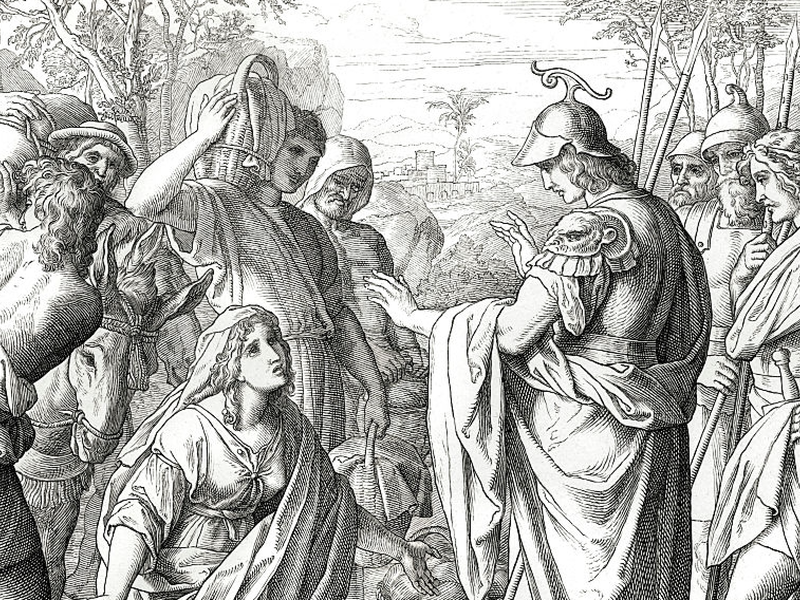
There is no denial from the careful reader that 1 Samuel 24 and 26 are telling the same story. Perhaps we should say, virtually the same story. But that the stories are cut from the same cloth is undeniable. What we have over these three chapters—1 Samuel 24-26—is a very…

by Eric RobinsonJanuary 5, 2021
screen-shot-2020-12-31-at-9-28-48-am
Marriage

Building Altars & Fire from Heaven: A Wedding Homily

In his novel That Hideous Strength , C.S. Lewis is able to masterfully illustrate in narrative form so many of his insights about the subversive dangers of Leftist political dogma to Christian civilization. Perceptive essays from Lewis like “The Abolition of Man” and “The Inner Ring” are fleshed out in…

by Jeff MeyersDecember 31, 2020
jeremiah-higgins-2dyvq1psbgw-unsplash
Ecclesiology

10 Theses of Ecclesiastical Conservatism

At a very practical level, the Evangelical Church has been injected with counterfeit spiritualities. We are a people looking for a city, whose builder may only be in office for four years. Our temptation to veer to the side of the temporal is striking in our day, especially as the…

by Uri BritoDecember 29, 2020

Showing page 59 of 309

See all

Showing page 5 of 43

See all

Public and Private Piety

Thanks to Jayson Grieser for sending along notes and quotations from Ramie Targoff’s 2001 Common Prayer: The Language of Public Devotion in Early Modern England . Targoff points out that, contrary to what we might think, Protestants were more interested than Catholics in communal worship. “For sixteenth-century Catholics,” she writes,…

April 7, 2007

Calvin and allegory

Calvin is harsher on allegorical interpretation than almost anyone, yet he is all in favor of typology. David, Zedekiah, Joseph, Aaron, Samson, Joshua, Zerubbabel, Cyrus and others are types of Christ. It is no easy task to discover where he draws the line between allegory and typology, though. At times,…

April 5, 2007

Yahweh/Iehave

“Yahweh” is often thought to be a purely modern rendering of the Hebrew name, but Smalley finds a medieval glossator who writes the name as “Iahave.” She goes on: “The ‘monstrous form’ Jehoveh was already known to Christians in the late thirteenth century. Henry Crossy seems to compromise between Jehoveh…

April 5, 2007

Kids in Mother’s Milk

Aquinas rejected Augustine’s dismisal of literal interpretations of the law as “absurdities,” arguing that “the end of the ceremonial precepts was twofold, for they were ordained to divine worship, for that particular time, and to the foreshadowing of Christ.” Applying this principle, he sought for a plausible literal interpretation of…

April 5, 2007

Kids in Mother’s Milk

Aquinas rejected Augustine’s dismisal of literal interpretations of the law as “absurdities,” arguing that “the end of the ceremonial precepts was twofold, for they were ordained to divine worship, for that particular time, and to the foreshadowing of Christ.” Applying this principle, he sought for a plausible literal interpretation of…

April 5, 2007

Man of Sorrows

Following Jewish exegetes of his time, Andrew of St. Victor interpreted Isaiah 53 as a prophecy of Israel. Isaiah used the phrase “man of sorrows” to speak “of the people as though of one man.” “Bearing infirmities” refers to “the people who were to suffer in the Babylonian captivity” and…

April 5, 2007

Showing page 1696 of 2212

Browse by Category

In Medias Res

Your weekly digest for all things Theopolis.

Donate

Theopolis is nearly 100% donor-supported. Consider joining us on our mission.