Theopolis Logo

Writing

Explore our collection of theological essays, biblical studies, and reflections on faith and culture.

See all
tanner-mardis-xuxghzhibn4-unsplash-1-2
Biblical Studies

Tweets-turned-Notes on the Bible’s Chronology

Summary In what follows, I will consider the “year-stamps” employed in Scripture, i.e., statements of the form, “Such-and-such an event took place in the Xth year of Y.” In the process, I will suggest some ways in which the Biblical narrative might relate to events in the extra-Biblical world, though…

by James BejonJuly 16, 2019
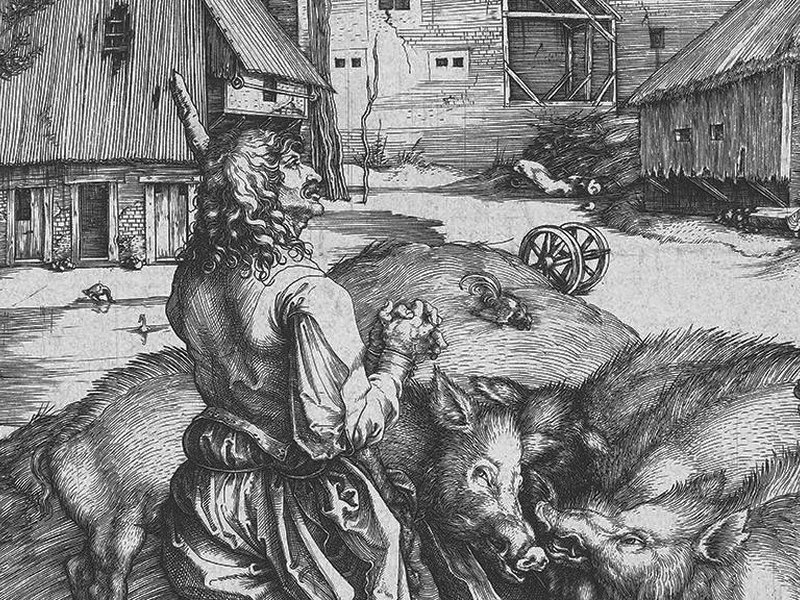
durer-prodigal-son-2
Luke

Perspectives on the Prodigal, (Part 2)

In the first essay on the parable of the Prodigal Son, I suggested that the problems commentators and others encounter in interpreting Jesus three-part parable are not accidental. These are not just problems in our ignorance of cultural background. They are intentional features of the stories —stories designed to poke…

by Ralph Allan SmithJuly 11, 2019
durer-prodigal-son-2
Luke

Perspectives on the Prodigal, (Part 1)

The story of the Prodigal Son is perhaps the most well-known story in the Bible. As others have observed, it may also be one of the most misunderstood. In two short essays, I will point out features of this story that are commonly neglected, aspects of Jesus’ parable that might…

by Ralph Allan SmithJuly 9, 2019
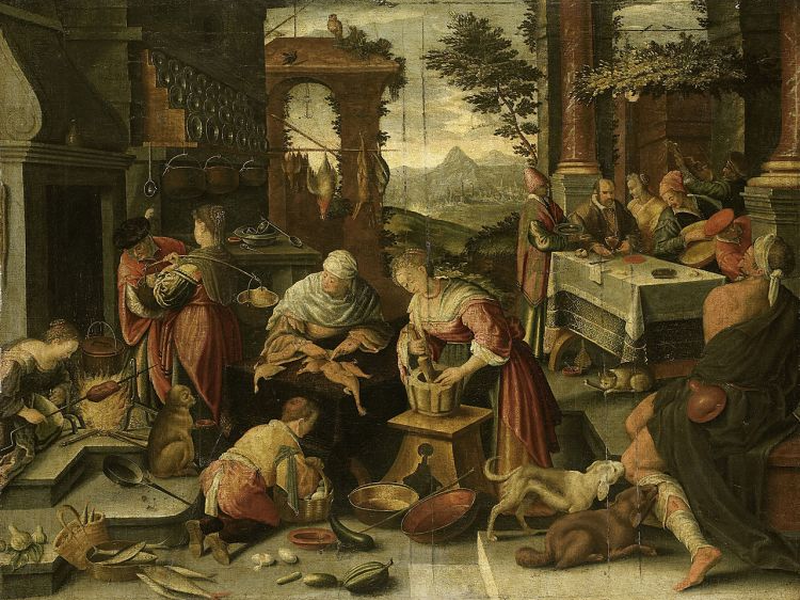
de-rijke-man-en-de-arme-lazarus-by-jacopo-da-ponte-16th-century
Luke

Lazarus and the Rich Man

The parable of Lazarus and the nameless rich man is not an independent story. It is part of a long context that begins in Luke 15:1, where Jesus is eating with tax collectors and sinners and the scribes and Pharisees grumble. In response to their hardheartedness, Jesus tells a three-part…

by Ralph Allan SmithJuly 4, 2019
aaron-burden-uynrnfdkjwg-unsplash
Luke

Everybody has Dropsy - Luke 14:1-24

The Bible is written so that even when a reader cannot pick up on what might be deeper or more detailed aspects of a text, there is virtually always a message to be heard. In the ancient world, where the “reader” of Scripture would likely be a church official facing…

by Ralph Allan SmithJuly 2, 2019
communion
Biblical Theology

Fruit Trees and Grain Plants

The distinction between garden (or vineyard) and field begins in Genesis 2. This relates to the ordering of the formless world. Plants of the field are contrasted with the garden planted by God in Genesis 2:5&8. Later on, under the Old Covenant the Israelites will be required to keep their…

by James B. JordanJune 27, 2019

Showing page 77 of 309

See all

Showing page 5 of 43

See all

Intention and sense

Does the intention of the author determine the sense? There are problems with saying Yes, particularly when “intention” is assumed to be the mental state of the author, which is unrecoverable. There are also problems with saying No, because that seems to introduce (as ED Hirsch argues) a hermeneutical free-for-all.…

March 29, 2007

Tragic hermeneutics

In an article in Theology Today (1980), David Steinmetz quotes Benjamin’s Jowett’s essay on the interpretation of Scripture (1859), which insists on a single meaning in a text - the meaning intended by the author and understood by the original audience. Steinmetz admits that critical scholarship has moved on since…

March 29, 2007

Victorious righteousness

Dahood takes “righteous” in Psalm 118:15, 19 as “victory.” The joyful shouting is heard from the tents of the victorious, and the gates are the gates of victory. He cites Isaiah 41:2 and 49:24 as other texts where this nuance of ZDK comes to the fore. The meaning could be:…

March 29, 2007

More notes on Psalm 118

More notes, taken from or inspired by Michael Dahood’s Anchor Bible commentary. 1) Dahood makes good sense of the entire Psalm by assuming that it moves from a place of battle and victory (vv. 5-14), to the victory celebration in the tents of the war camp (vv. 15-18), and then…

March 29, 2007
Literature

Auden on Austen

With his usual critical insight, Auden captured Austen’s knowingness in a poem about Byron: You could not shock her more than she shocks me; Beside her Joyce seems innocent as grass. It makes me most uncomfortable to see An English spinster of the middle class Describe the amorous effects of…

March 28, 2007

Be the river

Gregory the Great again: “he that treats of sacred writ should follow the way of a river, for if a river, as it flows along its channel, meets with open valleys on its side, into these it immediately turns the course of its current, and when they are copiously supplised,…

March 28, 2007

Showing page 1700 of 2212

Browse by Category

In Medias Res

Your weekly digest for all things Theopolis.

Donate

Theopolis is nearly 100% donor-supported. Consider joining us on our mission.