Theopolis Logo

Writing

Explore our collection of theological essays, biblical studies, and reflections on faith and culture.

See all
screen-shot-2019-09-03-at-7-00-44-am-2
Biblical Studies

Genesis 38 from Multiple Angles (Part 2)

Summary : The Bible is a multi-faceted text. As a result, it can fruitfully be analyzed in many ways. Pace, context, flow, imagery: all of these aspects of the Biblical text are significant and instructive. Here, by way of illustration, I analyze Gen. 38 in a range of different ways,…

by James BejonOctober 22, 2019

screen-shot-2019-09-03-at-7-00-44-am-2
Hermeneutics

Genesis 38 from Multiple Angles (Part 1)

Summary: The Bible is a multi-faceted text. As a result, it can fruitfully be analysed in many ways. Pace, context, flow, imagery: all of these aspects of the Biblical text are significant and instructive. Here, by way of illustration, I analyse Gen. 38 in a range of different ways, and…

by James BejonOctober 15, 2019
eco-warrior-princess-tsoeguwwzwo-unsplash
Biblical Theology

Church Planting as Garden Growing

The closing chapters of the Bible bring to fulfillment the mission inaugurated in the opening chapters of the Bible: the dwelling place of God expands to fill the entire new creation. The story of Scripture concludes having achieved God’s original intent for His people in the Garden of Eden, and…

by Drew KnowlesOctober 8, 2019
annie-spratt-rx1ij59jryu-unsplash
Economics

Gift Economies Aren't So Giving

Oddly, the nature of pre -modern economies plays a central role in today’s policy debate over economic globalization and neo-liberalism. Analysts take ancient non-market economies as the standard against which to measure the economic and social effects of the market system. Scholars compare the distribution of economic goods and services…

by James R. RogersOctober 1, 2019
20121120_1642723459__76354-1391444640-1280-1280-1014x487
Luke

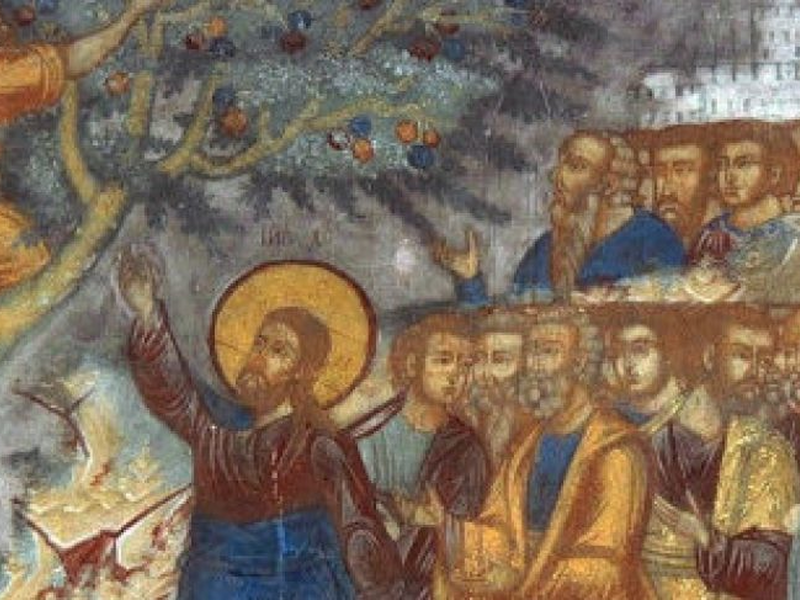
Zacchaeus, (Part 2)

In part one of this essay, I mentioned that the story of Zacchaeus includes not only many details that point to other passages in Luke, but also details that point to the Old Testament, though we might not initially think of them. The first detail I have in mind is…

by Ralph Allan SmithSeptember 24, 2019
20121120_1642723459__76354-1391444640-1280-1280-1014x487
Luke

Zacchaeus (Part 1)

The story of Zacchaeus includes numerous interesting details that link this story with others in the Gospel of Luke. There are also details that tie the story of Zacchaeus to the Old Testament in ways that we might not initially take note of. In the Gospel of Luke, the story…

by Ralph Allan SmithSeptember 17, 2019

Showing page 74 of 309

See all

Showing page 5 of 43

See all

By the Spirit

Paul says that one can only say “Jesus is Lord” by the Spirit (1 Corinthians 12:3). He adds later in the same chapter that we are incorporated into the body, the one-and-many body of the visible church, by “one Spirit” (12:13). Surely Paul exaggerates. Anybody can say Jesus is Lord.…

February 22, 2007

Righteousness by faith

ERH sees faith not as a “religious” issue but as one of the driving forces of history. All revolutions begin in faith, and the faith that drives historical change is a faith that is reckoned as justice: “Faith is a belief in things unseen; it goes against hope, it defies…

February 22, 2007
History

American Revolution

Was the American Revolution a Revolution? ERH concludes it was a “half-revolution” rather than a total revolution on the scale of the Russian, French, Puritan, Reformation, and Papal revolutions. Evaluating the revolutionary character of the American Revolution rests partly on the question of what “revolution” meant to the participants. ERH…

February 22, 2007

Liturgical uniformity

To outsiders, the Roman Catholic church appears to have a uniform liturgical tradition, of long standing. Rosenstock-Huessy points out that the uniformity of the Mass is a rather late development. During the 19th century, “the movement of Solesmes united all the churches of the Catholic world by introducing the Roman…

February 22, 2007

Receiving brothers

Within two verses, John accuses Diotrephes of refusing to “receive us” and refusing to “receive the brethren” (3 John 9-10). The first refers to an acknowledgement of authority; receiving “us,” the elder and his co-workers, would mean listening and obeying. The second refers to hospitality; receiving the brothers means welcoming…

February 22, 2007

In manner of God

John commends Gaius not only for receiving traveling brothers but for sending them on their way “in a manner worthy of God” (3 John 6). What does this mean? Stott is certainly right to say that they are to be treated as servants of God. But John’s language is more…

February 22, 2007

Showing page 1713 of 2212

Browse by Category

In Medias Res

Your weekly digest for all things Theopolis.

Donate

Theopolis is nearly 100% donor-supported. Consider joining us on our mission.