Theopolis Logo

Writing

Explore our collection of theological essays, biblical studies, and reflections on faith and culture.

See all
jefferson-santos-fcejgbzakru-unsplash
Interview

The Way My Story Goes: Interview with Singer-Songwriter Jamie Soles

Jamie Soles is the reason I know my way around a guitar. When my guitar teacher put the sheet music for Eine Kleine Nachtmusick in my fourteen-year-old hands, I balked. He gave me “Foggy Mountain Breakdown.” I learned half of it. At home, I ignored my teacher’s instructions and tugged…

by Christian LeithartMarch 12, 2019
screenshot-2023-10-27-at-1-23-26-pm
Epistemology

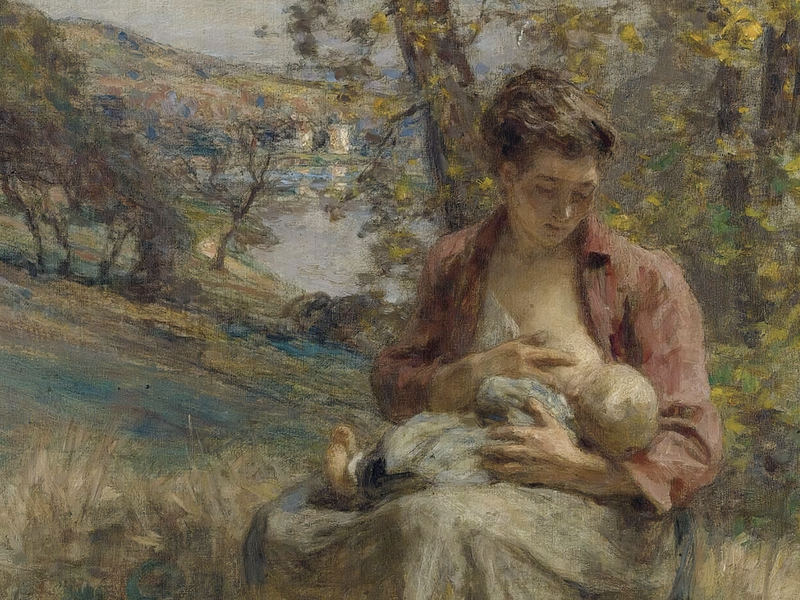
The Mother’s Smile: Integrative Beauty

This is a tough era for mothers. Regard for mothers, while it is always booming in some circles, is decidedly lacking in the prevailing winds of the milieu. In high demand by contrast is contribution to the work force, being a consumer, and basic economic survival, often as a solitary…

by Esther Lightcap MeekMarch 5, 2019
img_1456
Epistemology

Seeking Integration in a Fragmented World: D.C. Schindler: Are You Open to the Heart of Things?

After the dark quiet of the year’s beginning, I return now to pick up the threads of my reflection on integration. This is my own personal inquiry, and for me it is no academic exercise but rather the forefront of my personal quest for the real. My hope is that…

by Esther Lightcap MeekFebruary 26, 2019
tolkien
Chiasm

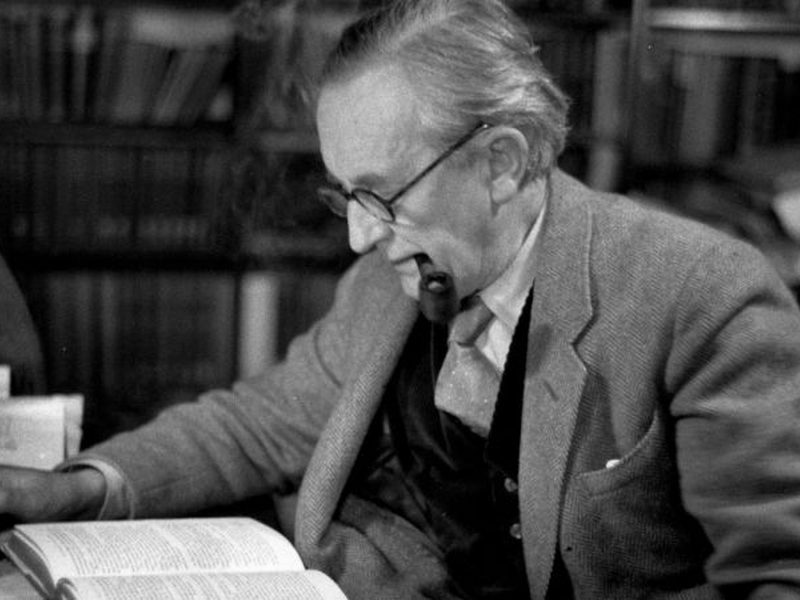
The Chiastic Structure of Lord of the Rings

The chiastic structure of The Hobbit we considered in the previous essay is highly suggestive of what might lie in store for The Lord of the Rings saga. It is undoubtedly the case that J. R. R. Tolkien was a literary craftsman. It may even be the case he is…

by Kelly KerrFebruary 19, 2019
tolkien
Chiasm

The Chiastic Structure of the Hobbit

Structure plays an important part of any literary work, whether poetry or prose. It adds to the beauty and depth of the work and allows insight to be gained about what the author is trying to communicate. The question that concerns us here is whether or not there exists an…

by Kelly KerrFebruary 5, 2019
a-giant-alien-spaceship-that-has-landed-in-montana-in-arrival-denis-villeneuves-film-adaptation-of-a-story-by-ted-chiang
Movies

Learning the Language of Arrival

Can we learn to communicate from an outside intelligence? Spoiler Alert! If you have not yet seen the movie, this article may provide you with a great deal more information than you wished to know at this point. Since the 1999 film The Matrix received careful scrutiny on many fronts…

by Eric RobinsonJanuary 29, 2019

Showing page 81 of 309

See all

Showing page 5 of 43

See all

By the Spirit

Paul says that one can only say “Jesus is Lord” by the Spirit (1 Corinthians 12:3). He adds later in the same chapter that we are incorporated into the body, the one-and-many body of the visible church, by “one Spirit” (12:13). Surely Paul exaggerates. Anybody can say Jesus is Lord.…

February 22, 2007

Righteousness by faith

ERH sees faith not as a “religious” issue but as one of the driving forces of history. All revolutions begin in faith, and the faith that drives historical change is a faith that is reckoned as justice: “Faith is a belief in things unseen; it goes against hope, it defies…

February 22, 2007
History

American Revolution

Was the American Revolution a Revolution? ERH concludes it was a “half-revolution” rather than a total revolution on the scale of the Russian, French, Puritan, Reformation, and Papal revolutions. Evaluating the revolutionary character of the American Revolution rests partly on the question of what “revolution” meant to the participants. ERH…

February 22, 2007

Liturgical uniformity

To outsiders, the Roman Catholic church appears to have a uniform liturgical tradition, of long standing. Rosenstock-Huessy points out that the uniformity of the Mass is a rather late development. During the 19th century, “the movement of Solesmes united all the churches of the Catholic world by introducing the Roman…

February 22, 2007

Receiving brothers

Within two verses, John accuses Diotrephes of refusing to “receive us” and refusing to “receive the brethren” (3 John 9-10). The first refers to an acknowledgement of authority; receiving “us,” the elder and his co-workers, would mean listening and obeying. The second refers to hospitality; receiving the brothers means welcoming…

February 22, 2007

In manner of God

John commends Gaius not only for receiving traveling brothers but for sending them on their way “in a manner worthy of God” (3 John 6). What does this mean? Stott is certainly right to say that they are to be treated as servants of God. But John’s language is more…

February 22, 2007

Showing page 1713 of 2212

Browse by Category

In Medias Res

Your weekly digest for all things Theopolis.

Donate

Theopolis is nearly 100% donor-supported. Consider joining us on our mission.