Theopolis Logo

Writing

Explore our collection of theological essays, biblical studies, and reflections on faith and culture.

See all
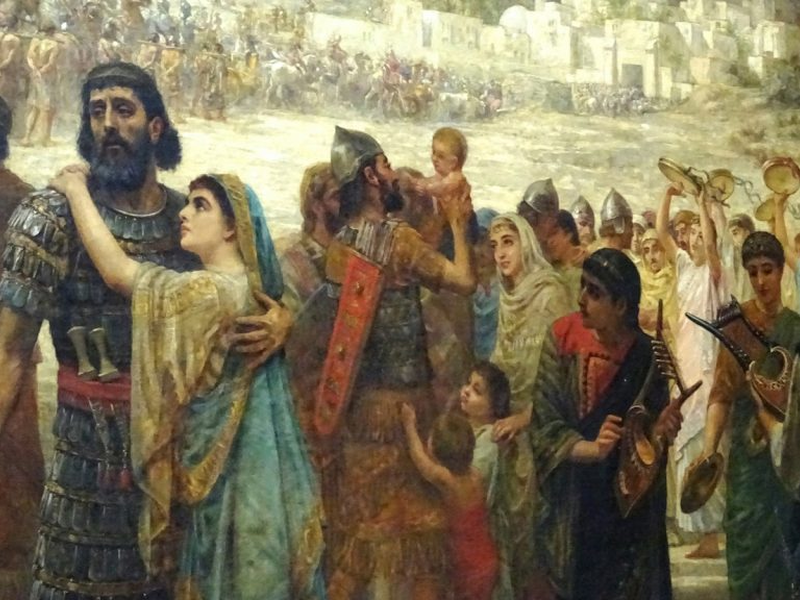
jephthahs-vow-by-edwin-long
Judges

The Jephthah-Jesus Connection

Why there is more to Jephthah than meets than eye It was not that long ago that I realized the Jephthah-story and the Jesus-story were basically the same story. Sounds crazy, I know. But here is a one-paragraph synopsis of both: The people of God have gone their own way,…

by Eric RobinsonDecember 27, 2018
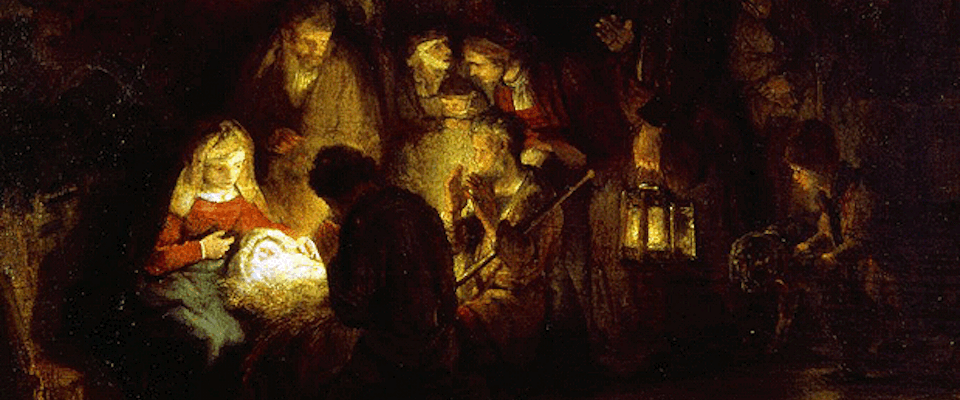
nativity-2
Advent

Jesus Rejoiced

G.K. Chesterton famously said that the Gospels don’t reveal Jesus’ mirth. It’s true we never catch Jesus laughing. But can we believe He never did? I don’t think so. Laughter is human, and Jesus was fully human. Jesus promised that those who mourned would laugh. He mourned; would He not…

by Peter LeithartDecember 25, 2018
74686
Advent

New Exodus

Matthew 2 has all the elements of an exodus story. There’s a murderous king, who slaughters Jewish babies. There’s a infant who will be Israel’s future deliverer, saved from the murderous king so He can later return to save His people and lead them to the Promised land. There’s an…

by Peter LeithartDecember 20, 2018
tpc-worship
Church Calendar

Is the Church Calendar Desirable?

The calendar of Israel was primarily theological, centered on commemorating the salvific acts of God, but also agricultural, celebrating the creation-restoring effects of those salvific acts. The feasts of the first month celebrated the reviving of the world in the Spring, and typified the cutting off of the Savior in…

by James B. JordanDecember 18, 2018
hebrew-manuscript-2
Chiasm

Chiasms and Life

The chiastic shape corresponds to the shape of human life. This should not surprise us, because we are made in the image of God, and God is manifest in Word and Spirit. If we are living epistles, our lives will look a bit like the literary shape of the books…

by James B. JordanDecember 14, 2018
sailing-shop-storm-crop
Biblical Theology

Boat Stories

Back in January, Venkatesh Rao wrote a fascinating post on the Ribbonfarm blog, discussing different forms of models of narrative. Engaging with Ursula LeGuin’s talk ‘The Carrier Bag Theory of Fiction’ , Rao explores her contrast between the (male) ‘hero narrative’ and the (female) ‘carrier-bag story’, and suggests a third…

by Alastair RobertsDecember 11, 2018

Showing page 83 of 309

See all

Showing page 5 of 43

See all

By the Spirit

Paul says that one can only say “Jesus is Lord” by the Spirit (1 Corinthians 12:3). He adds later in the same chapter that we are incorporated into the body, the one-and-many body of the visible church, by “one Spirit” (12:13). Surely Paul exaggerates. Anybody can say Jesus is Lord.…

February 22, 2007

Righteousness by faith

ERH sees faith not as a “religious” issue but as one of the driving forces of history. All revolutions begin in faith, and the faith that drives historical change is a faith that is reckoned as justice: “Faith is a belief in things unseen; it goes against hope, it defies…

February 22, 2007
History

American Revolution

Was the American Revolution a Revolution? ERH concludes it was a “half-revolution” rather than a total revolution on the scale of the Russian, French, Puritan, Reformation, and Papal revolutions. Evaluating the revolutionary character of the American Revolution rests partly on the question of what “revolution” meant to the participants. ERH…

February 22, 2007

Liturgical uniformity

To outsiders, the Roman Catholic church appears to have a uniform liturgical tradition, of long standing. Rosenstock-Huessy points out that the uniformity of the Mass is a rather late development. During the 19th century, “the movement of Solesmes united all the churches of the Catholic world by introducing the Roman…

February 22, 2007

Receiving brothers

Within two verses, John accuses Diotrephes of refusing to “receive us” and refusing to “receive the brethren” (3 John 9-10). The first refers to an acknowledgement of authority; receiving “us,” the elder and his co-workers, would mean listening and obeying. The second refers to hospitality; receiving the brothers means welcoming…

February 22, 2007

In manner of God

John commends Gaius not only for receiving traveling brothers but for sending them on their way “in a manner worthy of God” (3 John 6). What does this mean? Stott is certainly right to say that they are to be treated as servants of God. But John’s language is more…

February 22, 2007

Showing page 1713 of 2212

Browse by Category

In Medias Res

Your weekly digest for all things Theopolis.

Donate

Theopolis is nearly 100% donor-supported. Consider joining us on our mission.