Theopolis Logo

Writing

Explore our collection of theological essays, biblical studies, and reflections on faith and culture.

See all
screenshot-2024-04-04-at-4-49-39-pm
Apologetics

Christianity: Who Needs It?

Evangelistic Message to the Uninformed: 1 Timothy 3.14-16 Even though this is written as a sermon for delivery, and even though it was preached in a homiletics class, I decided I can’t post it as a sermon because it was not truly preached at a place where nonchristians wanted to…

by Mark HorneMay 7, 2024

carlo-alberto-burato-smdx3gleu_m-unsplash
Acts

Jesus’ Post-Resurrection Appearances

If we only read the Gospels of Mark and Luke, we might get the impression that Jesus’ ascension was on resurrection Sunday. Matthew speaks of going to Galilee but he does not put things into a clear time frame. John shows us that Jesus appeared to the disciples eight days…

by Ralph Allan SmithMay 1, 2024
alfons-morales-ylswjsy7stw-unsplash-1
Biblical Studies

The Bible and Western Literature

The most cursory glance at the history of Western literature reveals that it has been deeply influenced by the Bible. Some of the greatest classics of Western literature draw their plots, characters, and ideas largely from Scripture; Dante’s Divine Comedy and Milton’s Paradise Lost are two of the most notable…

by Peter LeithartApril 24, 2024
cederic-vandenberghe-21dp3hytvhw-unsplash
Biblical Theology

Inglorious Bastards

Few themes emerge as profoundly and persistently in the streams of biblical narrative as the conflict between light and darkness, and the juxtaposition of humanity with monstrosity. These themes not only weave through the fabric of Scripture, emerging in stories from Genesis to Revelation, but also stitch together the human…

by Kyle LammottApril 17, 2024
screenshot-2024-04-09-at-11-22-50-am
Luke

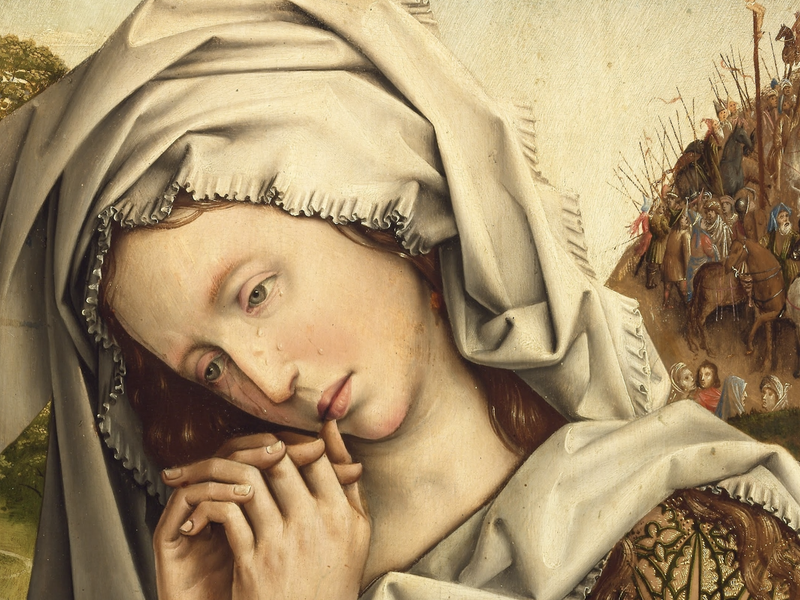
Mary Magdalene: Sister, Sinner, Saint

In John Wenham’s work, Easter Enigma , he devotes an entire chapter to Mary Magdalene, which is rephrased and summarized here. 1 One of the interesting things that Wenham said was that Mary Magdalene was the second “most favored woman in the Bible.” 2 He adds, “Yet apart from a…

by Ralph Allan SmithApril 9, 2024
screenshot-2024-04-04-at-4-50-53-pm

Daily Mutual Encouragement

God made man to live in a larger relational context, and even in high rebellion, man cannot escape his created nature. Instead, that nature takes revenge on rebellious man. Autonomous and alone, the self craves absolution but recognizes no authority that might give it; it thirsts for glory but rejects…

by Tim NicholsApril 4, 2024

Showing page 21 of 309

See all

Showing page 5 of 43

See all
History

Revolutionary timing

Are we living in a time of world-revolutionary change? Impossible to say, of course, but there might be some hints contained in the developments of the last millennium. Rosenstock-Huessy notes that Western man has been formed by periodic world-historical revolutions since the 11th century: Gregorian (11th), the Reformation (16th), Puritan…

December 29, 2006
History

One world

William Cavanaugh suggests that globalization represents a false catholicity, a unification of the human race organized around consumption and Hollywood blockbusters. That’s certainly one legitimate angle. On the other hand: The wealth of the wicked is stored up for the righteous, and Cain and Nimrod built cities long before David…

December 29, 2006
History

Fallen Soldiers

George L. Mosse’s Fallen Soldiers (Oxford 1990) is a fascinating study of the “Myth of War Experience” that developed between the French Revolution and came to a climax in World War I and its aftermath. Mosse develops a number of intertwined themes: the rise of volunteer armies after the French…

December 29, 2006

Childbirth

Rosenstock-Huessy notes the difference between animal birth and human childbirth, the main difference being that human parents remain with children after the birth: “marriage means to go from the blind act of the moment, through the whole life cycle to its most opposite point the childbirth,” and this shows “that…

December 29, 2006
History

Naming and nationalism

With nationalism at its height in the nineteenth century, the common practice of giving children biblical names was a check on nationalist idolatry, a reminder that the child was part of Christendom, not merely of France, Germany, England, etc. Rosenstock-Huessy puts the point dramatically: “When biblical names disappeared in Europe…

December 29, 2006
Science

Scientific law

In their Science & Grace (Crossway 2006), Tim Morris and Don Petcher helpfully define a law of nature as “God’s sustaining of, or man’s description of, that pattern of regularity that we observe in nature as God works out His purposes towards His own ends in HIs covenant faithfulness, through…

December 28, 2006

Showing page 1746 of 2212

Browse by Category

In Medias Res

Your weekly digest for all things Theopolis.

Donate

Theopolis is nearly 100% donor-supported. Consider joining us on our mission.