Theopolis Logo

Writing

Explore our collection of theological essays, biblical studies, and reflections on faith and culture.

See all
andriy-nestruiev-gdbrwwh6doc-unsplash
Biblical Studies

Funerals and Flutes

Matthew 8-9 records three clusters of miracles, interspersed with snatches of Jesus’ teaching about various aspects of discipleship. Just as the Sermon on the Mount displays the authority of Jesus’ Word in teaching, these chapters display the authority of Jesus’ Word over sickness, uncleanness, the creation, demons, and death. In…

by Peter LeithartApril 17, 1992

michal-parzuchowski-w9uljjwg2fa-unsplash
Baptism

Daddy, Why Was I Excommunicated?

Since the early 1980s, several of the conservative Reformed Churches have debated and wrestled with the issue of paedocommunion (infant communion). The PCA and the OPC assigned study committees to examine the question, both of which produced useful reports both in support of and against the position. Though the debate…

by Peter LeithartApril 13, 1992
skyler-gerald-akljfvj5ym4-unsplash
Biblical Chronology

Chronologies and Kings, Part 9: Jehu, Hazael, and Assyria

(This issue of Biblical Chronology concludes a discussion of the Biblical and Assyrian chronologies, begun in previous posts. Click on the category link of "Biblical Chronology" above to see previous issues. Did Shalmaneser Know Jehu? Allis writes: "The Black Obelisk of Shalmaneser contains, in addition to brief accounts of the…

by James B. JordanMarch 23, 1992
denise-jans-dpemksg59la-unsplash
American Culture

Arts and Play, Part 4

Movies Movies as an art form have a powerful impact because they take place in a dark room, on a large screen, with no distractions, and because they entail many of the arts: music, acting, choreography, design and color, etc. A movie can be an overwhelming experience for a young…

by James B. JordanMarch 23, 1992
sincerely-media-bhaswrjttzw-unsplash-2
Leviticus

The Ecology of the Tribute Offering

The Hebrew word translated as "grain offering" or "cereal offering" is minchah . Like the translation of `olah as "burnt offering," the translation of minchah as "grain offering" is somewhat deceiving, since minchah does not refer to grain or cereal. In liturgical contexts outside of Leviticus, in fact, the word…

by Peter LeithartMarch 13, 1992
sincerely-media-bhaswrjttzw-unsplash-2
Ascension

Skinned and Cut

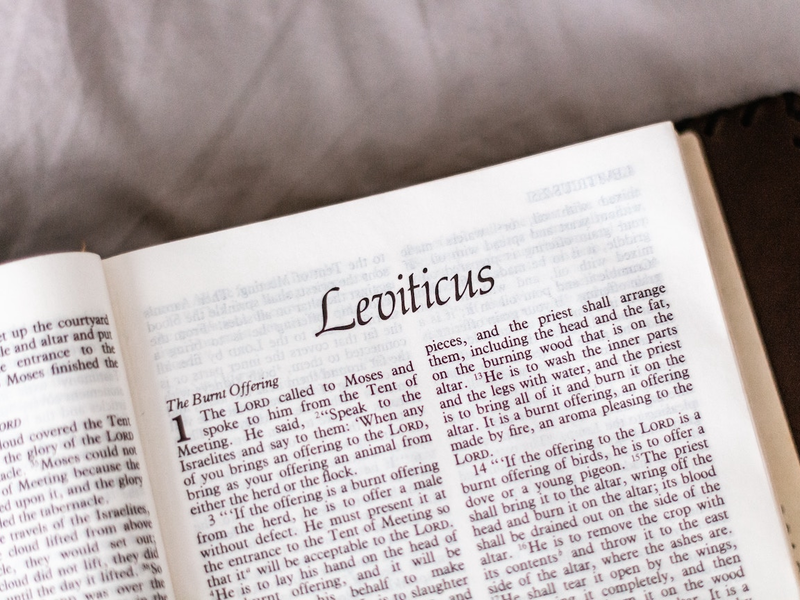
"He shall then skin the burnt offering and cut it into its pieces" (Leviticus 1:6). The normal word ( `olah ) that is translated as "burnt offering" and "whole burnt offering" has nothing to do with either burning or wholeness. It is the noun form of a verb meaning "to…

by Peter LeithartMarch 13, 1992

Showing page 291 of 309

See all

Showing page 5 of 43

See all
History

Revolutionary timing

Are we living in a time of world-revolutionary change? Impossible to say, of course, but there might be some hints contained in the developments of the last millennium. Rosenstock-Huessy notes that Western man has been formed by periodic world-historical revolutions since the 11th century: Gregorian (11th), the Reformation (16th), Puritan…

December 29, 2006
History

One world

William Cavanaugh suggests that globalization represents a false catholicity, a unification of the human race organized around consumption and Hollywood blockbusters. That’s certainly one legitimate angle. On the other hand: The wealth of the wicked is stored up for the righteous, and Cain and Nimrod built cities long before David…

December 29, 2006
History

Fallen Soldiers

George L. Mosse’s Fallen Soldiers (Oxford 1990) is a fascinating study of the “Myth of War Experience” that developed between the French Revolution and came to a climax in World War I and its aftermath. Mosse develops a number of intertwined themes: the rise of volunteer armies after the French…

December 29, 2006

Childbirth

Rosenstock-Huessy notes the difference between animal birth and human childbirth, the main difference being that human parents remain with children after the birth: “marriage means to go from the blind act of the moment, through the whole life cycle to its most opposite point the childbirth,” and this shows “that…

December 29, 2006
History

Naming and nationalism

With nationalism at its height in the nineteenth century, the common practice of giving children biblical names was a check on nationalist idolatry, a reminder that the child was part of Christendom, not merely of France, Germany, England, etc. Rosenstock-Huessy puts the point dramatically: “When biblical names disappeared in Europe…

December 29, 2006
Science

Scientific law

In their Science & Grace (Crossway 2006), Tim Morris and Don Petcher helpfully define a law of nature as “God’s sustaining of, or man’s description of, that pattern of regularity that we observe in nature as God works out His purposes towards His own ends in HIs covenant faithfulness, through…

December 28, 2006

Showing page 1746 of 2212

Browse by Category

In Medias Res

Your weekly digest for all things Theopolis.

Donate

Theopolis is nearly 100% donor-supported. Consider joining us on our mission.